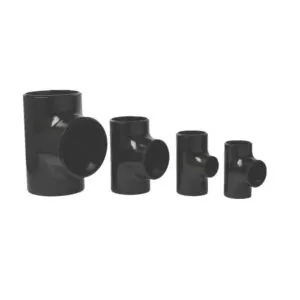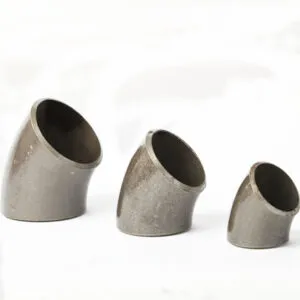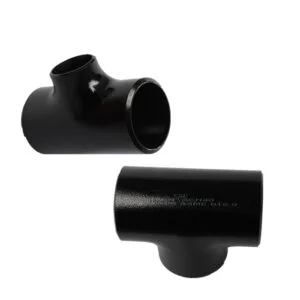

Choosing the right connection type for an industrial piping system is a decision that resonates through the entire lifecycle of a project—from initial procurement costs to long-term maintenance and safety.
For engineers, stockists, and project managers, the choice between Buttweld, Socket Weld, and Threaded fittings is rarely arbitrary; it is governed by pressure ratings, pipe size, and the nature of the fluid being transported.
At RAYOUNG-a China industry steel pipe fittings manufacturer & exporter, we’ve spent decades manufacturing these components for global infrastructure.
In this guide, we will break down the technical nuances, pros, and cons of these three primary fitting types to help you make an informed selection for your next MTO (Material Take-Off).
1. Butt-Weld Fittings (BW): The Gold Standard for High-Pressure Pipeline Systems
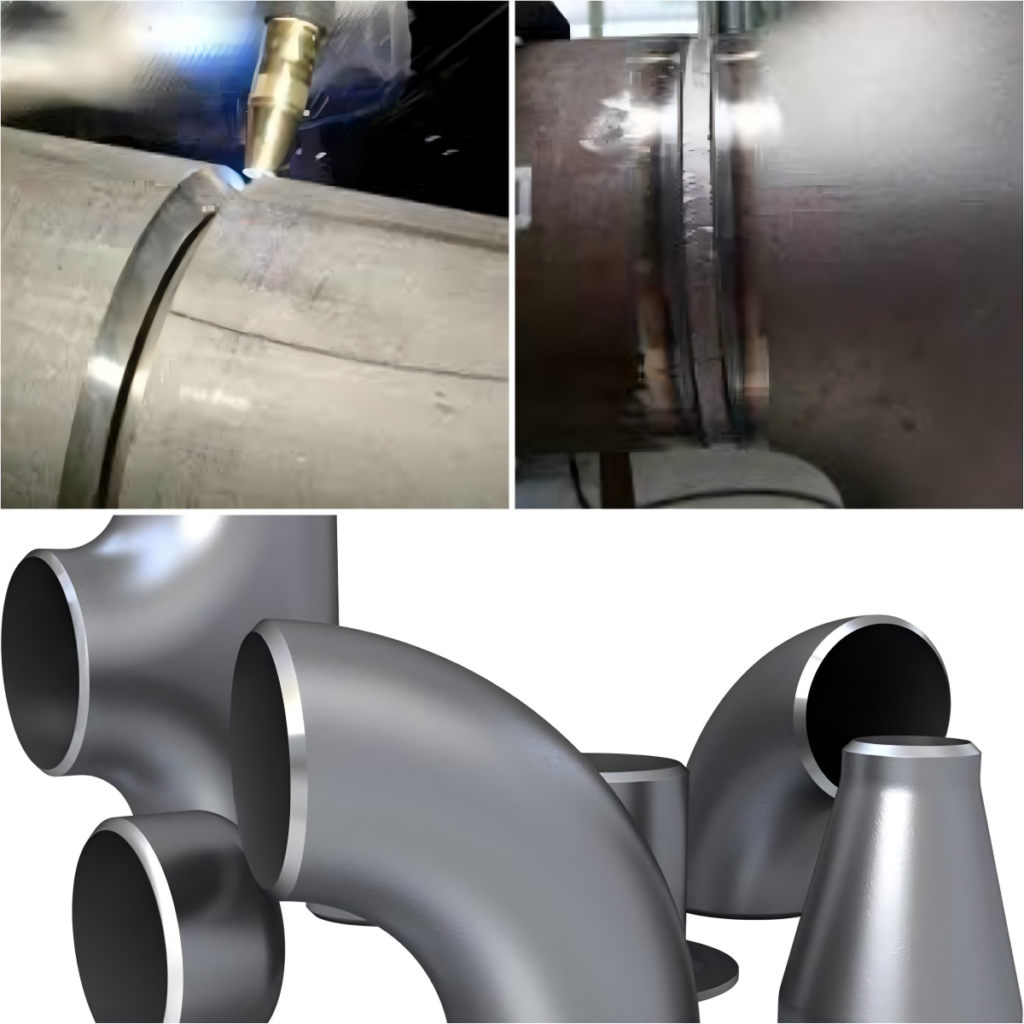
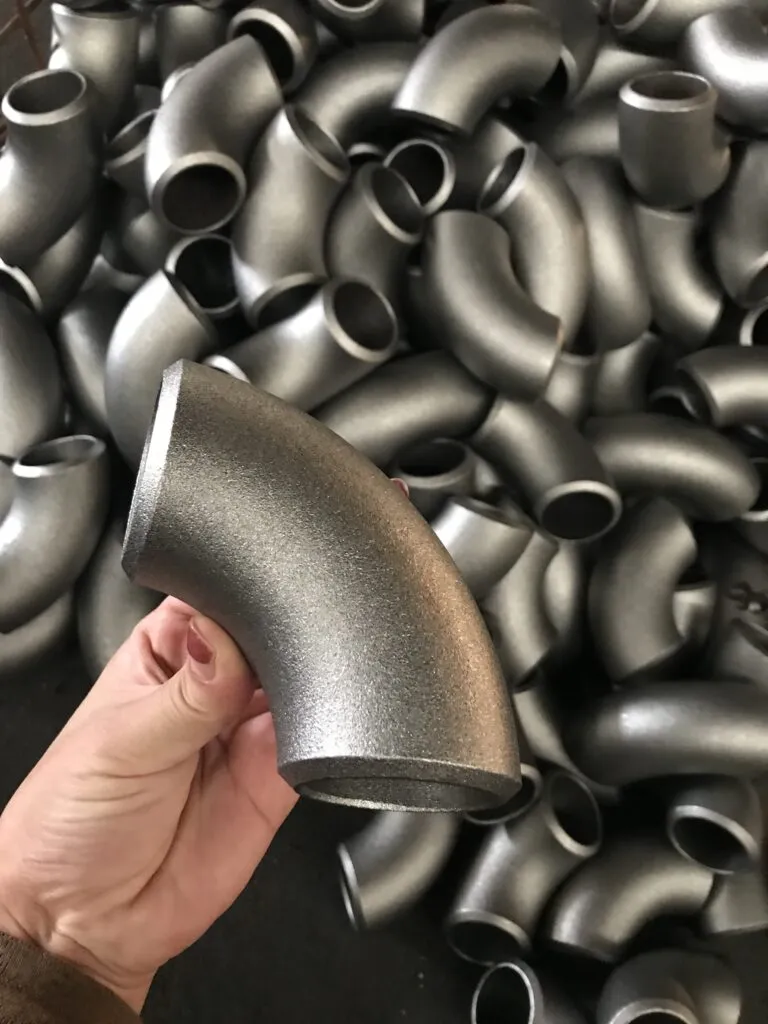
Butt-weld fittings are designed to be welded end-to-end with the pipe. This creates a “full penetration” weld that essentially makes the fitting and the pipe a single, continuous piece of metal.
- Governing Standard: ASME B16.9 (Dimensions) and ASTM A234 WPB (Material).
- Size Range: Generally used for pipes NPS 2 and larger, though available for smaller sizes in specific high-pressure applications.
Why Choose Butt-Weld?
- Unmatched Strength: Because the weld is as strong as the pipe itself, BW fittings are the only choice for high-pressure and high-temperature environments (e.g., steam lines or oil gas headers).
- Leak-Proof Integrity: It provides a permanent, leak-proof connection that can withstand significant thermal expansion and vibration.
- Smooth Internal Flow: The internal diameters of the pipe and fitting match perfectly, minimizing turbulence and pressure drop—a critical factor in long-distance transport pipelines.
The Trade-off:
Installation requires highly skilled welders and specialized equipment for “beveling” and alignment. It is also time-consuming, as multiple weld passes are often required.
2. Socket Weld Fittings (SW): Precision for Small-Bore Piping
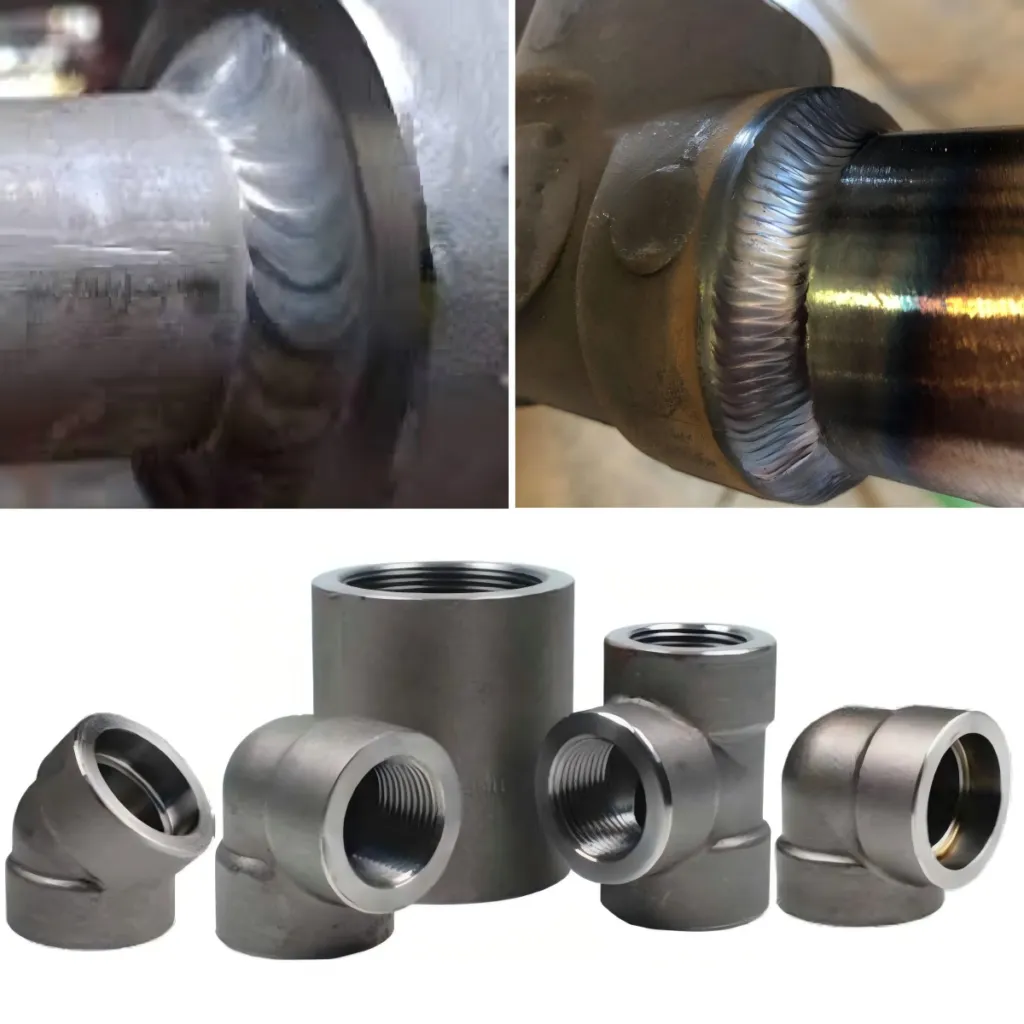
Socket weld fittings feature a recessed area (a “socket”) into which the pipe is inserted. A fillet weld is then applied around the top of the fitting to join it to the pipe.
- Governing Standard: ASME B16.11.
- Size Range: Typically used for small-bore piping (NPS 2 and below).
Why Choose Socket Weld?
- Easier Alignment: The socket acts as a guide, making it much easier to align the pipe and fitting compared to butt-welding. There is no need for “tack welding” or complex beveling.
- Cost-Effective Installation: Welders don’t need the same extreme level of precision required for BW, leading to faster assembly in complex, tight spaces.
- No Weld Protrusion: Unlike buttwelding, there is no risk of weld metal “icicles” protruding into the pipe, which is vital for systems that must remain perfectly clean internally.
A Critical Technical Note (The “Gap” Problem):
The biggest pain point with SW fittings is the “expansion gap.” Industry standards (and most piping codes) require a 1/16″ (1.5mm) gap between the pipe end and the bottom of the socket to allow for thermal expansion during welding. If the pipe is bottomed out, the weld is likely to crack under stress—a common cause of failure in poorly supervised projects.
3. Threaded (Screwed) Fittings: The Maintenance-Friendly Option
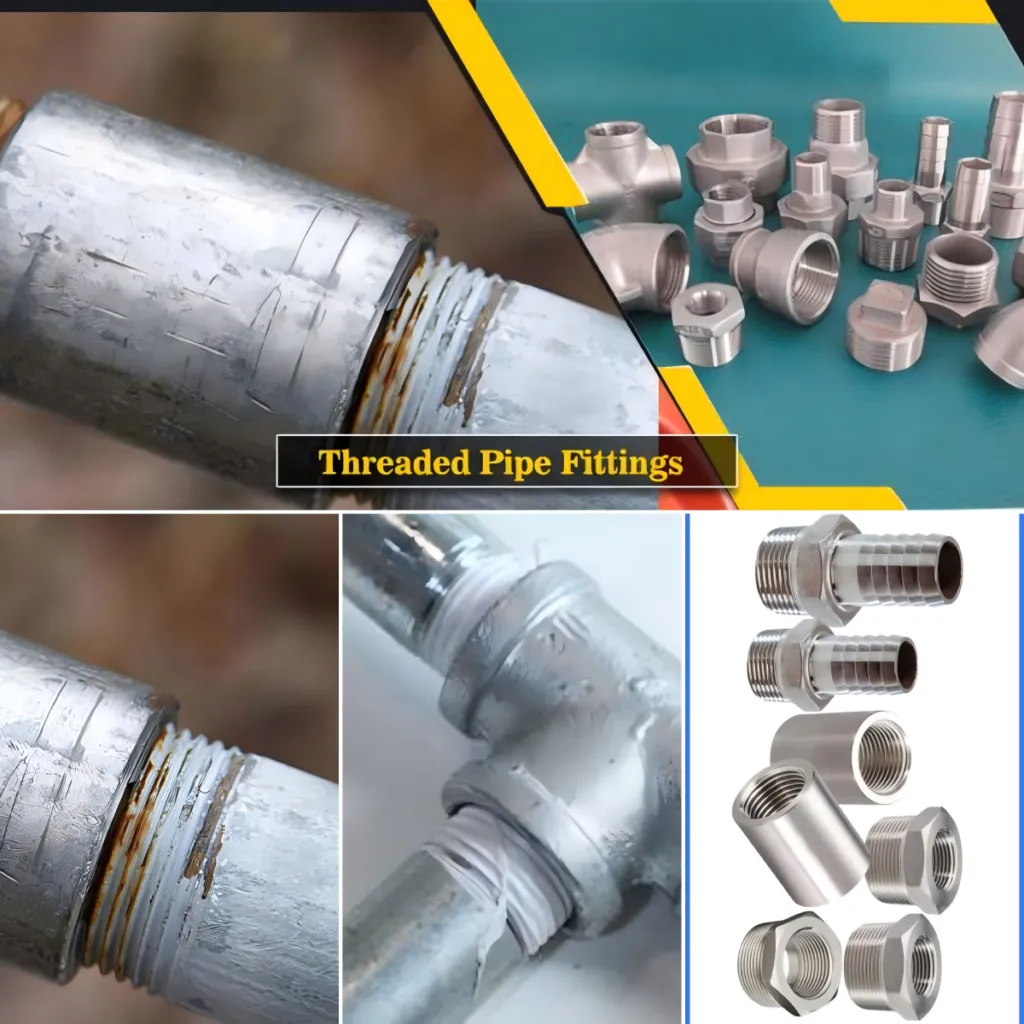
Threaded fittings connect to the pipe via tapered threads (usually NPT – National Pipe Thread). No welding is required for the primary seal, though “seal welding” is sometimes used in specific cases.
- Governing Standard: ASME B16.11.
- Size Range: Primarily NPS 2 and below, similar to Socket Weld.
Why Choose Threaded?
- Zero Fire Risk: Since no welding is involved, threaded fittings are ideal for areas where sparks or open flames are prohibited (explosive environments or “hot work” restricted zones).
- Ease of Disassembly: They are perfect for systems that require frequent maintenance, inspection, or temporary setups.
- Lower Labor Costs: No specialized welding certification is required; basic mechanical tools are sufficient for installation.
The Trade-off:
Threaded joints are prone to leaking under high-vibration conditions or rapid temperature cycles. They are generally restricted to low-pressure, non-critical services like water, air, or lubrication systems.
Technical Comparison Matrix: At a Glance
| Feature | Butt-Weld (BW) | Socket Weld (SW) | Threaded (THD) |
| Joint Strength | Highest (Full Strength) | High | Moderate |
| Common Sizes | NPS 2″ to 72″ | NPS 1/8″ to 4″ | NPS 1/8″ to 4″ |
| Weld Requirement | Full Penetration (V-Groove) | Fillet Weld | None (Optional Seal Weld) |
| Internal Flow | Excellent (Smooth) | Good (Slight Step) | Fair (Turbulence at threads) |
| Main Application | High Pressure/Temp | Small-bore Process Lines | Low-Pressure Utility |
| Cost of Fitting | Moderate | Higher (Precision Machined) | Moderate |
Industry Pain Points: Which One Solves Your Problem?
- The Corrosion Problem (Crevice Corrosion): In Socket Weld systems, the small gap between the pipe and the socket wall is a breeding ground for “crevice corrosion” in corrosive fluid service. If you are dealing with highly acidic or corrosive media, Butt-Weld is the safer long-term investment.
- Fatigue Failure: In systems with heavy vibration (near pumps or compressors), Threaded joints often fail at the root of the thread. Butt-Weld offers the best fatigue resistance, followed by Socket Weld.
- Space Constraints: In offshore modules or tight skid-mounted equipment, there isn’t always room for the bulky clamps needed for buttwelding. Socket Weld is often the “engineer’s compromise” for these scenarios.
Why Procurement Managers Trust RAYOUNG
Choosing the right type of fitting is only half the battle; the other half is ensuring the fitting actually meets the metallurgical standards it claims.
At RAYOUNG, we bridge the gap between technical requirements and project reality:
- Standard Mastery: Whether your project calls for ASME B16.9 (Buttweld) or ASME B16.11 (Forged SW/THD), our production lines are calibrated to the tightest tolerances.
- Material Integrity: We provide full traceability for Carbon Steel (A234 WPB, A105), Stainless Steel, and Alloy Steel. Every fitting leaves our factory with an EN 10204 3.1 Mill Test Certificate.
- The “One-Stop” Advantage: For large-scale distributors, we provide a unified supply chain. You can source your large-diameter BW elbows and your small-bore forged SW tees in a single shipment, ensuring consistent quality and simplified logistics.
Final Thoughts
There is no “best” fitting—only the right fitting for the specific application.
- Use Butt-Weld for high-pressure, large-diameter, and critical safety lines.
- Use Socket Weld for small-bore high-pressure lines where ease of assembly is needed.
- Use Threaded for low-pressure utility lines and areas where welding is impractical.
Still unsure which specification is right for your project’s MTO?
Our engineering team at RAYOUNG is ready to help you navigate the complexities of global piping standards. Contact us today for a technical consultation or a competitive quote.
Email: info@hb-steel.com
Tel/WhatsApp: +86-18003119682