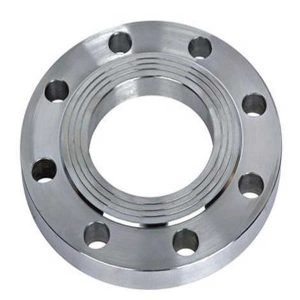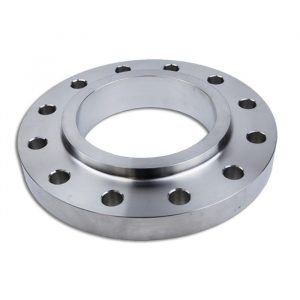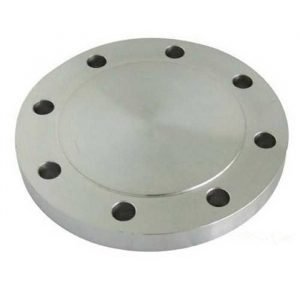

Short answer: In many international supply markets, “plain flange” and “plate flange” are used interchangeably to describe a flat, hubless flange made from plate or another permitted material form. However, the exact designation depends on the governing standard. For technical purchasing, EN 1092-1 Type 01, GB/T 9119 PL, or JIS B 2220 slip-on plate flange is more precise than using “plain flange” alone.
Both describe a flat, hubless disc cut from steel plate, slipped over a pipe end and fixed with fillet welds. “Plate” describes how it is made; “plain” describes what it does not have — no neck, no hub.
The confusion that costs money is elsewhere: “plain flange” is often mistaken for “flat face flange.” Those are two different decisions. A plate flange can be ordered with a raised face (RF) or a flat face (FF), and the face type changes the gasket, the mating flange and the sealing behaviour. Get that wrong and the joint leaks regardless of which name you used.
What the two names actually mean
| Term | What it points to | Where you will hear it |
| Plate flange | The engineering term. A flange made from plate, officially named “plate flange for welding” as EN 1092-1 Type 01 | European specs, engineering drawings, most manufacturer catalogues |
| Plain flange | Workshop shorthand for the same hubless disc — “plain” = unadorned, no neck | Chinese, Indian and Southeast Asian suppliers; maintenance and MRO buyers |
| Plate slip-on flange | Same part, described by how it attaches | Mixed ASME/EN project documents |
| Flat flange / ring flange | Loose aliases used in quotes and catalogues | Trade listings, informal enquiries |
| Flat face (FF) flange | A sealing face type, not a flange type — may be a plate flange, a weld-neck, or another type | All markets — highest risk of misreading |
Rule of thumb: if a clause mentions shape or manufacture, it is a flange type. If it mentions the sealing surface, it is a face type. “Plain flange” sits in the first group.

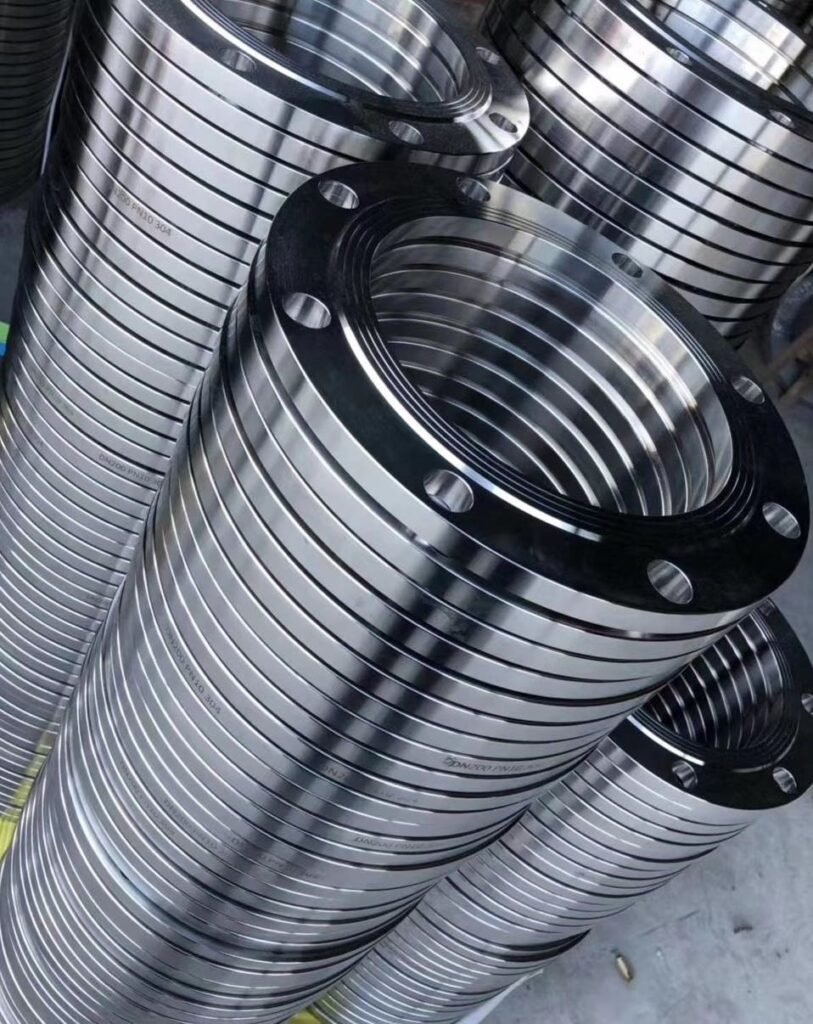
One product, one construction
Strip away the naming and the part is identical in every respect that matters:
- A single flat circular plate, laser-, plasma- or waterjet-cut from rolled steel plate, then drilled.
- Bore is slightly larger than the pipe outside diameter so the flange slides over the pipe. It is not a press fit.
- Bolt holes follow a standard pitch circle diameter (PCD) so the flange mates with a valve, pump or matching flange from the same standard.
- No hub and no tapered neck. That is the defining feature.
- Attachment is by fillet weld, normally one bead at the pipe-to-face side and one at the back of the plate. Some light-duty jobs weld only the outside, which halves joint strength and is not a code default.
- Because the load path runs through fillet welds rather than a forged transition, the part is economical but limited to low- and moderate-pressure, low-to-moderate-temperature service. Cyclic loading, severe vibration and high-pressure steam are outside its lane.
Important ASME B16.5 limitation. ASME B16.5 defines slip-on flanges with a hub, not the conventional flat, hubless plate flange commonly sold in international markets. Its material requirements also restrict the use of plate and flat-bar materials to blind flanges and reducing flanges without hubs.
A hubless plate flange manufactured with ASME-style dimensions should not automatically be described or certified as an ASME B16.5 slip-on flange. Dimensional similarity does not establish full compliance with the standard. For ASME-governed piping systems, confirm the applicable design code, material specification and engineering approval before accepting a substitution.
Chinese and Japanese standards sit in the same family: GB/T 9119 and HG/T 20592 call it PL (板式平焊法兰), JIS B2220 distinguishes between slip-on plate flanges (SOP) and slip-on hubbed flanges (SOH). These are separate flange constructions and should not be treated as interchangeable when preparing a purchase order.
Which name is used where
| Market | Preferred wording | Governing standard | Note |
| EU, UK, Germany, France, Nordics | Plate flange, EN 1092-1 Type 01 | EN 1092-1, legacy DIN 2573/2576, BS 4504, BS 10 tables | PN10 and PN16 dominate water and building services |
| United States, Canada | Slip-on flange formally; “plate flange” for the hubless budget option | ASME B16.5, AWWA C207 for large-diameter water | “Plain flange” is uncommon and may be read as “unfaced/uncoated” |
| Middle East (GCC), North Africa | Plate flange in catalogues; project specs usually say ASME | ASME B16.5, sometimes EN 1092-1 | Follow the project specification, not the supplier’s title |
| China, Taiwan, Korea | Plain flange and plate flange used interchangeably; 板式平焊法兰 (PL) domestically | GB/T 9119, HG/T 20592, JIS B2220 | Most export listings carry both English names |
| India, Southeast Asia | Plain flange is very common in listings, plate flange equally accepted | ASME B16.5, BS 10, EN 1092-1 | Confirm the standard before comparing prices |
| Japan | Plate slip-on flange | JIS B2220 5K / 10K | 5K and 10K are not interchangeable with PN ratings |
For a supplier query, write both names once — “plate flange (plain flange), EN 1092-1 Type 01, PN16, DN100, RF” — and you will stop the alias problem at source.
Where these flanges earn their place
Plate/plain flanges show up wherever a joint is frequent, dismantled often, and not pushed hard:
- Water supply, treatment and distribution — the largest single user, including AWWA C207 large-diameter work.
- HVAC and building services — chilled water, heating loops, ventilation duct connections.
- Fire protection — sprinkler mains and fire pumps, where low cost and fast installation matter.
- Marine and shipbuilding — low-pressure cooling, ballast and general service lines.
- General process industries — low-pressure, non-hazardous fluids; food and beverage and pharmaceutical utilities usually in stainless steel.
- Power station auxiliaries — cooling water and service water, not main steam.
- Irrigation, mining slurry water and temporary bypass lines.
They are a poor choice for high-pressure steam, toxic or flammable media, and equipment interfaces with heavy vibration or thermal cycling. In those cases the extra cost of a weld-neck flange buys a forged transition and a butt weld that survives the load.
How the joint goes together
- Slide the flange over the pipe. Check the bore clearance against the actual pipe OD and schedule — nominal size alone is not enough.
- Set the depth and align. Face the flange square to the pipe axis. A cocked plate flange is almost impossible to pull tight with bolts.
- Tack, then weld. Two fillet welds (inside and outside) are normal. Keep weld metal out of the gasket seating area.
- Match the faces. FF mates with FF and uses a full-face gasket covering the bolt circle. RF mates with RF and uses a raised-face gasket. An RF-to-FF pairing is a classic leak path — one of the two faces will not seat.
- Fit the gasket and bolts. Use the gasket material the media and temperature call for: rubber or non-asbestos fibre for water, spiral-wound or graphite for higher temperature.
- Tighten in a cross pattern, in two or three passes to the specified torque. Uneven bolt load on a thin plate flange distorts it.
One practical detail: because the plate is thin and the weld sits close to the face, never assume a spare gasket from another flange type will work. Full-face gaskets are the safe default for FF plate flanges.
Telling it apart from the neighbours
| Compared with | How to spot the difference |
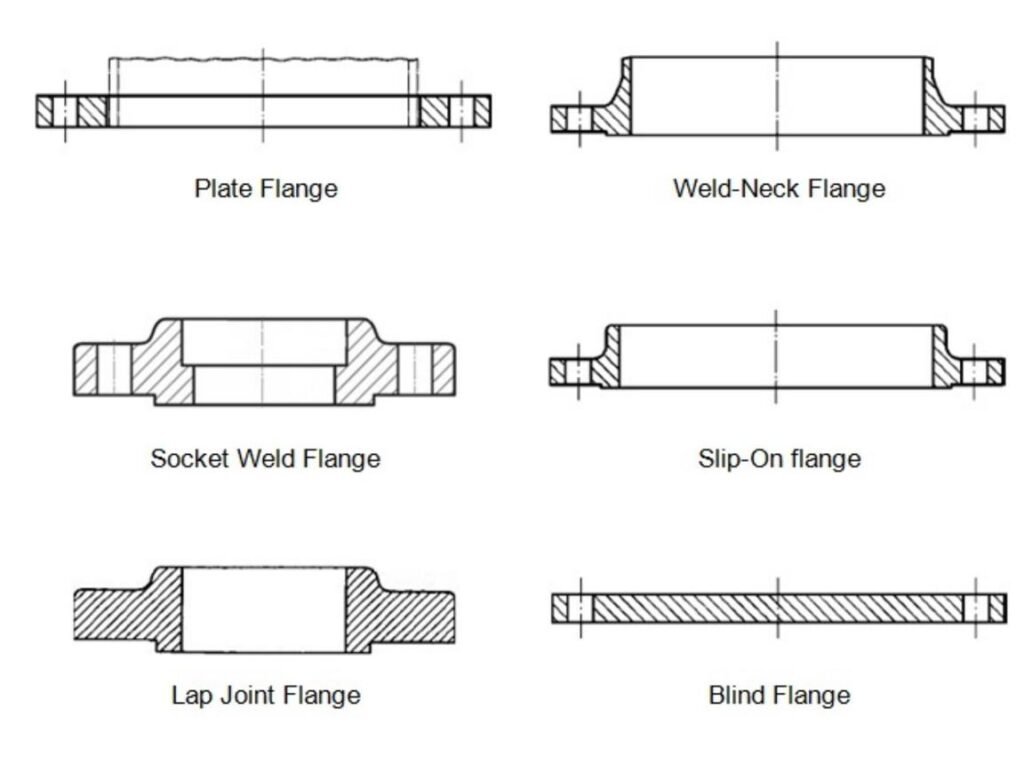
| Slip-on (SO) flange | SO has a short hub rising from the plate; plate flange is flat top to bottom |
| Weld-neck (WN) flange | WN has a long tapered neck and joins the pipe with a butt weld; plate flange uses fillet welds |
| Lap joint flange | Lap joint is a loose ring that rotates around a stub end; it does not weld directly to the pipe |
| Blind flange | Blind has no centre bore; plate flange has one |
| Socket weld flange | Socket weld has a counterbore the pipe inserts into; plate flange bore passes straight through |
EN 1092-1 plate flanges are typically stamped with the standard, Type 01, DN, PN, facing and material (for example EN 1092-1 Type 01 DN100 PN16 RF P250GH). No hub, a flat profile, and a two-bead fillet weld at the pipe are the physical tells.
Ordering checklist: what to pin down before the quote
- Standard and type, not just the name. “Plain flange” alone is not a specification. Write EN 1092-1 Type 01, hubless plate flange to ASME B16.5 dimensions (non-code, with design approval), BS 4504, JIS B2220 10K and so on.
- DN/NPS plus pipe OD and schedule. The bore has to suit the actual tube.
- PN or Class rating against design pressure and temperature, not against the highest number the supplier offers.
- Facing: FF or RF, stated explicitly. This is the single most common ordering error with plate flanges.
- Material and grade — P235GH/P265GH (plate) or P250GH (forged), S235JR for EN service; ASTM A36/A516 Gr.70/A240 (plate) or A105/A182 F304/F316 (forged blanks) for ASME-dimension service. Match the pipe material.
- Certificate and traceability — EN 10204 3.1/3.2 or mill test report, heat number stamped on the part.
- Coating — hot-dip galvanized, epoxy or paint for water and outdoor service; bare or pickled for many process lines.
- Bolting and gaskets — confirm whether they are included, and which standard they follow.
- Marking requirements — project specs often demand standard, size, material and heat number on the rim.
- Code acceptance — if the line is ASME B16.5 governed, get written confirmation that a hubless plate flange is acceptable before production starts.
- Tel/whatsapp: +86-18003119682
- Emails: info@hb-steel.com
Frequently asked questions
Is a plain flange the same as a plate flange? Yes. Both names refer to the same flat, hubless slip-on flange. “Plate” refers to the manufacturing method; “plain” refers to the absence of a hub. There is no performance difference between the two names.
Is a plate flange the same as a flat face flange? No. Plate flange is a flange type; flat face is a sealing face type. A plate flange can come with either RF or FF. Always state both the type and the facing in an enquiry.
Can a plate flange be used on an ASME B16.5 line? Only with design approval. ASME B16.5 defines a hubbed slip-on, not a hubless plate flange. The hubless version is a cost-driven project variant that shares the slip-on dimensions but omits the hub.
What pressure can a plate flange handle? It depends on standard, size, material and temperature. Under EN 1092-1, Type 01 is commonly supplied from PN6 to PN40, with PN10 and PN16 the volume ratings. Check the pressure-temperature table for the exact grade; never use the PN number as a universal limit.
Does a plate flange need one weld or two? Normally two fillet welds, one each side of the plate. Some low-duty services use an outside weld only, but that is a design decision, not a default.
Which gasket fits a plate flange? A full-face gasket for flat face flanges; a raised-face gasket such as spiral-wound or graphite for RF flanges. Match the gasket material to the media and temperature.
Are plate flanges cheaper than weld-neck flanges? Yes, typically. They use less steel, need no forging and take less machining, which is why they are specified for low-pressure, high-volume work. The saving disappears if the flange is used outside its rating and the joint fails.
How do I identify a plate flange on site? No neck, flat disc profile, bore slightly larger than the pipe, and fillet weld beads at the pipe-to-plate joint. Standard markings such as “Type 01” or “PL” confirm it.
Need plate flanges or plain flanges to a specific standard? Send the standard, size, rating, facing and material and we will quote against the drawing rather than the name.
- Tel/whatsapp: +86-18003119682
- Emails: info@hb-steel.com