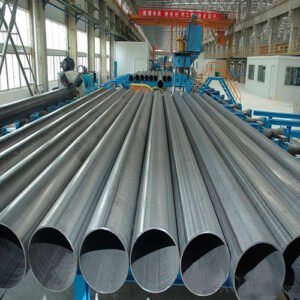

In the global infrastructure and energy sectors, where high-pressure pipelines and heavy-duty structural integrity are paramount, LSAW (Longitudinal Submerged Arc Welded) steel pipe stands as the gold standard.
For distributors and project engineers in the oil and gas industry, choosing the right pipe is not just about cost—it’s about risk management and long-term performance.
This comprehensive guide explores everything you need to know about LSAW pipes to optimize your next procurement.
What is LSAW Steel Pipe?
LSAW steel pipe is produced by taking a wide steel plate and forming it into a “U,” “O,” or “J” shape, then welding the longitudinal seam using submerged arc welding. Unlike ERW (Electric Resistance Welded) pipes, LSAW utilizes a filler metal and is specifically designed for high-strength, large-diameter, and heavy-wall applications.
For most high-pressure gas pipelines and offshore structural piling, LSAW is the preferred choice due to its superior weld quality and uniform wall thickness.
Longitudinally Submerged Arc Welding Steel Pipe Features:
- Large diameter
- Thick walls
- High-pressure resistance
- Low temperature resistance
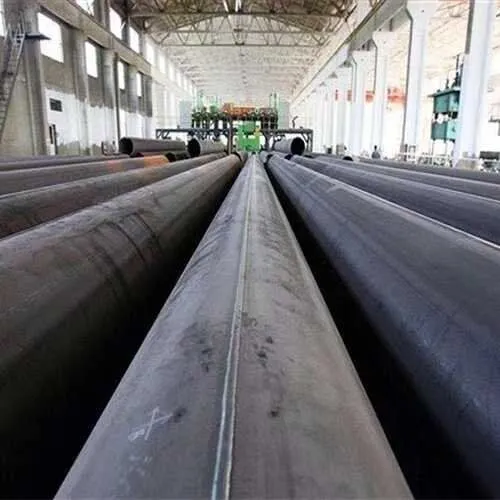
LSAW Steel Pipe vs. SMLS, ERW, and SSAW: Which is Better?
Choosing between different pipe types can be confusing. Here is a technical breakdown:
- LSAW vs. SMLS (Seamless): SMLS is excellent for small diameters, but once you exceed 24 inches (610mm), LSAW becomes much more cost-effective and available in larger sizes and thicker walls.
- LSAW vs. ERW: ERW is typically for lower-pressure, smaller-diameter pipes. LSAW can handle significantly higher pressures and harsher environments.
- LSAW vs. SSAW (Spiral): While SSAW is cheaper to produce, LSAW has lower internal stress and higher dimensional accuracy. In critical oil and gas pipelines, LSAW is often mandated by international standards over SSAW due to its superior safety profile.
Difference between SMLS, ERW, LSAW, and SSAW steel pipe
Technical Specifications and Standards
At RAYOUNG, our LSAW steel pipes comply with rigorous international standards to ensure compatibility with global projects.
1. Key Manufacturing Standards
- API 5L (PSL1 & PSL2): The primary standard for line pipes in the oil and gas industry.
- ASTM A671 / A672: For high-pressure service at atmospheric or lower temperatures.
- EN 10219: For cold-formed welded structural hollow sections.
2. Common Specifications
- Outside Diameter (OD): 16″ (406.4mm) to 60″ (1524mm) is the standard range for most LSAW mills.
- Wall Thickness (WT): Up to 60mm (depending on the grade).
- Length: 6m to 12.5m (Fixed or random lengths).
The JCOE Process: Precision in Manufacturing
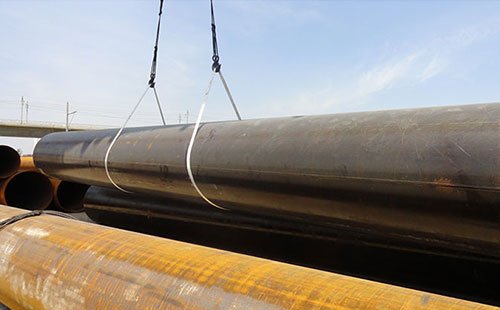
LSAW pipes at RAYOUNG are typically manufactured using the JCOE process. This involves:
- J-Forming: Pressing the plate into a “J” shape.
- C-Forming: Converting it to a “C” shape.
- O-Forming: Finalizing the “O” shape.
- E-Expansion: The most critical step. Cold expansion improves dimensional accuracy and eliminates internal stress.
Quality Control: The RAYOUNG Standard
For an industrial project, a pipe failure is catastrophic. Our quality control (QC) protocol for LSAW steel pipes includes:
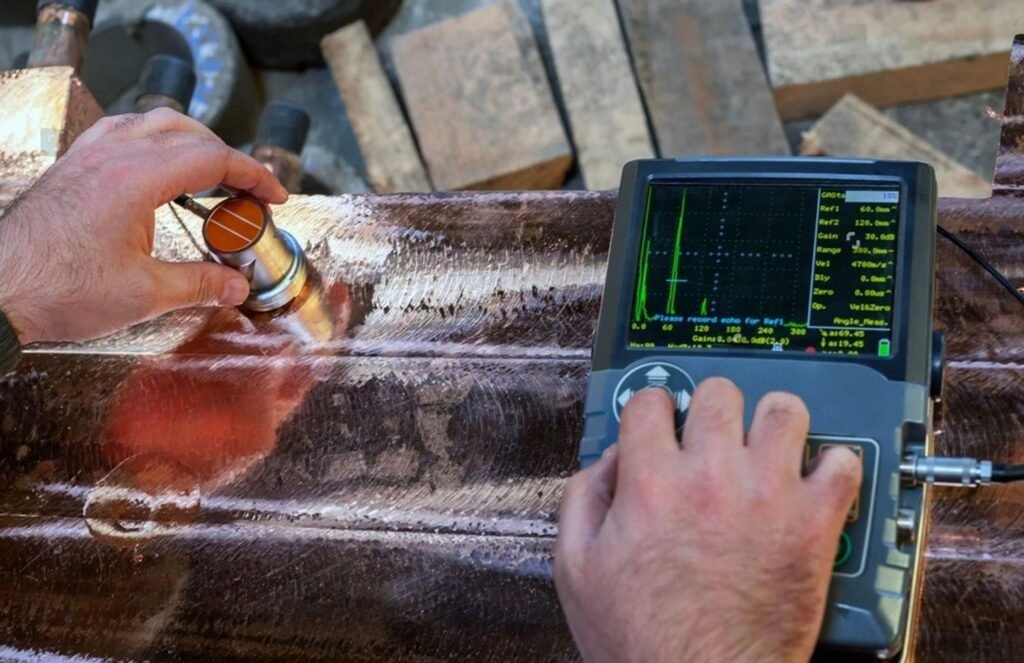
- 100% UT (Ultrasonic Testing): Scanning the weld seam for internal defects.
- RT (Radiographic Testing): X-ray inspection to verify weld integrity.
- Hydrostatic Test: Every pipe is tested under pressure to ensure no leaks or bursts.
- MTC 3.1 & 3.2: Full traceability of chemical composition and mechanical properties (Tensile, Yield, Impact).
- Bevel End Inspection: Ensuring the ends are perfectly prepared for on-site welding.
How to Choose a Reliable LSAW Steel Pipe Supplier
When sourcing from China or other global markets, look for these three pillars:
- Certifications: Does the supplier hold API 5L, ISO 9001, and CE certificates?
- Project History: Can they show a track record of supplying to the oil, gas, or piling industries?
- Third-Party Inspection (TPI): A reliable supplier like RAYOUNG welcomes inspections from SGS, BV, or Moody to verify quality before shipment.
How to Order LSAW Steel Pipes: A Checklist for Buyers
To get an accurate quote and avoid delays, ensure your RFQ (Request for Quote) includes:
- Standard & Grade: (e.g., API 5L Grade B PSL2 or X52).
- Dimensions: OD and Wall Thickness (e.g., 48″ x SCH 40).
- Coating Requirements: (e.g., Bare, Black Vanish, 3PE, or FBE).
- End Finish: (Beveled or Plain).
- Quantity: (Total meters or tonnage).
LSAW Steel Pipes FAQ
Q: Why is LSAW more expensive than SSAW?
A: LSAW uses heavy steel plates and a more complex JCOE forming process, resulting in higher dimensional accuracy and lower residual stress, which justifies the premium.
Q: Can LSAW pipes be used for piling?
A: Absolutely. LSAW is ideal for structural piling in bridge and marine construction due to its high load-bearing capacity.
Q: What is the maximum diameter for LSAW?
A: While most projects use up to 60 inches, some specialized mills can produce up to 80 inches for specific structural needs.
Conclusion: Partner with RAYOUNG for Your Next Pipeline Project
Whether you are a steel pipe distributor looking to stock premium LSAW pipes or a project manager overseeing a major pipeline, RAYOUNG is your trusted partner. Our commitment to quality, from raw plate selection to final shipping, ensures your project stays on schedule and on budget.
Ready to discuss your LSAW requirements?
Visit our LSAW Product Page or Get a Quick Quote from our technical sales team today.