

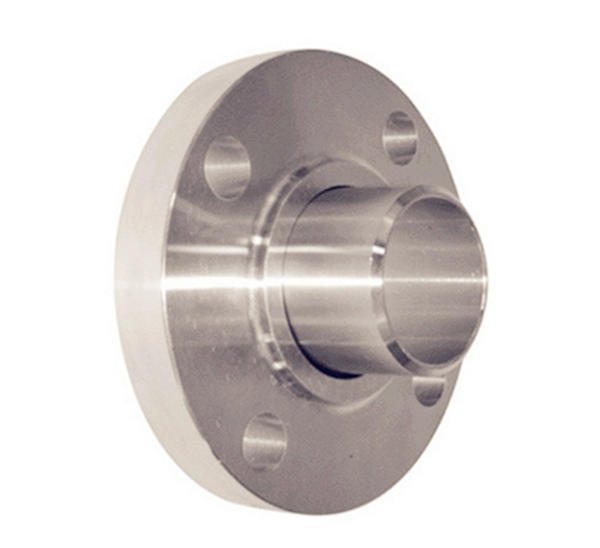
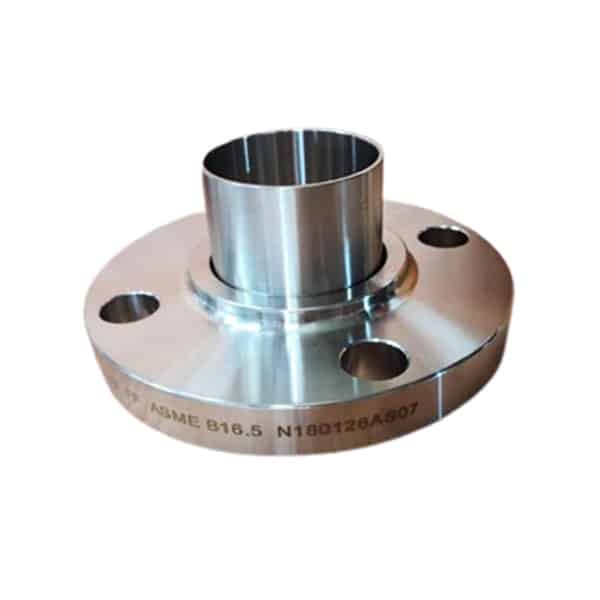
A Lap Joint Flange is a specialized component used in a two-part assembly. It consists of a Stub End (which is butt-welded to the pipe) and the backing flange itself. Unlike other styles, a lap joint flange is not welded to the pipe. Instead, it slides over the pipe and sits behind the stub end.
In the industry, you may hear these referred to by several names:
Loose Flange
Backing Flange
Stub End Flange
Vanstone or Backing Ring
1. Do I Need to Buy the Lap Joint Flange and Stub End Together?
Not necessarily, but you must confirm compatibility.
A lap joint flange is a loose backing flange that fits over the pipe. The stub end is welded to the pipe and provides the lapped face for the gasketed connection. The backing flange can rotate before bolting, making alignment easier during installation.
The two components have different functions and may follow different material and dimensional specifications. When ordering them separately, confirm that the dimensions and mating requirements are compatible.
For procurement teams, the safest approach is to specify whether you need the backing flange only or a complete flange-and-stub-end assembly.
2. Which Standards Should I Specify?
For common ASME piping systems, two standards are particularly relevant:
- ASME B16.5: Covers pipe flanges and flanged fittings within its scope, including dimensions and pressure-temperature ratings.
- ASME B16.9: Covers factory-made wrought buttwelding fittings, including applicable stub ends.
The required standard and edition should be stated in the purchase order. Other standards may apply to different piping systems or project specifications.
Do not assume that specifying ASME B16.5 alone fully defines the stub end. The supplier must also confirm the appropriate stub end specification, dimensions, and material requirements.
If your project uses EN, DIN, JIS, or another standard, identify it clearly before requesting a quotation.
3. Which Material Should I Choose for a Lap Joint Flange?
Material selection depends on the fluid, operating conditions, corrosion environment, and applicable engineering requirements.
Common purchasing considerations include:
- Carbon steel: Often considered for general industrial piping where the design and service conditions permit it.
- Stainless steel: Used where corrosion resistance is required, depending on the specific grade and service.
- Alloy steel: Selected for applications requiring particular mechanical or temperature properties.
One potential cost advantage of a lap joint assembly is that the backing flange and stub end do not always need to use the same material. In suitable applications, a carbon steel backing flange may be paired with a corrosion-resistant stub end.
However, the stub end is the component exposed to the process fluid, and the complete assembly must meet the applicable design requirements. The backing flange must also be suitable for its pressure, temperature, and external environment.
Always specify the exact material grade for each component rather than requesting only a general material category.
4. What Information Do I Need to Request an Accurate Quotation?
A quotation based only on “lap joint flange, 4 inch” is incomplete. Suppliers need enough information to identify the correct product configuration.
Include the following details in your request:
| Purchasing item | Information to provide |
|---|---|
| Size | Nominal pipe size |
| Standard | Applicable flange and stub end standards |
| Pressure class | Required class or design specification |
| Material | Exact grade for the flange and stub end |
| Stub end | Type, pattern, wall thickness or schedule, as applicable |
| Quantity | Quantity for each size and configuration |
| Inspection | Required testing, certificates, and third-party inspection |
| Delivery | Destination, packaging, and required delivery date |
Drawings and a bill of materials are particularly useful for project orders or mixed-size purchases. Complete specifications also make supplier quotations easier to compare on an equivalent basis.
5. How Can I Avoid Compatibility Problems?
The main risk is assuming that matching nominal sizes automatically means that two components will fit correctly.
Before production, ask the supplier to verify the relevant dimensions of the backing flange and stub end against the specified standards and project requirements. This includes the interface between the two components and the compatibility of the assembled connection with the mating flange and gasket.
For mixed-supplier orders, provide the actual drawings or dimensional requirements rather than relying on catalog descriptions alone.
Where required, request a dimensional inspection report or assembly drawing for approval before shipment. This is especially valuable for project-specific orders and components with additional dimensional requirements.
6. What Quality Documents Should a Lap Joint Flange Supplier Provide?
The required documentation depends on the purchase order, project specification, and applicable standards.
Before ordering, clarify whether you need:
- Material test certificates and heat number traceability.
- Dimensional inspection records.
- Applicable test reports.
- Product marking and identification.
- Third-party inspection reports, where required.
- Packing lists and other export documents.
Do not assume that every order automatically includes every certificate or inspection service. State your requirements when requesting the quotation and confirm them before production.
For distributors, consistent identification and documentation help with stock management and customer requirements. For EPC contractors, they support project inspection and material acceptance.
7. How Do I Choose a Reliable Lap Joint Flange Manufacturer in China?
Price matters, but the supplier’s ability to fulfil the specified order matters just as much.
When evaluating a lap joint flange supplier, consider the following:
Manufacturing experience: Check whether the company has relevant experience supplying industrial flanges and related piping products.
Product capability: Confirm the required sizes, pressure classes, materials, and configurations are within its actual supply scope.
Quality coordination: Ask how dimensions, material identification, inspection, and documentation will be handled.
Order management: Confirm production scheduling, packaging, shipping arrangements, and communication responsibilities.
Long-term suitability: For stockists and distributors, consider whether the supplier can support repeat orders and coordinate different product categories.
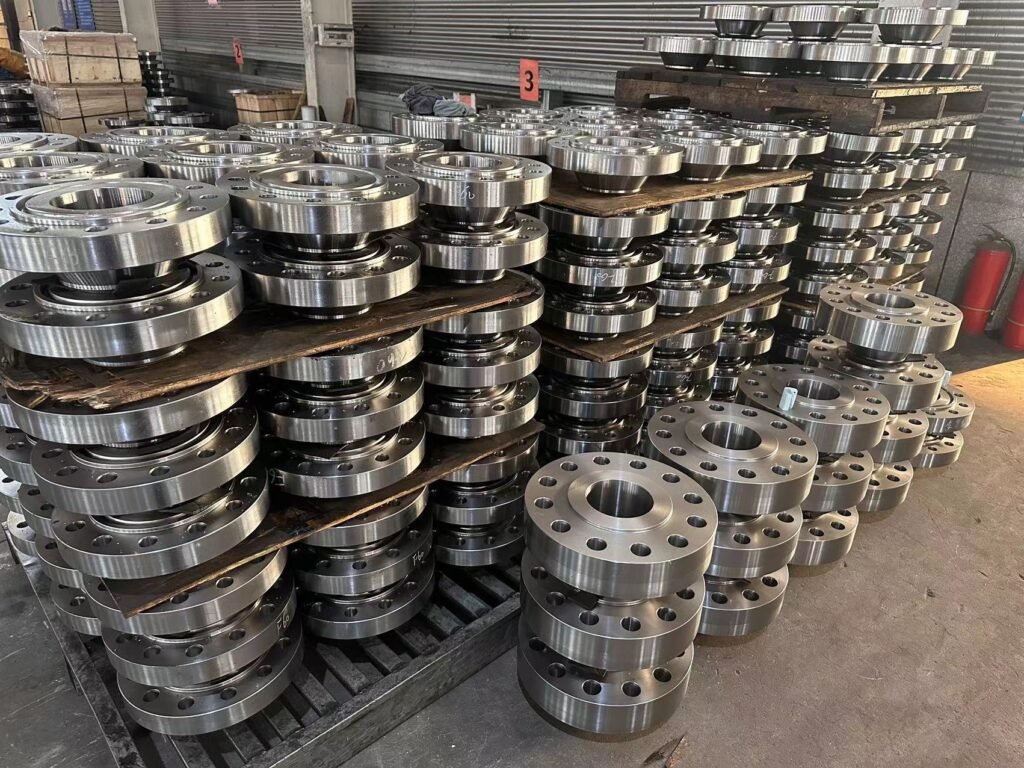
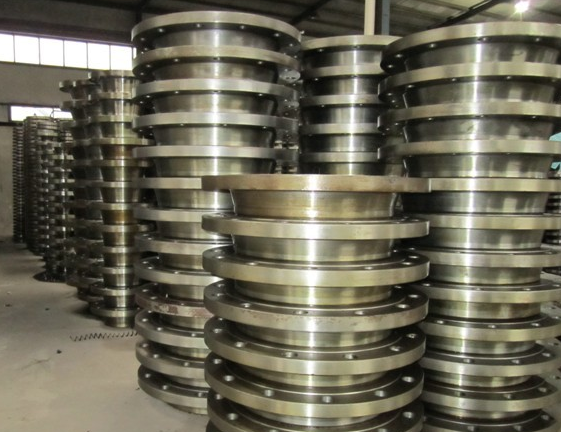
RAYOUNG, Hebei Rayoung Pipeline Technology Co., Ltd., is based in Cangzhou, Hebei, China. The company has been involved in industrial pipe fitting and flange manufacturing since 1983, with a manufacturing base of approximately 35,000 square meters and a team of more than 100 people.
Our product range includes industrial flanges, butt weld pipe fittings, and steel pipes. We welcome inquiries from distributors, stockists, trading companies, and EPC contractors seeking a supplier for their specified requirements.
You can explore our lap joint flange product range for further product information.
8. How Can I Get a Quotation for Lap Joint Flanges?
To help us review your requirements, send your size list, pressure class, material grades, applicable standards, quantities, and destination details. If stub ends are required, include their specifications and confirm whether you need a complete matched assembly.
Our team can review the inquiry and discuss product availability, inspection requirements, and delivery arrangements based on the order details.
For additional technical information, read our guide to lap joint flange specifications and applications.
Looking for a lap joint flange manufacturer or supplier in China?
Contact RAYOUNG with your inquiry and technical requirements. We aim to make the quotation process clear from the beginning, helping buyers confirm what they need before placing an order.
Contact our team to discuss your next lap joint flange purchase.
1 thought on “Lap Joint Flanges: 8 Questions Often Ask Before Ordering”
Bookmarking this one on “Lap Joint Flanges: 8 Questions Often Ask Before Ordering”. While we’re on the subject, Siemens PLC has a solid write-up that pairs well with it.