
In the world of industrial piping, a flange is more than just a connector; it is the structural foundation of a system’s integrity. Whether you are dealing with high-pressure oil lines or municipal water systems, understanding industrial flange dimensions is critical for ensuring leak-proof performance and operational safety.
This guide breaks down everything you need to know about flange dimensions, standards, and the requirements specific industries dictate.
1. Why Flange Dimensions Matter?
Flange dimensions are standardized to ensure that components from different manufacturers can be integrated seamlessly. A mismatch of even a few millimeters in the Bolt Circle Diameter (BCD) or the thickness can lead to catastrophic failure under pressure.
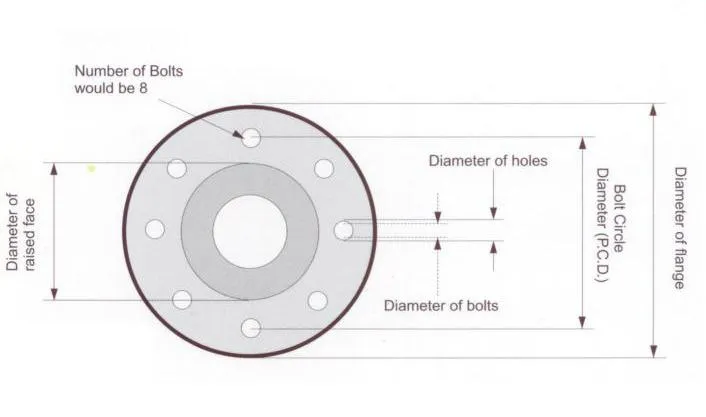
Key dimensional parameters include:
- Outside Diameter (OD): The total width of the flange.
- Nominal Pipe Size (NPS): The standard designating the size of the pipe the flange attaches to.
- Bolt Circle Diameter (BCD): The diameter of the circle passing through the center of the bolt holes.
- Thickness: The depth of the flange, which determines its pressure-bearing capacity.
- Hub Diameter: The width of the “neck” where the flange meets the pipe.
2. Universal Standards for Flange Dimensions
To maintain global compatibility, flanges are manufactured according to several major standards:
ASME/ANSI B16.5
This is the most common standard for flanges ranging from 1/2″ to 24″. It classifies flanges by “Pressure Classes” (150, 300, 600, 900, 1500, and 2500). As the class number increases, the flange becomes thicker and more robust to handle higher pressures.
ASME B16.47
For larger industrial projects requiring pipes over 24 inches, ASME B16.47 (Series A and Series B) is the go-to standard.
- ASME B16.47 Series A flanges are thicker and heavier, designed for higher external loads.
- ASME B16.47 Series B flanges have more, yet smaller, bolt holes and are often preferred for more compact spaces.
DIN / EN 1092-1
Used extensively in Europe, these standards use the Metric system (PN – Pressure Nominal). Common ratings include PN10, PN16, PN25, and PN40.
3. Industry-Specific Requirements: Which Size and Standard Fits Your Sector?
Different industries have unique demands regarding flange dimensions, materials, and pressure ratings. Below is a breakdown of how various sectors approach flange selection.
Oil, Gas, and Petrochemical
- Common Sizes: 2″ to 36″ (Small for refineries, large for cross-country pipelines).
- Standard Requirements: Typically ASME B16.5 and API 6A (for wellhead equipment).
- Key Needs: This industry prioritizes high-pressure ratings (Class 600, 900, and 1500). Dimensions must account for “Ring Type Joint” (RTJ) facings, which are used to create a metal-to-metal seal in extreme environments.
- Common Materials: Carbon steel (A105) and Alloy steel to resist corrosion and high temperatures.
Water Treatment and Desalination
- Common Sizes: 24″ to 120″ (Large diameter).
- Standard Requirements: AWWA (American Water Works Association) C207.
- Key Needs: Because water systems operate at lower pressures compared to oil, flanges are often thinner. The AWWA standard allows for larger dimensions without the massive weight of an ASME-rated flange, making it more cost-effective for municipal infrastructure.
Chemical Processing and Pharmaceuticals
- Common Sizes: 1/2″ to 12″.
- Standard Requirements: ASME B16.5 and DIN/EN.
- Key Needs: Precision is vital here. In pharmaceutical lines, “tri-clamp” or hygienic flanges are used, but for chemical transport, Stainless Steel (316L) flanges are standard. Dimensions must ensure a smooth bore to prevent “dead zones” where chemicals could accumulate and corrode the metal.
Power Generation (Nuclear and Thermal)
- Common Sizes: Variable, but often involves high-pressure steam lines.
- Standard Requirements: ASME Section III (Nuclear) or B31.1 (Power Piping).
- Key Needs: Flange dimensions in power plants must accommodate thermal expansion. High-pressure steam often requires Class 2500 flanges with reinforced hubs to withstand constant vibration and heat cycles.
Shipbuilding and Marine Engineering
- Common Sizes: 1″ to 24″.
- Standard Requirements: JIS (Japanese Industrial Standards) or DIN.
- Key Needs: Space is at a premium on vessels. Marine flanges often follow JIS B2220 standards, which emphasize a more compact design than their ASME counterparts while maintaining high resistance to salt-water corrosion.
Small Sizes (1/2” to 24”): Primarily used in commercial piping, HVAC, compressed air systems, light chemical facilities, and residential plumbing. These generally align with Class 150 to Class 300 pressure ratings.
Medium Sizes (24” to 60”): Frequently seen in process plants, oil & gas refineries, midstream pipelines, and power generation boilers. These require heavy-duty flanges (Classes 400 to 2500) built for high-temperature and extreme-pressure containment.
Large Sizes (60” and above): Utilized heavily in municipal waterworks, large-volume sewage treatment facilities, and wind power infrastructure. These follow standard guidelines like AWWA C207 for heavy-duty, low-pressure volume
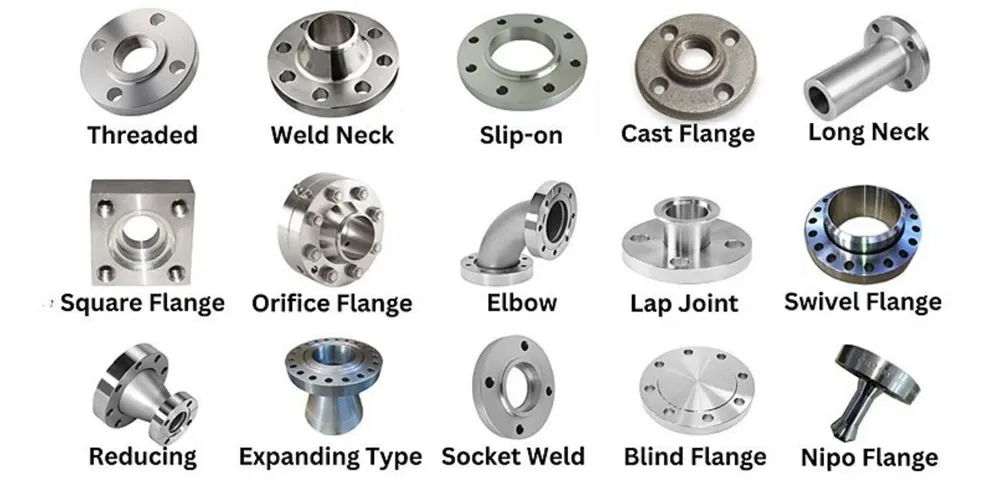
4. How to Ensure You Order the Right Flange
When consulting with a supplier like us, always have the following data points ready:
- Standard: (ASME, DIN, JIS, or AWWA?)
- Type: (Weld Neck, Slip-on, Blind, or Socket Weld?)
- Pressure Rating: (e.g., 150# vs 300#)
- Pipe Schedule: (For Weld Neck flanges, the internal bore must match the pipe’s wall thickness).
- Facing: (Raised Face, Flat Face, or RTJ?)
Conclusion
Industrial flange dimensions are more than just numbers on a chart—they are the language of global engineering. By understanding the specific needs of your industry, whether it’s the high-pressure demands of Oil & Gas or the large-scale requirements of Water Treatment, you can ensure a safer and more efficient piping system.
At RAYOUNG/JS FITTINGS, we specialize in providing high-quality flanges that meet and exceed international standards. Looking for a specific size or custom dimension for your next project?
Contact our technical team today for expert guidance and competitive quotes.