

When designing or maintaining a piping system, selecting the right pipe fittings is just as important as choosing the pipes themselves. Among the most common decisions engineers and contractors face is choosing between a Long Radius (LR) elbow and a Short Radius (SR) elbow.
At first glance, they might look similar, but installing the wrong type can lead to severe pressure drops, faster pipe erosion, or fitting issues in tight spaces.
So, what exactly is the difference between an LR and an SR elbow? Let’s break down their definitions, dimensions, flow dynamics, and exactly when you should use each type.
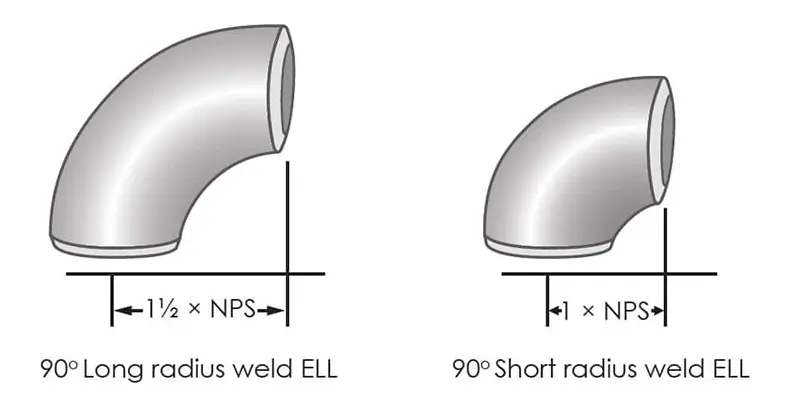
What is a Long Radius (LR) Elbow?
A Long Radius elbow is the standard and most commonly used pipe fitting in the industry. By definition, the radius of curvature in an LR elbow is 1.5 times the nominal diameter of the pipe (R = 1.5D).
Because of its gentle, sweeping curve, an LR elbow provides a smoother path for fluids or gases to travel through. This design significantly reduces frictional resistance and minimizes pressure drop across the pipeline.
Common applications: Pipelines carrying high-pressure fluids, abrasive materials, or systems where maintaining a steady flow rate is critical.
What is a Short Radius (SR) Elbow?
As the name suggests, a Short Radius elbow has a much sharper bend. Its radius of curvature is exactly equal to the nominal diameter of the pipe (R = 1.0D).
Because the bend is tighter, SR elbows take up less physical space. However, this sharp turn forces the fluid to change direction abruptly, which creates higher resistance, increased pressure drop, and potential turbulence.
Common applications: Low-pressure systems, tight clearance areas, and compact equipment design where space is strictly limited.
Head-to-Head Comparison: LR vs SR Elbows
To make the best choice for your project, you need to understand how these two fittings compare across four critical factors:
1. Curvature Radius and Dimensions
The fundamental difference lies in the math. If you are working with a 4-inch pipe:
- The center-to-face distance of a 4-inch LR elbow will be 6 inches (1.5 x 4).
- The center-to-face distance of a 4-inch SR elbow will be 4 inches (1.0 x 4).
This dimensional difference dictates how much physical room you need for installation.
2. Flow Dynamics and Pressure Drop
Fluid dynamics play a massive role in piping. LR elbows offer less frictional resistance. If your system pumps thick liquids or requires maximum flow efficiency, LR is the undisputed winner. On the flip side, SR elbows cause a sudden shift in fluid direction, leading to a higher pressure drop in the pipe elbow.
3. Wear and Tear (Erosion)
Because the fluid hits the outer wall of an SR elbow more directly due to the sharp turn, these fittings wear out faster when transporting abrasive materials (like slurries or sand-mixed fluids). LR elbows distribute the impact more evenly along their sweeping curve, resulting in a longer lifespan for the fitting.
4. Cost and Availability
Generally, Long Radius elbows are produced in higher volumes, making them readily available and often more cost-effective. Short Radius elbows are considered slightly more specialized and may cost a bit more or require specific ordering, depending on the material.
Quick Reference: LR vs SR Elbow Comparison Table
| Feature | Long Radius (LR) Elbow | Short Radius (SR) Elbow |
| Bend Radius | R = 1.5D | R = 1.0D |
| Space Required | Requires more installation space | Ideal for tight, compact spaces |
| Pressure Drop | Low | High |
| Fluid Resistance | Minimal | Significant |
| Wear & Erosion | Slower (longer lifespan) | Faster (due to sharp fluid impact) |
| Best Used For | High-pressure, high-flow systems | Low-pressure, confined spaces |
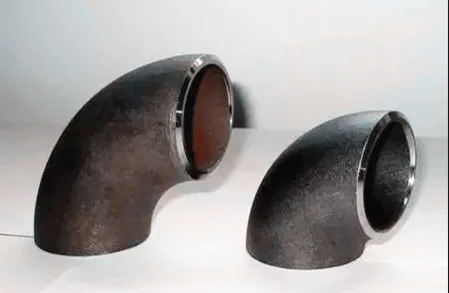
How to Choose the Right Pipe Elbow
Still not sure which one to order? Follow this simple rule of thumb:
Default to Long Radius Elbows. In 90% of industrial piping projects, the LR elbow is the standard choice. It protects your system from pressure loss and reduces pump strain. Choose LR for petrochemical plants, water treatment facilities, and oil pipelines.
Only use Short Radius Elbows when forced by space constraints. If you are building an offshore rig, assembling a compact skid-mounted system, or working inside the tight hull of a ship, the SR elbow is your problem-solver. Just ensure your system can handle the slight reduction in flow efficiency.
Frequently Asked Questions (FAQs)
Can I replace a Short Radius elbow with a Long Radius elbow?
Yes, but only if you have enough physical space to accommodate the larger center-to-face dimension of the LR elbow. From a performance standpoint, upgrading to an LR elbow is generally beneficial as it improves flow.
Are both LR and SR elbows available in 45-degree and 90-degree angles?
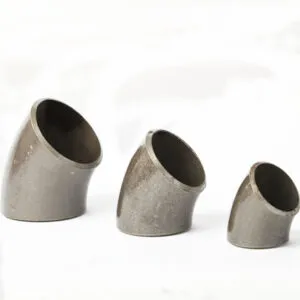
LR elbows are widely available in 45°, 90°, and 180° bends. However, SR elbows are almost exclusively manufactured in 90° and 180° bends. A 45° SR elbow is extremely rare because the bend angle is too small to justify a shortened radius.
How do I measure an elbow to know if it’s LR or SR?
Measure the center-to-face distance. If the distance equals the nominal pipe size (NPS), it’s a Short Radius. If the distance is 1.5 times the NPS, it’s a Long Radius.
Looking for High-Quality Pipe Fittings?
Choosing between long radius and short radius elbows comes down to balancing system efficiency with available space. At RAYOUNG, we manufacture and supply a comprehensive range of premium pipe fittings tailored to your project’s specifications.
Whether you need standard LR elbows for smooth flow or SR elbows for confined spaces, we’ve got you covered. Contact our engineering team today for a quick quote or technical assistance!
IF YOU HAVE ANY INQUIRY, PLEASE DON’T HESITATE TO CONTACT US IMMEDIATELY
Email: info@hb-steel.om
Tel/WhatsApp: +86-18003119682
1 thought on “Long Radius vs Short Radius Elbow: Key Differences Explained”
whoah this blog is fantastic i love reading your articles.
Stay up the good work! You realize, lots of individuals are hunting round for this information, you can aid them
greatly.