

When comparing a blind flange vs a slip-on flange, the main difference is their function and connection design:
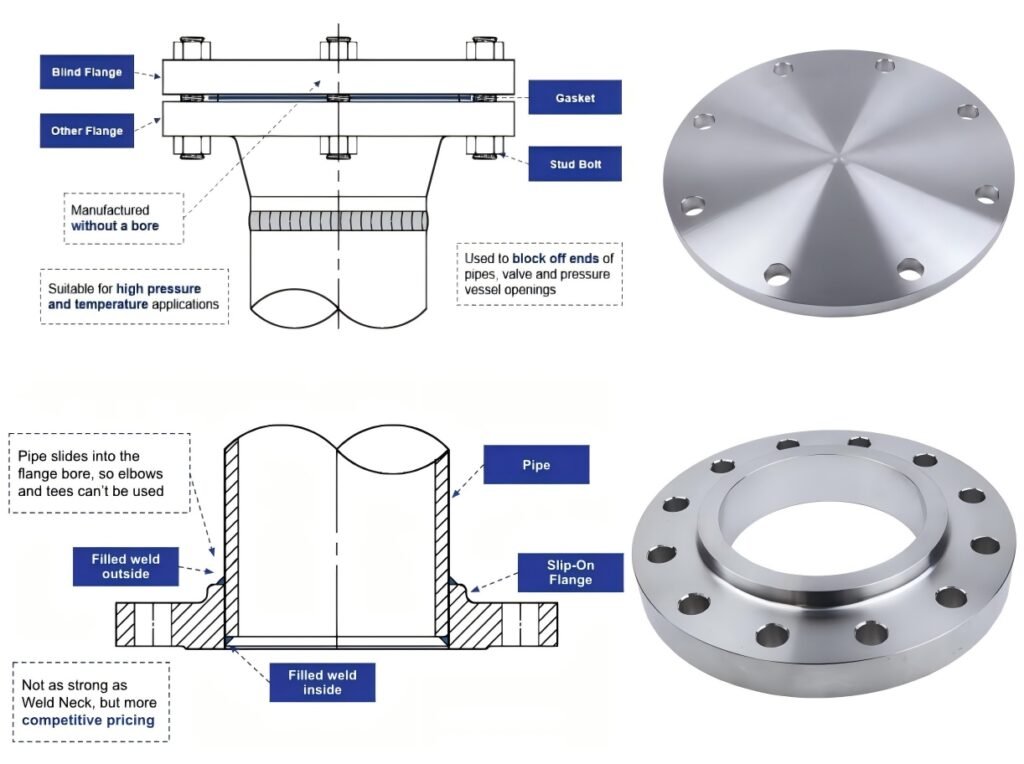
- Blind Flange: A solid flange without a center bore, used to close pipeline ends, equipment openings, or unused connections and prevent fluid or gas flow.
- Slip-On Flange: A flange with a center bore that slides over a pipe and is secured by fillet welds on both the inside and outside.
- Main Difference: Blind flanges isolate or terminate a pipeline, while slip-on flanges connect pipes, valves, pumps, and other equipment while allowing media to pass through.
- Installation: Blind flanges are bolted to a mating flange, whereas slip-on flanges require welding to the pipe.
- Selection: The correct choice depends on pipeline function, pressure and temperature conditions, material, applicable standards, and installation requirements.
For industrial piping contractors, distributors, and project purchasers, selecting the wrong flange can cause installation delays, additional costs, and potential leakage risks. Understanding these differences before placing an order helps ensure that the flange matches the actual piping design.
1. What Is a Blind Flange?
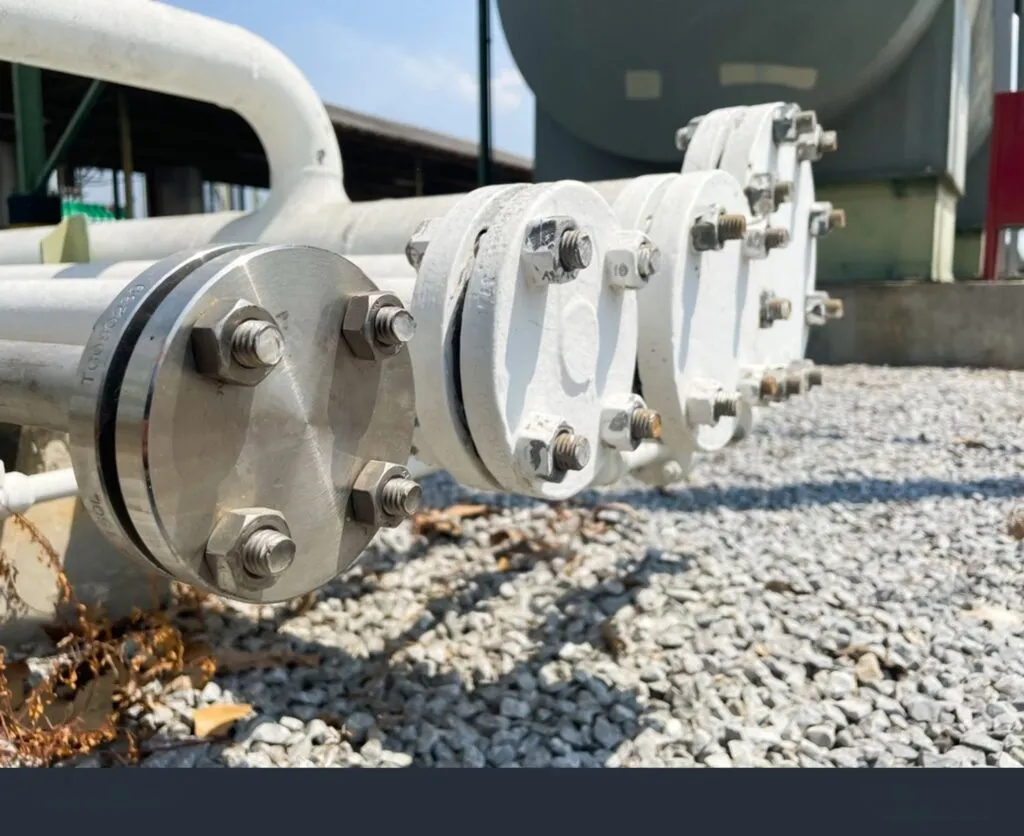
A blind flange is a solid, circular flange with no center opening. Unlike conventional pipe flanges, it does not allow fluid or gas to pass through. Its primary purpose is to close the end of a pipeline, valve, pressure vessel, or other flanged equipment connection.
Blind flanges are commonly used in oil and gas pipelines, petrochemical plants, water treatment facilities, power stations, and industrial processing systems.
Because they can be bolted and removed without cutting the pipeline, blind flanges are also useful when a pipeline section needs to be inspected, maintained, isolated, or prepared for future expansion.
Main Features of Blind Flanges
- Solid construction: No center bore, providing a complete physical barrier to media flow.
- Bolted connection: Installed against a mating flange using bolts and an appropriate gasket.
- Removable design: Can be removed when maintenance, inspection, or future pipeline connections are required.
- Pressure-bearing capability: Designed to withstand the specified pressure and temperature conditions when correctly selected and installed.
Common Applications
Blind flanges are frequently used for:
- Closing unused pipeline branches and equipment nozzles.
- Isolating pipeline sections during maintenance.
- Closing pump, valve, and pressure vessel openings.
- Supporting hydrostatic testing and commissioning procedures, where properly engineered for the test conditions.
- Reserving pipeline connections for future expansion.
For example, an EPC contractor may install a blind flange at an unused branch connection in a chemical processing plant. When additional equipment is installed later, the blind flange can be removed and the new pipeline connection made without replacing the entire pipeline section.
2. What Is a Slip-On Flange?
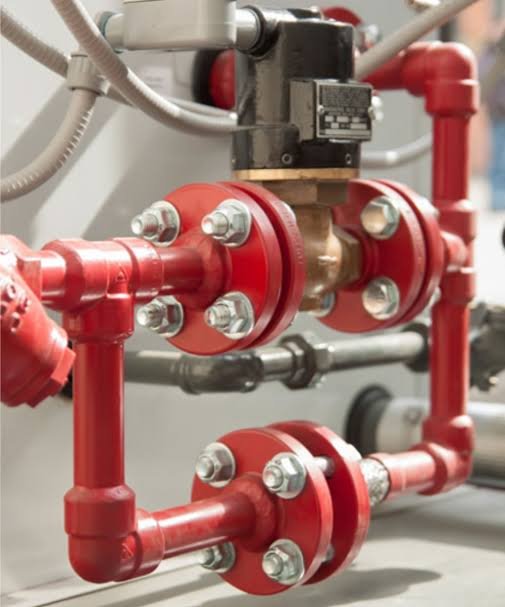
A slip-on flange, also known as an SO flange, is designed with a center bore slightly larger than the outside diameter of the connecting pipe. The pipe slides through the flange, allowing the installer to position and align it before welding.
Unlike a weld neck flange, a slip-on flange does not have a tapered hub designed for a butt-weld connection. Instead, it is typically secured using two fillet welds: one on the outside and another on the inside of the flange.
Slip-on flanges are widely used in general industrial piping systems where straightforward installation and economical fabrication are important.
Main Features of Slip-On Flanges
- Bored center: Allows the flange to slide over the connecting pipe.
- Double fillet welding: Typically welded on both the inside and outside edges.
- Flexible alignment: Provides some installation flexibility when positioning the flange.
- Economical construction: Generally offers a lower initial flange cost than more complex flange designs.
Common Applications
Slip-on flanges are commonly found in:
- Industrial water supply and drainage systems.
- General-purpose process pipelines.
- HVAC and utility piping.
- Pump and valve connections.
- Industrial equipment and fabrication projects.
For example, a water treatment plant may use carbon steel slip-on flanges to connect pumps, valves, and pipeline sections. Their relatively straightforward installation can help reduce fabrication time and overall connection costs.
However, slip-on flanges should not automatically be selected simply because they are less expensive. Their suitability must be checked against the applicable piping code, design pressure, temperature, loading conditions, and welding requirements.
3. Blind Flange vs Slip-On Flange: Key Differences
Although both are widely used in industrial piping systems, blind flanges and slip-on flanges have different structures, installation methods, and purposes.
The following table provides a practical comparison for engineers, contractors, and purchasing teams.
| Comparison | Blind Flange | Slip-On Flange |
|---|---|---|
| Main function | Closes a pipeline or equipment opening | Connects pipes and equipment |
| Center opening | No bore | Has a center bore |
| Connection method | Bolted connection | Fillet welded to pipe |
| Media flow | Blocks flow | Allows flow |
| Installation | Bolting and gasket | Sliding over pipe and welding |
| Maintenance | Can be removed by unbolting | Pipe-side welds must be cut to remove |
| Typical application | Pipeline isolation and closure | General pipeline connections |
| Initial material cost | Often higher due to solid construction | Often more economical |
| Common materials | Carbon steel, stainless steel, alloy steel | Carbon steel, stainless steel, alloy steel |
3.1 Structural Design
The most obvious difference is the center opening.
A blind flange is a solid disc with bolt holes around its circumference. It is designed to cover an open connection and resist the pressure load acting on its closed surface.
A slip-on flange has a central bore that accommodates the pipe. Its design allows it to be installed over the pipe before welding.
This structural difference determines where each flange can be used. A blind flange cannot serve as a normal inline pipe connection, and a standard slip-on flange cannot close a pipeline because its center remains open.
3.2 Installation and Welding
Blind flanges do not normally require welding to the pipeline. They are installed by aligning the bolt holes with a mating flange, placing the specified gasket between the flange faces, and tightening the bolts according to the applicable procedure.
Slip-on flanges require welding. The pipe is inserted through the flange and positioned according to the approved installation procedure. Fillet welds are then applied to both the inside and outside edges.
For purchasing teams, this difference matters when estimating installation costs. A slip-on flange may have a lower purchase price, but welding labor, inspection, and installation time should also be included in the total project cost.
3.3 Pressure and Temperature Considerations
Blind flanges and slip-on flanges can both be manufactured for different pressure classes. However, their pressure capabilities must be evaluated differently.
A blind flange is subjected to pressure acting across its entire closed area. This creates a significant force that must be resisted by the flange body, bolting, gasket, and mating connection.
A slip-on flange transfers loads through its flange body and welded connection. Its suitability depends on the flange class, weld design, pipe material, and operating conditions.
Neither type should be considered suitable for all high-pressure or high-temperature applications simply because of its design. Always verify the applicable pressure-temperature rating and piping design requirements.
For demanding services involving high pressure, temperature fluctuations, or cyclic loading, a weld neck flange may be a more appropriate connection option than a slip-on flange, depending on the engineering design.
3.4 Maintenance and Replacement
Blind flanges offer a practical advantage when future access is required. Once the system is safely depressurized and isolated, the flange can be unbolted for inspection, cleaning, or equipment replacement.
Slip-on flanges are more difficult to replace because they are welded directly to the pipe. Removing one generally requires cutting the welds and preparing the pipe for a new connection.
This is an important consideration for industrial plants that frequently modify their pipeline configurations.
4. How to Choose Between a Blind Flange and a Slip-On Flange?
For industrial buyers, the decision should start with the function of the connection rather than the price of the flange.
Step 1: Identify the Pipeline Connection Requirement
Ask one basic question: Does the connection need to allow media to pass through?
- If the purpose is to close an open pipeline, nozzle, or equipment connection, select a blind flange.
- If the purpose is to connect a pipe to another component while maintaining media flow, consider a slip-on flange.
This is the first and most important selection criterion.
Step 2: Confirm the Pressure Class and Operating Conditions
Pressure class is one of the most common sources of purchasing mistakes.
For example, ASME Class 150, Class 300, and Class 600 are not direct pressure values in PSI. The allowable working pressure depends on the flange material and operating temperature.
Before requesting a quotation, confirm:
- Design pressure and operating temperature.
- Required pressure class.
- Applicable piping code.
- Whether the system involves pressure fluctuations or cyclic loading.
Do not assume that two flanges with the same nominal size are interchangeable if their pressure classes or dimensional standards differ.
Step 3: Select the Correct Material
Material selection directly affects flange performance, corrosion resistance, and service life.
Common choices include:
- ASTM A105 / A105N: Carbon steel forged flanges for general industrial and pressure piping applications, subject to the applicable service requirements.
- ASTM A350 LF2: Low-temperature carbon steel forgings for specified low-temperature services.
- ASTM A182 F304 / F316: Stainless steel flanges for applications requiring specific corrosion resistance.
- Alloy steel grades: Used where elevated-temperature or other specialized mechanical properties are required.
The selected material should match the pipeline material specification, operating environment, and project requirements.
Step 4: Confirm Flange Facing and Gasket Compatibility
Flange facing is another detail that should never be overlooked.
Common facing types include:
- RF (Raised Face): Commonly used in industrial piping systems.
- FF (Flat Face): Often specified for particular equipment and piping arrangements.
- RTJ (Ring Type Joint): Used in designated high-pressure applications with compatible ring gaskets.
A blind flange and its mating flange must have compatible facing dimensions and gasket arrangements. The same principle applies to slip-on flange connections.
A mismatch in facing type or gasket specification can lead to sealing problems even when the nominal size and pressure class appear correct.
Step 5: Check Dimensions and Applicable Standards
Before confirming an order, verify the following information:
- Nominal Pipe Size (NPS).
- Outside diameter and flange thickness.
- Bolt circle diameter.
- Number and diameter of bolt holes.
- Facing dimensions.
- Bore dimensions for slip-on flanges.
- Pressure class and manufacturing standard.
For many industrial projects, ASME B16.5 covers pipe flanges from NPS 1/2 through NPS 24, while ASME B16.47 covers larger-diameter flanges from NPS 26 through NPS 60.
For projects using European, Japanese, or Russian standards, the relevant EN, DIN, JIS, or GOST dimensional requirements should be specified instead.
Do not mix flange dimensions from different standards without engineering approval.
5. Common Purchasing Mistakes When Ordering Blind and Slip-On Flanges
Even experienced buyers can encounter problems when ordering industrial flanges, especially when purchasing from multiple suppliers or sourcing products for different project specifications.
Here are four issues worth checking before issuing a purchase order.
1. Confusing flange type with flange function
A blind flange and a slip-on flange may share similar outside dimensions, but they cannot perform the same job. Always confirm the required connection function before ordering.
2. Providing only the nominal size
An inquiry stating only “6-inch carbon steel flange” is not sufficient for accurate quotation.
The supplier also needs the flange type, pressure class, standard, material grade, facing, and quantity.
3. Overlooking material certification
For oil and gas, petrochemical, and other engineering projects, material traceability is important. Buyers should confirm whether the order requires a Material Test Certificate (MTC), heat number identification, chemical composition, mechanical test results, or third-party inspection.
4. Ignoring dimensional compatibility
A flange may meet the requested NPS but still be unsuitable if the bolt pattern, facing, thickness, or dimensional standard does not match the existing equipment.
For distributors and stockists, this can result in inventory problems and costly returns. Checking the complete specification before production is much more efficient than correcting a mismatch after delivery.
6. RAYOUNG: Industrial Blind Flange and Slip-On Flange Manufacturer
For buyers sourcing blind flanges and slip-on flanges for industrial piping projects, choosing a manufacturer with consistent production capability and specification control is just as important as selecting the correct product.
RAYOUNG (Hebei Rayoung Pipeline Technology Co., Ltd.) has specialized in industrial pipe fittings and flanges since 1983, supplying products to international distributors, trading companies, EPC contractors, and industrial project customers.
Our flange product range includes:
- Blind Flanges
- Slip-On Flanges (SO Flanges)
- Weld Neck Flanges (WN Flanges)
- Socket Weld Flanges
- Threaded Flanges
- Lap Joint Flanges
- Plate Flanges
- Custom Industrial Flanges
Manufacturing and Supply Capabilities
RAYOUNG supports industrial flange orders with:
- Production according to ASME, GOST, DIN, EN, JIS, and other specified standards.
- Carbon steel, stainless steel, and alloy steel material options.
- Standard and customized flange dimensions.
- Forging, CNC machining, drilling, and heat treatment capabilities.
- Material inspection and dimensional quality control.
- Technical documentation and inspection support.
- Export packaging and international shipment arrangements.
With a factory established in 1983 and a production facility covering more than 35,000 m², RAYOUNG has a monthly flange output of approximately 700 tons and ships more than 90 containers of products monthly.
For overseas distributors, these capabilities help support regular replenishment orders, mixed flange specifications, and project-based procurement.
Whether you need carbon steel blind flanges for pipeline isolation or slip-on flanges for general industrial connections, our team can assist with specification confirmation and product quotations.
Send us your flange specifications, drawings, or inquiry list. RAYOUNG will help you check the requirements and provide a quotation based on your project needs.
7. Frequently Asked Questions (FAQs)
Q1: Can a blind flange replace a slip-on flange?
No. A blind flange is designed to close a pipeline connection, while a slip-on flange is used to connect a pipe to another component. They have different structures and functions and cannot be directly substituted.
Q2: Is a blind flange stronger than a slip-on flange?
Not necessarily. Their mechanical performance depends on the design, dimensions, material, pressure class, and loading conditions. Blind flanges must resist the pressure force acting on their closed surface, while slip-on flanges transfer loads through the flange body and welded connection. Each must be evaluated for its intended service.
Q3: Are blind flanges suitable for high-pressure applications?
Yes, blind flanges are available for high-pressure applications, provided they are designed and manufactured to the required pressure class, material specification, and applicable standard. The bolting, gasket, mating flange, and installation procedure must also be suitable for the design conditions.
Q4: What is the difference between a blind flange and a pipe cap?
Both are used to close a pipeline, but their connection methods are different. A blind flange is bolted to a mating flange with a gasket, while a pipe cap is typically welded directly to the pipe end. The choice depends on the pipeline design and whether future removal is required.
Q5: Which standards are commonly used for blind flanges and slip-on flanges?
ASME B16.5 is widely used for NPS 1/2 to NPS 24 pipe flanges, and ASME B16.47 covers NPS 26 to NPS 60 large-diameter flanges. Other projects may specify EN 1092-1, DIN, JIS, or GOST standards. Always follow the standard stated in the project specification.
Q6: What information should I provide when requesting a flange quotation?
For an accurate quotation, provide:
- Flange type: Blind or Slip-On.
- Size: NPS or DN.
- Pressure class or pressure rating.
- Manufacturing standard.
- Material grade.
- Facing type: RF, FF, or RTJ.
- Quantity.
- Inspection and documentation requirements.
- Destination port and delivery requirements.
Providing complete specifications helps suppliers check technical compatibility and prepare more accurate quotations.
Conclusion
The choice between a blind flange and a slip-on flange comes down to one fundamental requirement: closing a pipeline or connecting it while maintaining flow.
Blind flanges are designed for pipeline termination, isolation, and future access, while slip-on flanges provide welded connections between pipes and industrial equipment.
For reliable purchasing, do not focus on flange type and price alone. Check the applicable standard, pressure class, material grade, facing, dimensions, and service conditions before confirming an order.
If you are looking for a reliable blind flange or slip-on flange manufacturer in China, RAYOUNG can support your industrial piping requirements with standard and customized flange solutions.
Contact RAYOUNG today for technical support and a competitive quotation.