

When a piping project requires Russian or CIS standards, choosing the right GOST buttweld carbon steel pipe fittings is more than simply specifying an elbow, tee or reducer. The fitting must match the required GOST standard, dimensions, material grade, wall thickness and project conditions.
This guide explains the main GOST butt weld fittings used in carbon steel piping systems, including GOST 17375 elbows, GOST 17376 tees, GOST 17378 reducers and GOST 17379 caps.
What Are GOST Buttweld Carbon Steel Pipe Fittings?
GOST buttweld fittings are pipe fittings manufactured according to applicable Russian GOST standards and designed to be connected to piping by butt welding.
Unlike threaded or socket-weld fittings, butt weld fittings provide a continuous welded connection between the fitting and pipe. This makes them suitable for industrial piping systems where strength, dimensional accuracy and long-term reliability are important.
Common GOST carbon steel fittings include:
- Elbows
- Equal and reducing tees
- Concentric and eccentric reducers
- Pipe caps
- Other special or customized butt weld fittings
They are commonly specified for industrial piping, oil and gas, petrochemical, power generation, chemical processing and other heavy-duty applications.
Main GOST Standards for Buttweld Fittings
The four standards most commonly associated with the main GOST butt weld fitting shapes are:
| Product | GOST Standard | Main Function |
|---|---|---|
| GOST 17375 Elbows | GOST 17375 | Change pipe direction |
| GOST 17376 Tees | GOST 17376 | Create a branch connection |
| GOST 17378 Reducers | GOST 17378 | Connect different pipe sizes |
| GOST 17379 Caps | GOST 17379 | Close the end of a pipe |
This classification is particularly useful when preparing purchase specifications because the product type and dimensional standard should be clearly identified in the RFQ.
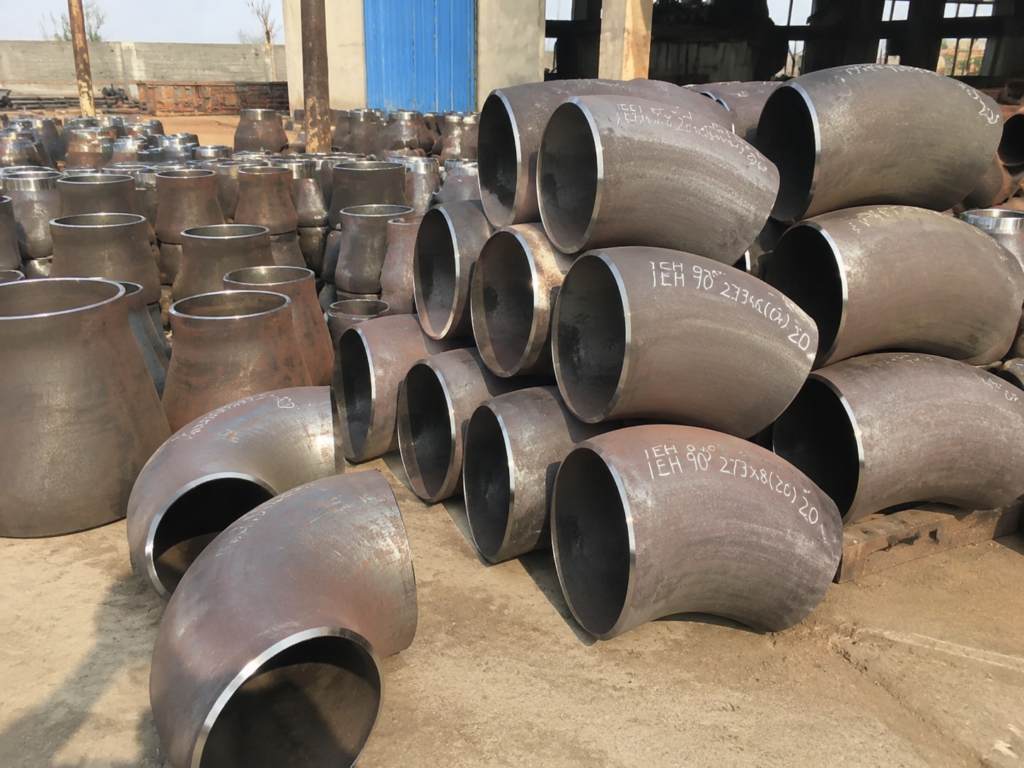
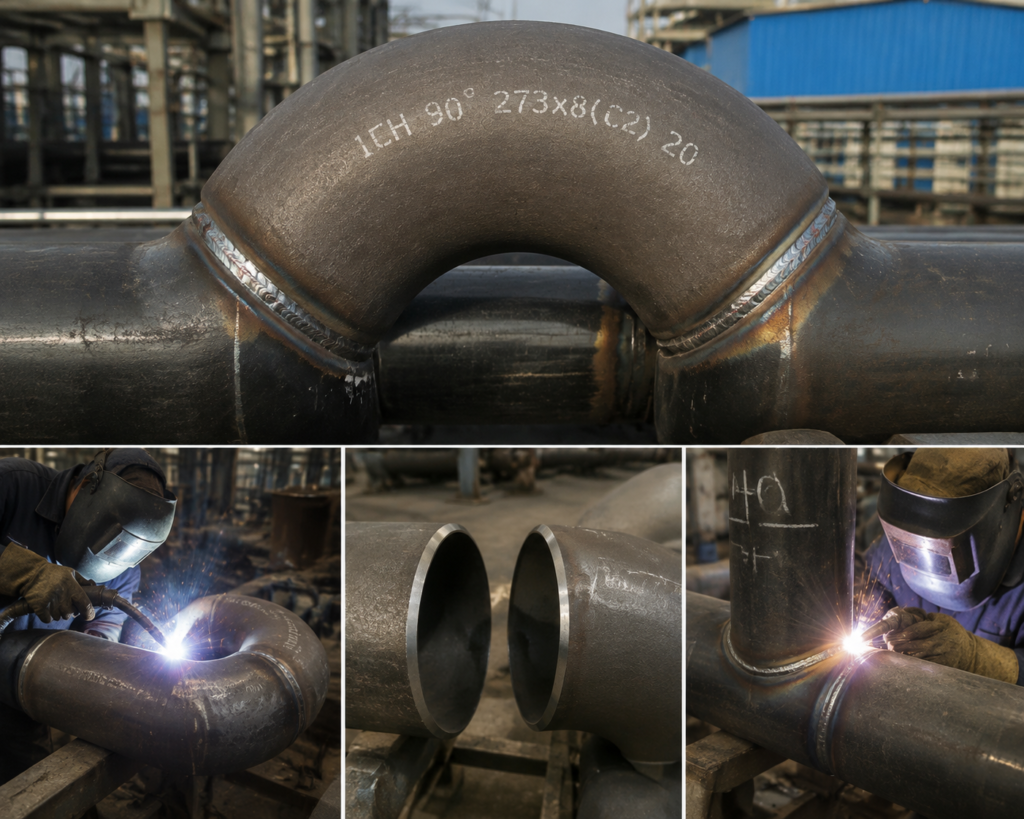
GOST 17375 Elbows
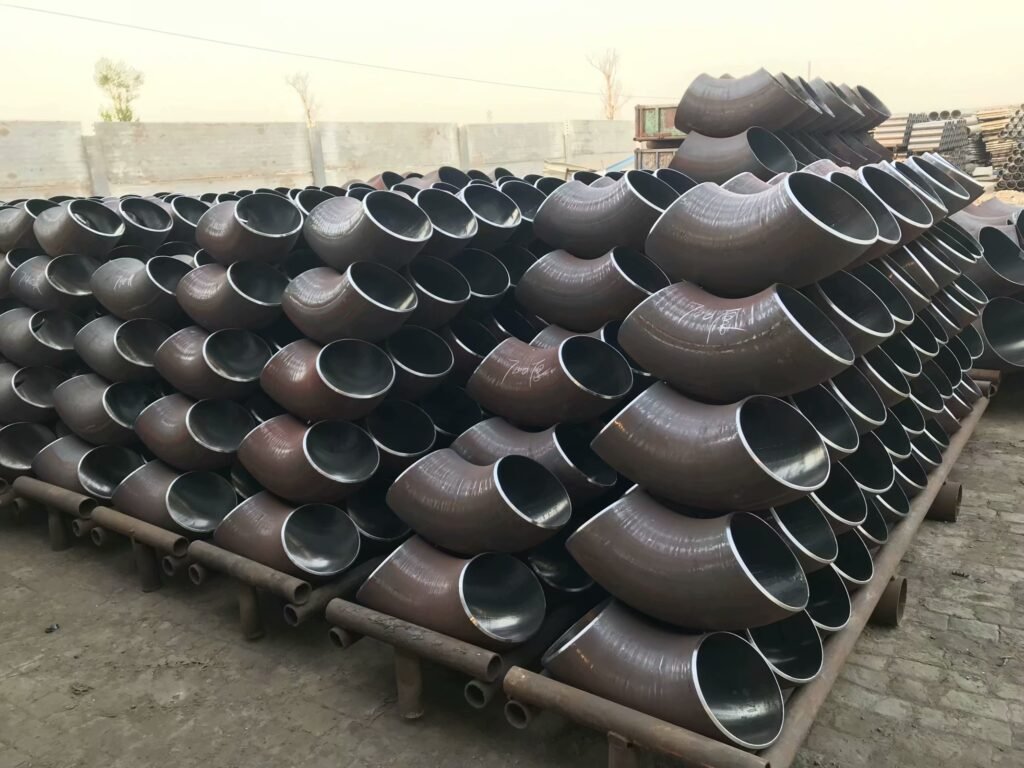
GOST 17375 elbows are used to change the direction of a pipeline without introducing unnecessary changes in the pipe diameter.
Depending on the project specification, elbows may be required in different angles and configurations. Common requirements include:
- 45° elbows
- 90° elbows
- Long-radius elbows
- Short-radius elbows
- Seamless or welded construction, depending on size and specification
A GOST 17375 elbow should be selected according to the required nominal diameter, outside diameter, wall thickness and material grade.
For carbon steel piping, the material should also be confirmed against the project specification rather than assuming that every GOST 17375 elbow uses the same steel grade.
GOST 17376 Tees
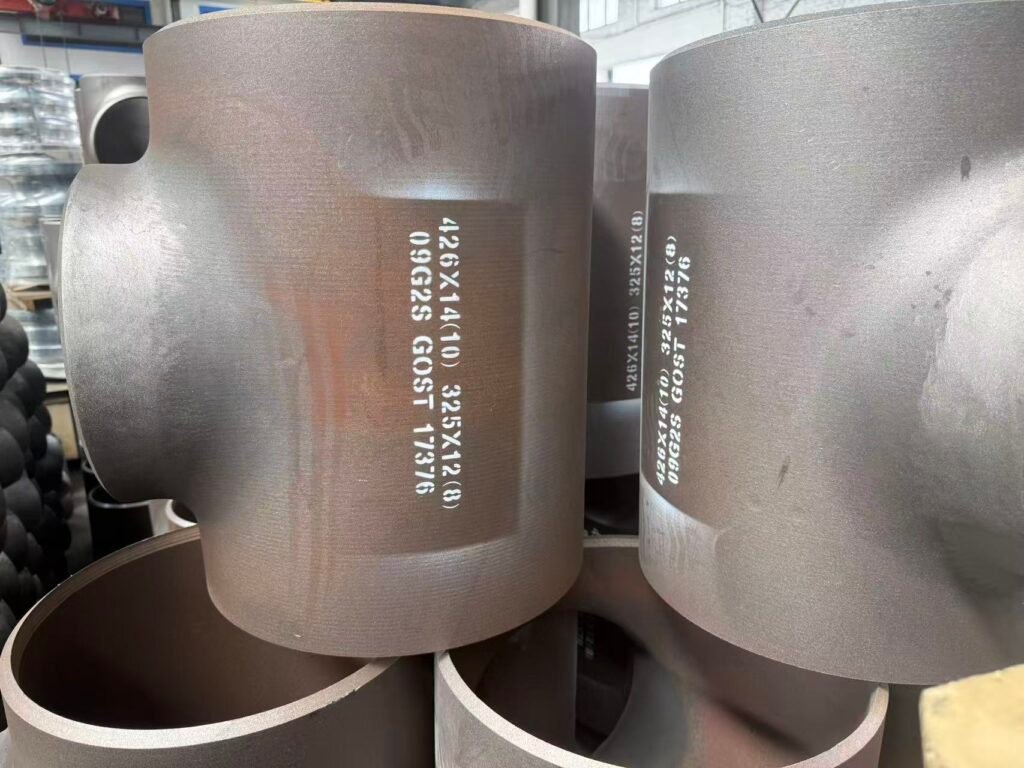
GOST 17376 tees are used when a main pipeline needs to create a branch connection.
The two basic configurations are:
Equal Tee
An equal tee has three outlets of the same nominal size. It is commonly used when the branch line and main pipeline have the same diameter.
Reducing Tee
A reducing tee has a smaller branch outlet than the main run. It is useful when a smaller process or utility line branches from a larger pipeline.
For procurement, buyers should clearly specify whether an equal or reducing tee is required, together with the required dimensions, wall thickness and material.
GOST 17378 Reducers
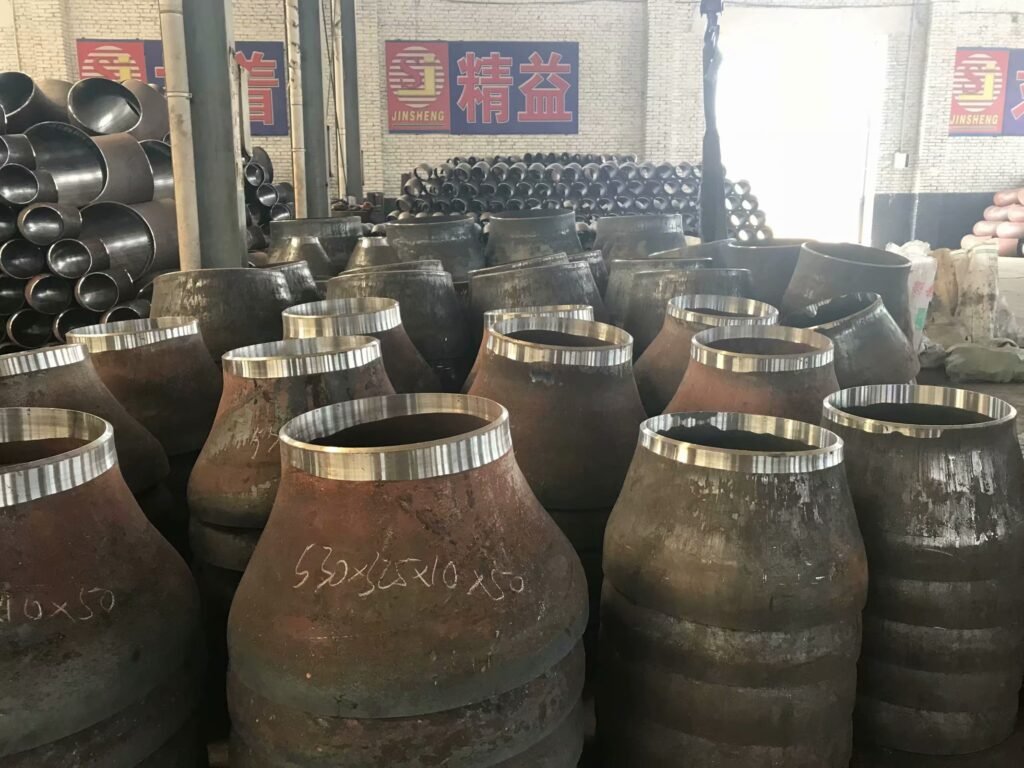
GOST 17378 reducers connect pipes with different diameters and provide a controlled transition between the two sizes.
The two most common designs are:
Concentric Reducer
The centerlines of the large and small ends remain aligned.
Concentric reducers are widely used in vertical piping and applications where maintaining a symmetrical flow transition is appropriate.
Eccentric Reducer
One side of the reducer remains aligned while the opposite side is offset.
Eccentric reducers are often selected where the piping layout, drainage requirements or pump suction arrangement requires a flat-side configuration.
When ordering GOST 17378 reducers, buyers should specify:
- Large-end diameter
- Small-end diameter
- Wall thickness
- Concentric or eccentric configuration
- Material grade
- Applicable project specification
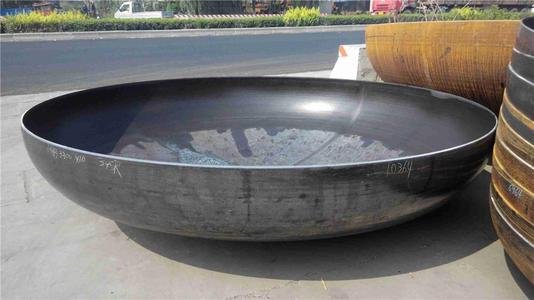
GOST 17379 Caps
GOST 17379 caps are used to close the end of a pipe or pipeline section.
Unlike reducers and tees, a cap does not create another flow path. It provides a permanent or temporary closure and can be used in piping systems, equipment connections and pipeline fabrication.
For procurement, the most important parameters normally include:
- Nominal size
- Outside diameter
- Wall thickness
- Material
- End configuration
- Applicable GOST requirements
GOST 17379 caps are commonly supplied as part of a complete GOST butt weld fitting package together with elbows, tees and reducers.
Carbon Steel Materials for GOST Pipe Fittings
Material selection should always be based on the operating conditions and project specification.
For GOST carbon steel pipe fittings, commonly specified materials may include carbon steel and low-alloy steel grades such as Steel 20 and 09G2S, depending on the applicable standard and project requirements.
The buyer should not select a material based only on the fitting standard. Temperature, pressure, corrosion conditions, impact requirements and the pipe material all need to be considered.
For export orders, the material specification should be stated clearly in the purchase order and confirmed before production.
What Should You Specify When Buying GOST Buttweld Fittings?
A complete RFQ helps prevent incorrect quotations and reduces the risk of receiving fittings that cannot be matched with the piping system.
For each fitting, consider specifying:
1. Product type: elbow, tee, reducer, or cap.
2. GOST standard: For example, GOST 17375, GOST 17376, GOST 17378 or GOST 17379.
3. Size: Specify the required DN or pipe dimensions.
4. Wall thickness The fitting wall thickness should be compatible with the connected pipe and project requirements.
5. Material grade Clearly identify the required carbon steel or low-alloy steel grade.
6. Quantity State the number of pieces for each size and type.
7. Inspection and documentation If required, specify MTCs, inspection reports, dimensional inspection or other project documentation before production.
This information is particularly important for distributors and stockists who may purchase several sizes and fitting types in one shipment.
GOST Butt Weld Fittings for Industrial Piping Projects
GOST carbon steel butt weld fittings are used in many industrial piping applications where Russian or CIS standards are specified.
Typical applications include:
- Oil and gas pipelines
- Petrochemical plants
- Chemical processing
- Power generation
- Industrial water systems
- Gas processing
- Heating and steam systems
- General process piping
The correct fitting is determined not only by its shape but also by the complete combination of standard, dimensions, material and operating requirements.
GOST Buttweld Fittings Manufacturer and Export Supplier
For international projects, a reliable supplier should be able to provide more than individual fittings.
RAYOUNG–A professional GOST buttweld fittings manufacturer should be able to support customers with:
- GOST 17375 elbows
- GOST 17376 tees
- GOST 17378 reducers
- GOST 17379 caps
- Carbon steel and low-alloy steel options
- Dimensional inspection
- Material certificates
- Export packaging
- Mixed-size orders
- Custom requirements based on drawings or project specifications
For distributors and EPC contractors, this is especially important when several fitting sizes and standards need to be consolidated into one shipment.
Frequently Asked Questions
What are GOST buttweld fittings?
GOST buttweld fittings are pipe fittings manufactured according to applicable Russian GOST requirements and connected to pipes by butt welding. Common products include elbows, tees, reducers and caps.
What is GOST 17375?
GOST 17375 is the GOST standard associated with steel butt-welding elbows. It covers the dimensional and construction requirements applicable to the specified fitting range.
What is GOST 17376?
GOST 17376 applies to steel butt-welding tees, including straight/equal and reducing configurations.
What is GOST 17378?
GOST 17378 applies to steel butt-welding reducers, including concentric and eccentric designs.
What is GOST 17379?
GOST 17379 applies to steel butt-welding caps used to close pipe ends.
How do I order GOST carbon steel pipe fittings?
Provide the fitting type, GOST standard, size, wall thickness, material grade, quantity and any required inspection or documentation. For project orders, it is also recommended to provide the piping specification or technical drawing.
Choose the Correct GOST Fitting for Your Project
GOST standards provide a clear framework for selecting butt weld pipe fittings, but the correct product still depends on the actual piping specification.
Whether you need GOST 17375 elbows, GOST 17376 tees, GOST 17378 reducers, GOST 17379 caps, or a complete range of GOST carbon steel pipe fittings, the key is to confirm the standard, dimensions and material before placing the order.
For distributors, stockists and engineering contractors sourcing GOST fittings for overseas projects, a detailed specification at the RFQ stage can save considerable time and prevent costly supply mistakes.