
Choosing the right pipe flange is not only about selecting a flange type. The size, pressure class, drilling, facing and material all need to match the piping system.
For distributors, contractors, and industrial buyers, understanding basic pipe flange specifications and sizes can help avoid ordering mistakes and installation problems.
At RAYOUNG, we manufacture forged and industrial pipe flanges for different international standards, including ASME, EN, DIN, JIS and GOST systems.
What Does Pipe Flange Size Mean?
Pipe flange size normally refers to the nominal pipe size (NPS) rather than the actual outside diameter of the flange.
For example:
- 2″ flange = NPS 2
- 4″ flange = NPS 4
- 6″ flange = NPS 6
- 10″ flange = NPS 10
For metric systems, the corresponding designation is usually DN, such as DN50, DN100 and DN150.
One important point: NPS or DN does not directly tell you the flange’s outside diameter. The actual flange dimensions depend on the applicable standard and pressure class.
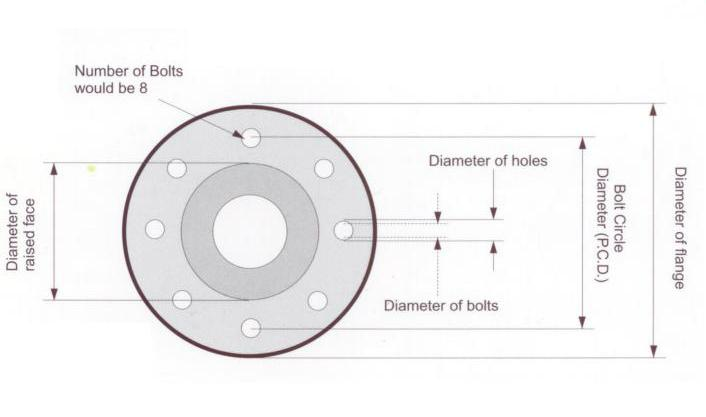
Key Pipe Flange Dimensions
When checking a flange drawing or specification sheet, several dimensions are important.
1. Outside Diameter (OD)
The flange outside diameter is the total diameter of the flange.
It affects the available space around the pipe and must match the applicable flange standard.
2. Bolt Circle Diameter (BCD)
The bolt circle diameter, also called PCD, is the diameter of the circle passing through the centers of the bolt holes.
This is critical when connecting two flanges together. The bolt hole pattern must match.
3. Bolt Hole Diameter and Number of Holes
The flange specification should also identify:
- Number of bolt holes
- Bolt hole diameter
- Bolt hole spacing
- Bolt size or thread requirements, where applicable
A flange with the correct nominal size but the wrong drilling pattern will not connect properly.
4. Flange Thickness
Flange thickness varies by size, pressure class, flange type, and standard.
A Class 300 flange, for example, may have different dimensions from a Class 150 flange of the same nominal pipe size.
5. Bore Diameter
The bore is the opening through the flange.
For welding neck and some other flange types, the bore needs to correspond with the pipe outside diameter and wall thickness or schedule specified for the application.
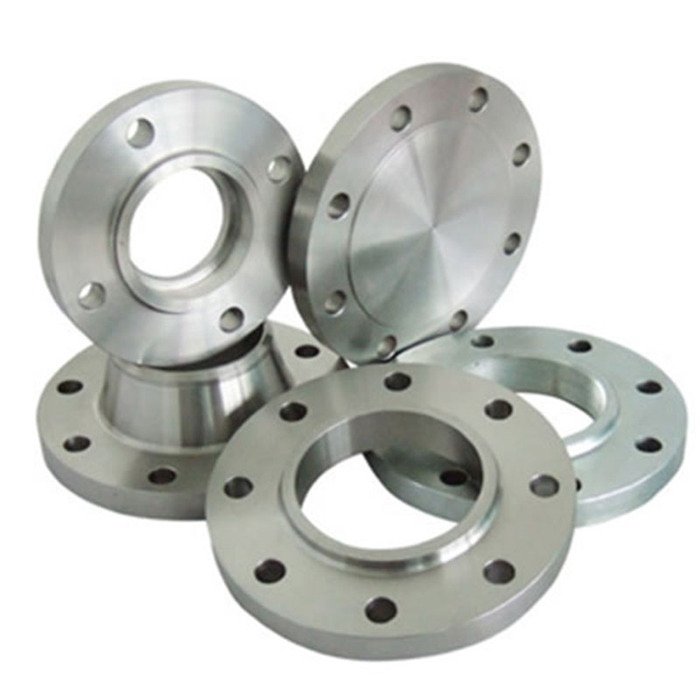
Pipe Flange Size and Pressure Class
Never consider flange size separately from the pressure class.
For ASME systems, common pressure classes include:
Class 150, 300, 600, 900, 1500 and 2500.
ASME B16.5 covers steel pipe flanges from NPS 1/2 through NPS 24, while ASME B16.47 covers larger steel flanges from NPS 26 through NPS 60.
The same NPS can therefore have different flange dimensions depending on the pressure class.
For example, a 6″ Class 150 flange and a 6″ Class 300 flange are not necessarily the same size or drilling.
A Simple Example: 4″ Flange
When ordering a 4″ flange, saying only:
4″ flange
is usually not enough.
A complete specification could look like:
4″ Class 150 Weld Neck Flange, RF, ASTM A105, ASME B16.5
This tells the manufacturer:
- Nominal pipe size: 4″
- Pressure class: Class 150
- Flange type: Weld Neck
- Facing: Raised Face (RF)
- Material: ASTM A105
- Dimensional standard: ASME B16.5
This is much clearer for both the buyer and manufacturer.
Common Pipe Flange Standards
Different markets use different flange standards. RAYOUNG supplies flanges according to a range of international specifications, including:
| Standard | Typical Size Range |
|---|---|
| ASME B16.5 | 1/2″–24″ |
| ASME B16.47 | 26″–60″ |
| EN 1092-1 | DN10 and above, depending on type |
| DIN | Various DN sizes |
| JIS B2220 | Various nominal sizes |
| GOST | Various DN sizes |
RAYOUNG also manufactures custom flange dimensions when a project requires non-standard specifications.
What Information Should You Give When Ordering Flanges?
To receive the correct quotation and avoid unnecessary back-and-forth, buyers should provide as much of the following information as possible:
- Flange type
- Nominal size (NPS/DN)
- Pressure class or PN rating
- Flange standard
- Facing type: RF, FF or RTJ
- Material grade
- Bore or pipe schedule
- Quantity
- Special inspection or marking requirements
For example:
10″ Weld Neck Flange / Class 300 / RF / ASTM A105 / ASME B16.5
is a much more useful purchasing specification than simply 10″ steel flange.
RAYOUNG Pipe Flanges for Industrial Applications
RAYOUNG manufactures forged steel flanges and industrial pipe flanges for oil and gas, chemical processing, power generation, water treatment, shipbuilding and other piping applications.
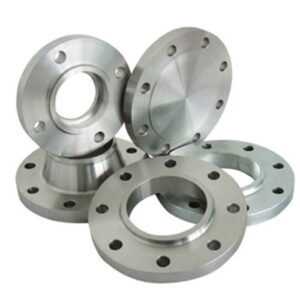
Our flange range includes Weld Neck, Slip-On, Blind, Socket Weld, Threaded, Lap Joint and Plate Flanges, with different pressure ratings, facing options and material grades.
For standard or project-specific flange requirements, RAYOUNG can supply products according to the required size, pressure rating, standard and material specification.
Need a specific flange size or dimensional drawing? Contact RAYOUNG with your pipe size, pressure class and standard.
Email: info@hb-steel.com
WhatsApp: +86 180 0311 9682