

In piping systems, fittings are essential components that allow for the redirection, branching, or joining of pipes. Among the most commonly used pipe fittings are tees. There are two common types—equal tees and reducing tees—each plays a unique role in how liquids and gases move through a system. Picking the right one is key to a well-functioning pipeline.
This article will delve into the characteristics, applications, and benefits of both equal and reducing tees, offering a clear comparison to help you make informed decisions for your next project.
What is an Equal Tee?
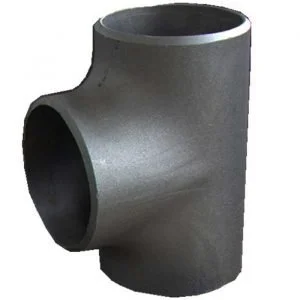
Equal tee (sometimes called a straight tee) has three openings, all with the same diameter. Whether it’s the main “run” of the pipe or the branching-off section, every connection point is uniform, ensuring a consistent flow rate across all directions.
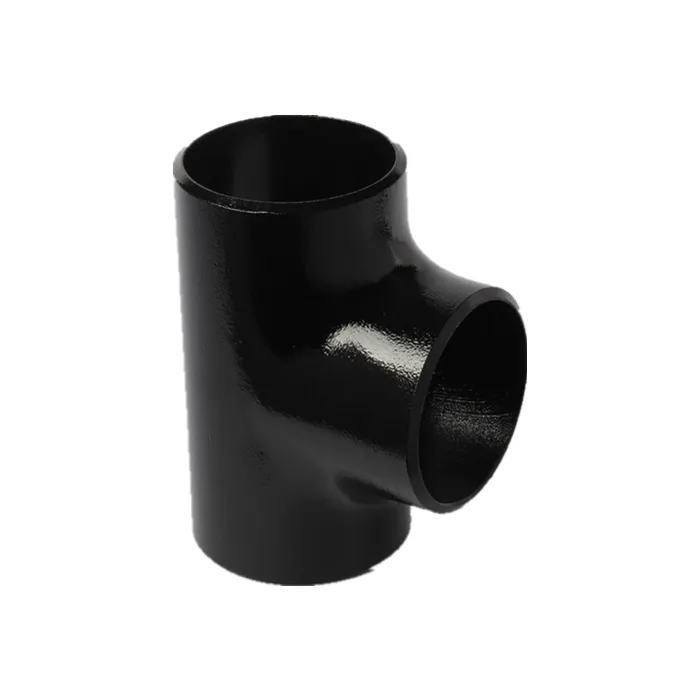
Key Features of Equal Tees:
- Uniform Openings: All three ports share the same size, simplifying flow consistency.
- Balanced Flow Distribution: Perfect for splitting a pipe system where fluid or gas needs to be distributed evenly.
- Stable Flow: Helps maintain consistent pressure and velocity, preventing disruptions at the branching point.
Equal Tees Application:
- Residential & Commercial Plumbing: Essential for water distribution systems that demand balanced flow to various outlets.
- Chemical Plants: Crucial for maintaining steady fluid movement in pipelines carrying sensitive chemicals or gases.
- HVAC Systems: Frequently used in heating, ventilation, and air conditioning to ensure uniform air or water distribution.
- Heavy Industry: From oil and gas to power generation, equal tees are vital for consistent flow rates in branching pipelines.
What is Reducing Tee?
A reducing tee is a type of buttweld fitting where the branch outlet has a smaller diameter than the main run. The two outlets on the main pipe maintain the same size, while the third branch is smaller, allowing the fitting to connect pipes of different diameters.
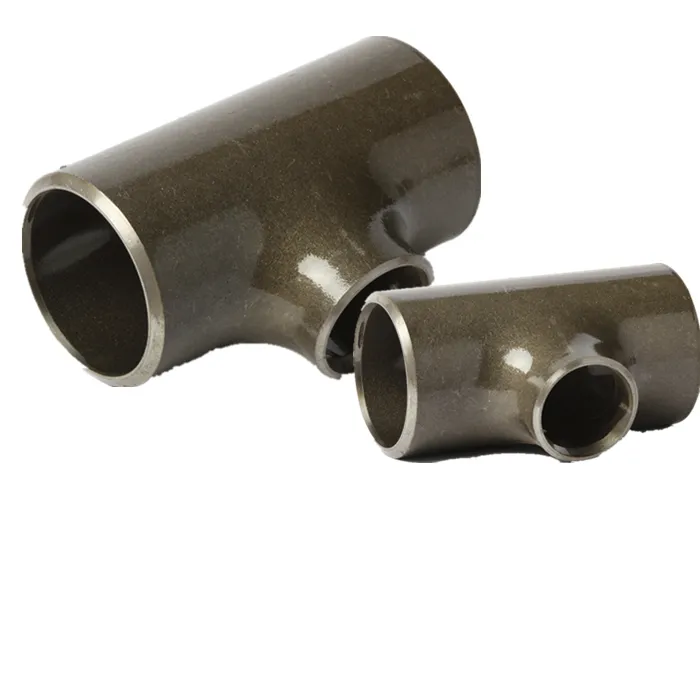
Key Features of Reducing Tees:
- Varied Outlet Sizes: Two main ports are identical, but the third branch is scaled down.
- Flow Regulation: Enables a change in pipe size, naturally reducing flow or pressure in the smaller branch—perfect for systems needing diverse flow rates.
- Streamlined Transitions: Facilitates smooth transitions between different pipe sizes, often eliminating the need for extra reducers.
Reducing Tees Application:
Urban Water Supply: Commonly used when a main water line needs to branch off into smaller lines for homes or businesses.
Gas Networks: Ideal for systems where gas flow needs to be scaled down in specific areas, such as industrial gas distribution.
Agricultural Irrigation: Frequently deployed in farming to control and reduce water flow to different sections of an irrigation system.
Industrial Processes: In complex industrial setups, reducing tees allow for varied flow rates to different operational units, boosting efficiency.
Equal Tee vs. Reducing Tee: A Side-by-Side Look
Let’s break down the core differences:
Outlet Size:
Equal Tee: All three outlets are identical, guaranteeing uniform flow.
Reducing Tee: The branch outlet is smaller than the main run, designed to reduce flow or pressure.
Flow Dynamics:
Equal Tee: Maintains consistent flow and pressure across all three outlets.
Reducing Tee: The smaller branch actively reduces flow or pressure, making it ideal for directing fluids into smaller pipes or subsystems.
Primary Function:
Equal Tee: Best when consistent flow across all branches is paramount for balance and uniformity.
Reducing Tee: Used when there’s a need to connect pipes of different sizes and manage varying flow rates throughout the system.
Typical Applications:
Equal Tee: Found in HVAC, general plumbing, and industrial fluid control where balanced distribution is key.
Reducing Tee: Common in water supply, gas distribution, and irrigation systems where flow reduction in a branch is necessary.
Installation Nuances:
Equal Tee: Generally simpler to install due to uniform outlet sizes, requiring fewer components.
Reducing Tee: Can be slightly more involved, as it requires careful alignment and flow calculations to ensure proper pressure management.
The Perks of Equal Tees
Predictable Flow: Guarantees steady pressure and flow across all outlets, crucial for balanced systems.
Straightforward Design: Their simplicity means easier installation and maintenance.
Broad Utility: Adaptable across almost any industry, from residential plumbing to advanced chemical processing.
The Benefits of Reducing Tees
Flexible Connections: Offers the ability to connect diverse pipe sizes, simplifying complex system designs.
Precise Flow Control: Helps manage pressure and flow by reducing the branch diameter, offering greater control over fluid distribution.
Economical: By integrating the reduction directly into the tee, they often remove the need for additional reducers or adapters, cutting material costs.
The Final Call: Which Tee for You Project?
The decision between an equal tee and a reducing tee boils down to the specific demands of your piping network.
If your system requires uniform flow and consistent pressure across all outlets, the equal tee is your go-to. Think HVAC systems, main water distribution lines, or industrial processes where balance is non-negotiable.
However, if your system involves connecting pipes of different diameters or demands a reduction in flow or pressure in one particular branch, the reducing tee offers the flexibility and control you need. This makes it perfect for gas distribution, secondary water supply lines, or targeted irrigation setups.
Both types of tees are indispensable elements in fluid distribution, each bringing unique advantages rooted in their design and function. Understanding these distinctions is the key to making the right choice for your piping system, ensuring peak performance and efficiency.
1 thought on “Equal Tee vs Reducing Tee”
Please we kindly request quote for the attached item including weight/packaging dimension, lead time and shipping cost
4.TEE:PIPE EQUAL TYPE:TEESIZE:3/4 CONN:SW CLASS:3000 MATL:316/316L SS SPEC:ASTM A182 GRADE:F316/F316L TEE;3/4 IN ASME B16.11; SW; CL 3000; SS ASTM A182 GR F316/F316L (DUAL-STAMPED) Manufacturer(MA) – ICARUS
QTY:2