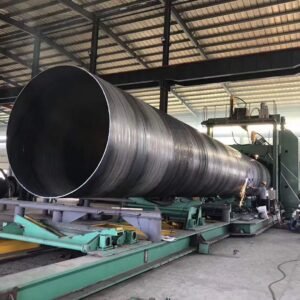

In the high-stakes worlds of energy extraction and heavy infrastructure, pipeline integrity is non-negotiable. API 5L steel pipes stand as the global benchmark for reliability, designed to withstand the extreme pressures and corrosive environments inherent to the oil and gas industry.
For procurement managers and engineers, understanding the nuances of these pipes—from manufacturing methods to specific grade requirements—is critical for project success. This guide breaks down everything you need to know。
Why the Industry Relies on API 5L Standards?
API (American Petroleum Institute) 5L specifications are not just guidelines; they are the backbone of global energy infrastructure.
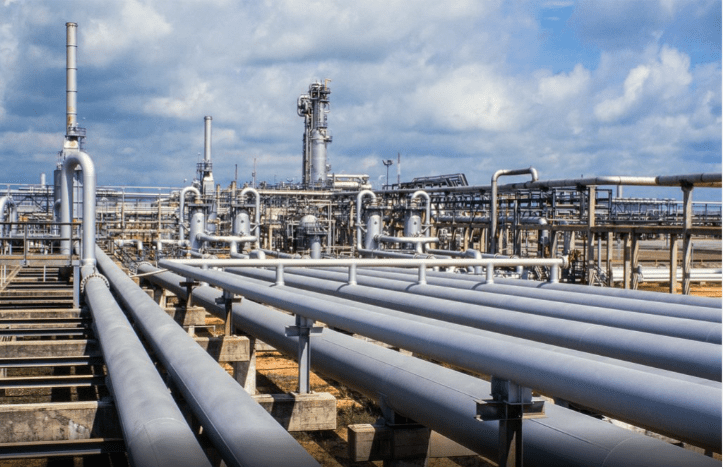
Oil & Gas: These API 5L pipes are the primary pipes for transporting crude oil and natural gas. Their rigorous testing ensures they can handle high-pressure environments, preventing leaks that could lead to environmental catastrophes and massive financial losses.
Construction & Manufacturing: Beyond fluids, API 5L pipes provide structural support. Their high tensile strength makes them ideal for piling, heavy machinery frameworks, and industrial plant construction.
Power Generation: In power plants, these pipes efficiently transport steam and water under high heat, minimizing downtime and maintenance costs.
Manufacturing Processes: Seamless vs. Welded
Choosing the right manufacturing method is a balance between cost, size requirements, and pressure tolerance.
- Seamless Pipes (SMLS)
The Process: A solid round steel billet is heated and pierced by a mandrel to create a hollow tube. It is then rolled and stretched to specific dimensions.
The Advantage: With no weld seam, SMLS pipes offer uniform strength across the entire body. They are the top choice for high-pressure, critical applications where failure is not an option.
The Trade-off: They are generally more expensive and have size limitations (typically up to 36″ OD). - Electric Resistance Welded (ERW)
The Process: Steel coils are unrolled and formed into a cylinder. The edges are heated via electrical resistance and pressed together to form a longitudinal seam.
The Advantage: ERW pipes are cost-effective and faster to manufacture. They are excellent for standard pressure applications and are available in sizes from 2″ to 24″.
The Trade-off: The weld seam can be a point of vulnerability if not strictly tested. - Submerged Arc Welded (SAW)
The Process: Used for larger diameters, steel plates are formed into cylinders. The seam is welded from both the inside and the outside using an arc submerged in flux.
The Advantage: This double-weld technique provides immense durability for large-diameter pipes (20″ to 48″).
The Trade-off: The process is complex and requires heavy machinery, making it more costly than ERW.
API 5L Steel pipes Applications
Selecting the right pipe goes beyond just size; it requires matching the pipe’s properties to the environment.
- Onshore and Offshore Transmission
For standard transport of oil, gas, and water, API 5L pipes provide the necessary ductility and strength to traverse vast distances over land or along the seabed. - Sour Service
When pipelines transport fluids containing Hydrogen Sulfide (H2S), they face the risk of sulfide stress cracking. API 5L pipes manufactured to Annex H standards undergo specific chemical treatments to resist this corrosion, ensuring safety in “sour” environments. - Offshore Service
The deep ocean is a hostile environment. Pipes designated for offshore use must meet Annex J requirements, which mandate higher toughness and fatigue resistance to withstand ocean currents, pressure, and saltwater corrosion.
Frequently Asked Questions (FAQ)
Q: What is the real difference between PSL1 and PSL2?
A: Think of PSL (Product Specification Level) as quality tiers. PSL1 is the standard quality for general use. PSL2 is stricter, requiring tighter controls on chemical composition, notch toughness testing, and traceability. For critical or high-pressure lines, PSL2 is almost always required.
Q: What do the grades (e.g., X42, X60, X70) mean?
A: The letter ‘X’ is followed by a number representing the pipe’s minimum yield strength in kilopounds per square inch (ksi). For example, API 5L X52 has a minimum yield strength of 52,000 psi. Higher numbers mean stronger steel.
Q: Why is coating necessary for API 5L pipes?
A: Even the strongest steel is susceptible to rust. Coatings (such as 3LPE, FBE, or concrete weight coating) provide a barrier against external corrosion and mechanical damage, significantly extending the pipeline’s operational lifespan.
Q: Which pipe is better: Seamless or Welded?
A: “Better” depends on the application. Seamless is superior for high-pressure, critical environments. Welded (ERW/DSAW) is superior for cost-efficiency in lower-pressure lines or when large diameters are needed.
Need help selecting the right API 5L grade for your project?
Ensuring you have the correct specifications can save millions in maintenance and prevent critical failures.
Contact our team today for advice on sourcing the best piping solutions for your needs.