
In the complex world of industrial piping systems, the integrity of a connection is paramount. Whether you are managing a high-pressure oil refinery or a municipal water treatment plant, the choice of flange can mean the difference between seamless operation and catastrophic failure. As a leading manufacturer specializing in industrial steel flanges, Rayoung understands that project managers and stakeholders often face the “Forged vs. Cast” dilemma.
This technical guide delves into the metallurgical differences, manufacturing processes, and application scenarios for both forged and cast flanges, enabling you to make an informed decision for your 2026 procurement strategy.
1. Understanding the Fundamental Differences
At its core, the difference between a forged flange and a cast flange lies in the grain structure of the metal. Manufacturing techniques dictate how the steel molecules align, which directly impacts the flange’s pressure-bearing capacity, ductility, and longevity.
What is a Cast Iron/Steel Flange?
Casting is one of the oldest metalworking methods. It involves heating the metal until it is molten and then pouring it into a pre-shaped mold. Once cooled, the metal solidifies into the shape of the flange.
Key Characteristics of Casting:
- High Production Efficiency: Casting allows for high-volume production of complex shapes that would be difficult or impossible to forge.
- Low production cost: Due to lower energy requirements and less labor-intensive processing, cast flanges generally come at a lower price point.
- Precision and Complexity: Modern casting (such as investment casting) can achieve very accurate dimensions, reducing the need for extensive CNC machining.
- Inherent Risks: The cooling process in casting can lead to “casting defects” such as porosity (air bubbles), shrinkage cracks, and non-metallic inclusions. These internal flaws are often invisible to the naked eye but can fail under high pressure.
What is a Forged Steel Flange?
Forging is a mechanical process where the steel is heated to a plastic state and then hammered or pressed into shape using localized compressive forces. This “working” of the metal physically changes its internal structure.
Key Characteristics of Forging:
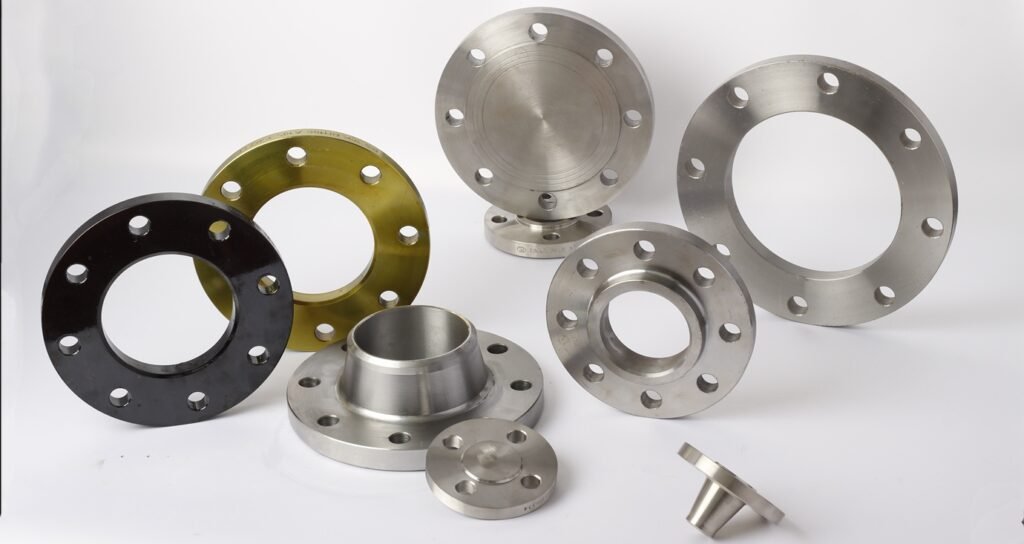
- Structural Integrity: Forging refines the grain flow of the steel, aligning it with the shape of the flange. This results in superior mechanical properties, including higher tensile and shear strength.
- Density: The high pressure of the forging process eliminates internal voids and gas pockets, creating a dense, compact molecular structure.
- Durability: Forged flanges exhibit better resistance to fatigue and impact, making them the standard for critical infrastructure.
- Costs are higher than those of cast flanges: The forging process requires massive machinery and multiple heating cycles, which reflects in a higher unit cost compared to casting.
Technical Comparison: Why Forging Wins in Critical Applications
Mechanical Performance
A forged flange is significantly more “tough.” In a cast flange, the grain structure is random. In a forged flange, the grain flow is continuous, which allows the component to withstand the high stress of thermal expansion and pressure surges. If your application involves “water hammer” effects or extreme temperature fluctuations, forging is the only safe choice.
Corrosion Resistance
Interestingly, the carbon content and the density of the metal play a role in oxidation. Forged flanges generally maintain a lower, more controlled carbon content. Combined with a more uniform internal structure, they are less prone to localized pitting and stress corrosion cracking compared to the often-irregular surface of a casting.
Machining and Surface Quality
Forged flanges provide a superior surface for machining. When we turn a forged blank on a CNC lathe at Rayoung, the result is a cleaner, more precise sealing face (serrated or smooth finish). Castings can sometimes reveal hidden “sand holes” during machining, leading to scrapped parts and project delays.
When to Choose Casting vs. Forging steel flanges?
While we primarily recommend forged flanges for industrial use, both have their place in the market.
Choose Cast Flanges if:
- The application is low-pressure (e.g., HVAC, non-critical water lines).
- The flange size is exceptionally large, or the shape is highly irregular.
- Budget is the primary constraint, and safety factors are low.
Choose Forged Flanges if:
- You are operating in the Petrochemical, Oil, Gas, or Nuclear industries.
- The system operates under high pressure (Class 600 and above).
- The medium is hazardous, flammable, or extremely hot/cold.
- You require compliance with strict international standards like ASME B16.5 or API 6A.
Forged flanges Material Standards:
At Rayoung, we specialize in carbon steel alloy steel forged flanges.
These are used in standard piping projects where corrosion is managed by coatings or fluid chemistry.
ASTM A105: The most common grade for ambient and higher-temperature service in pressure systems.
ASTM A350 : Specifically designed for low-temperature applications (Arctic climates or cryogenic storage).
ASTM A694 (F42 to F70): High-yield carbon steel often used in transmission pipelines for oil and gas.
Stainless & Alloy Steel Forged Flanges
For specialized environments requiring extreme heat resistance or chemical stability.
ASTM A182 F304/F316: The standard for corrosion resistance.
ASTM A182 F5, F9, F11, F22: Cr-Mo alloys used in high-temperature power plant piping.
Manufacturing Standards
To serve international stockholders and EPC contractors, our production line adheres strictly to global standards.
ASME B16.5: The primary standard for steel pipe flanges from NPS 1/2 through NPS 24.
ASME B16.47 Series A & B: For large-diameter flanges (NPS 26 through NPS 60). This is where forging expertise becomes critical due to the sheer mass of the component.
ASME B16.48: Covers “Line Blanks” (Spectacle Blinds, Spacers, and Paddles).
API 605 / MSS-SP44: Standards specifically tailored for high-pressure pipeline applications.
Pressure Ratings
Our forged flanges are engineered to meet various pressure classes, ensuring safety across the board:
Class 150 lb & 300 lb: Common for general industrial use.
Class 600 lb, 900 lb, 1500 lb: Required for high-pressure line pipes.
Class 2500 lb: For extreme high-pressure environments, often found in deep-sea or specialized chemical processing.
The Rayoung’s Advantage
As a dedicated export factory, we don’t just “make” flanges; we engineer them. Our process ensures that every distributor receives a product that enhances their brand reputation.
Full Traceability: Every forged flange is stamped with a unique Heat Number. We provide a Mill Test Certificate (MTC) EN 10204 3.1 with every shipment, detailing the chemical composition and mechanical test results (Tensile, Yield, Elongation, Hardness).
Rigorous Testing: Beyond visual inspection, we offer Ultrasonic Testing (UT) for Class 600 and above to ensure zero internal defects, along with Magnetic Particle (MPI) and Dye Penetrant (DPI) testing upon request.
Precision Machining: Our facility uses high-precision CNC equipment to ensure that bolt holes, flange thickness, and raised face heights are accurate to the millimeter.
Anti-Corrosion Packaging: We understand the rigors of sea freight. All carbon steel flanges are treated with anti-rust oil, black paint, or yellow varnish, and packed in seaworthy plywood cases with plastic wrap protection.
While cast flanges offer a low-cost entry point for non-critical systems, the forged flange remains the gold standard for industrial safety and reliability. For engineers and distributors, choosing a forged flange from a reputable manufacturer like Rayoung is an investment in peace of mind.
In the long run, the “higher” cost of a forged flange is offset by the lack of downtime, the prevention of leaks, and the sheer lifespan of the piping system.
Contact Our Engineering Team
Ready to upgrade your inventory or source for your next project? Our team is standing by to provide technical data sheets, CAD drawings, and competitive factory-direct quotes.
Official Website: https://hb-steel.com
Inquiry Email: info@hb-steel.com
Technical Support / WhatsApp: +86-18003119682
Headquarters: Cangzhou,Hebei, China
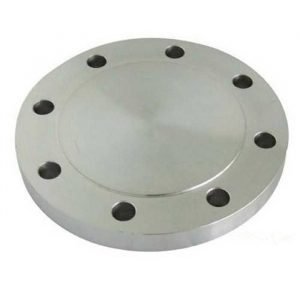
Whether you need a standard ASME B16.5 Blind Flange or a custom large-diameter A694 F70 Weld Neck Flange, Rayoung is your partner in high-performance piping components. Reach out today.