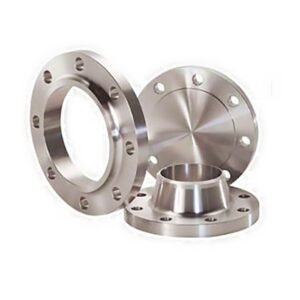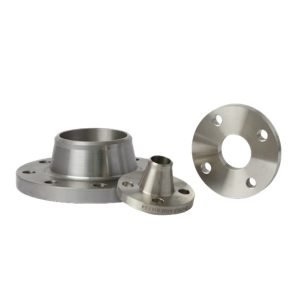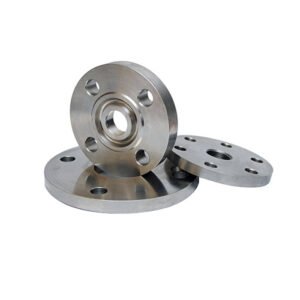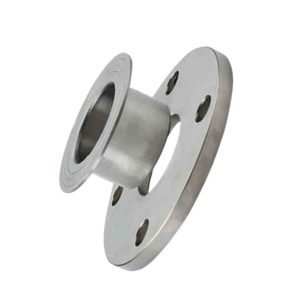

When buying industrial steel flanges, the quality of the finished product is not determined only by forging, machining or dimensional inspection. Surface preparation and painting also directly affect appearance, coating adhesion and protection during storage and transportation. At our factory, flange painting is handled through a controlled automatic painting line, with defined cleaning, drying, painting, curing, cooling and packaging steps rather than a simple manual spraying process.
For industrial pipe flange distributors, stockists, or project buyers, this process provides a clearer view of how we control flange production after machining and before shipment.
A Controlled Auto-Painting Process for Industrial Steel Flanges
Our automatic flange painting process consists of multiple stages. Each stage has a specific purpose and operating requirement.
1. Dust Removal and Cleaning
Before painting, flange surfaces are cleaned using a low-foaming detergent.
The cleaning process includes:
- Cleaning pressure above 2.0 MPa
- Cleaning time of approximately 8–10 minutes
- Removal of surface impurities
- Preparation of the flange surface for better paint adhesion
Proper surface cleaning is an important first step because residual dust, oil or other impurities can affect the final coating.
2. Rinsing and Surface Drying
After cleaning, the flanges are rinsed with clean water for approximately 2–3 minutes.
A high-power fan is then used to remove surface water for around 15 minutes.
The objective is to ensure that excessive surface moisture is removed before the flange enters the next drying stage.
3. Moisture Treatment Before Painting
The flange surface is subsequently dried at approximately 80–100°C for at least 30 minutes.
This stage is used to further remove moisture and prepare the surface for the painting process.
Controlling the drying conditions helps provide a more suitable surface for subsequent coating.
4. Painting, Dripping and Draining
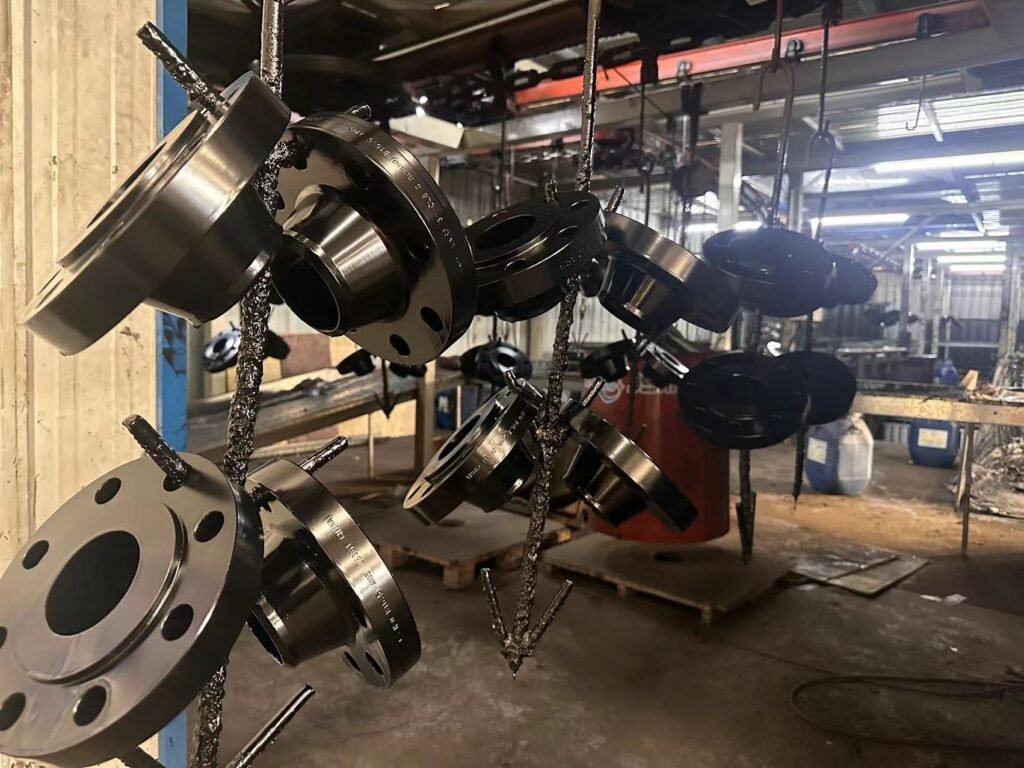
After surface preparation, the flanges enter the painting process.
The paint dripping and draining stage takes approximately 40–50 minutes. This allows excess paint to drain while maintaining uniform coating adhesion on the flange surface.
For an industrial steel flange factory, this step is particularly important when handling batches of products because consistency across different pieces is more difficult to achieve when the process depends entirely on manual operation.
5. High-Temperature Baking and Curing
After painting, the flanges enter the high-temperature baking process.
Our specified baking conditions are:
- Baking temperature: 140–160°C
- Baking time: 30–40 minutes
The process requirements are controlled carefully. According to our production process, temperatures below 140°C may result in insufficient paint adhesion, while temperatures above 160°C may cause bubbling and paint loss after drying.
The purpose of this stage is to achieve a more solid coating and stronger adhesion.
6. Controlled Cooling After Baking
After leaving the oven, the residual flange temperature is approximately 100–120°C.
A 0.55 kW blower is used for cooling for approximately 30–40 minutes.
The expected result is a more solid coating with stronger adhesion before the products move to the following stages.
7. Natural Drying and Packaging Protection
After the controlled cooling stage, the painted flanges undergo approximately 24 hours of natural drying.
Before packaging, an insulation or anti-stick film is applied to help prevent painted surfaces from sticking together.
For flanges with FF (Flat Face), two layers of film are used. For RF (Raised Face) flanges, one layer is used according to the production process.
This small packaging detail matters when painted flanges need to be transported over long distances or stored as inventory before installation.
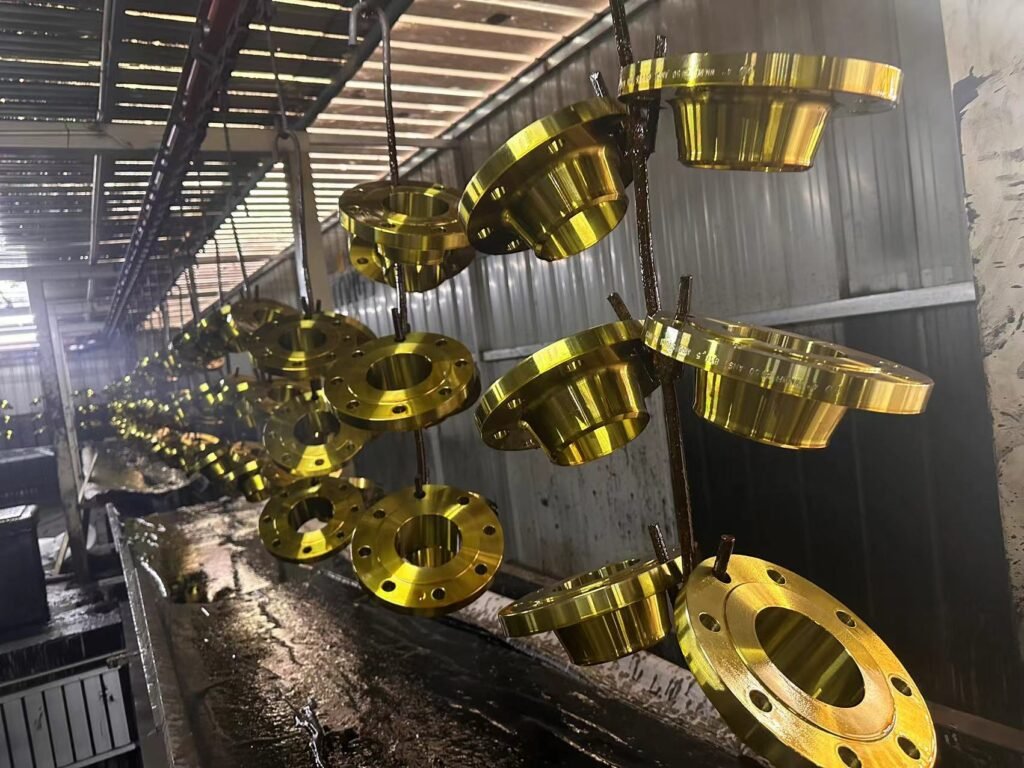
Special Control for Yellow-Painted Flanges
Yellow-painted flanges require an additional treatment step.
After the first heating and drying process, a dedicated worker checks the products piece by piece and removes rust spots or yellow spots where necessary.
Without this treatment, black spots and impurities may remain visible on the finished surface and affect the overall appearance.
This is one example of why automated equipment does not replace production inspection. Automation provides process consistency, while human inspection is still required for specific quality-control points.
Production Capacity: Up to 15 Tons of Flanges per Day
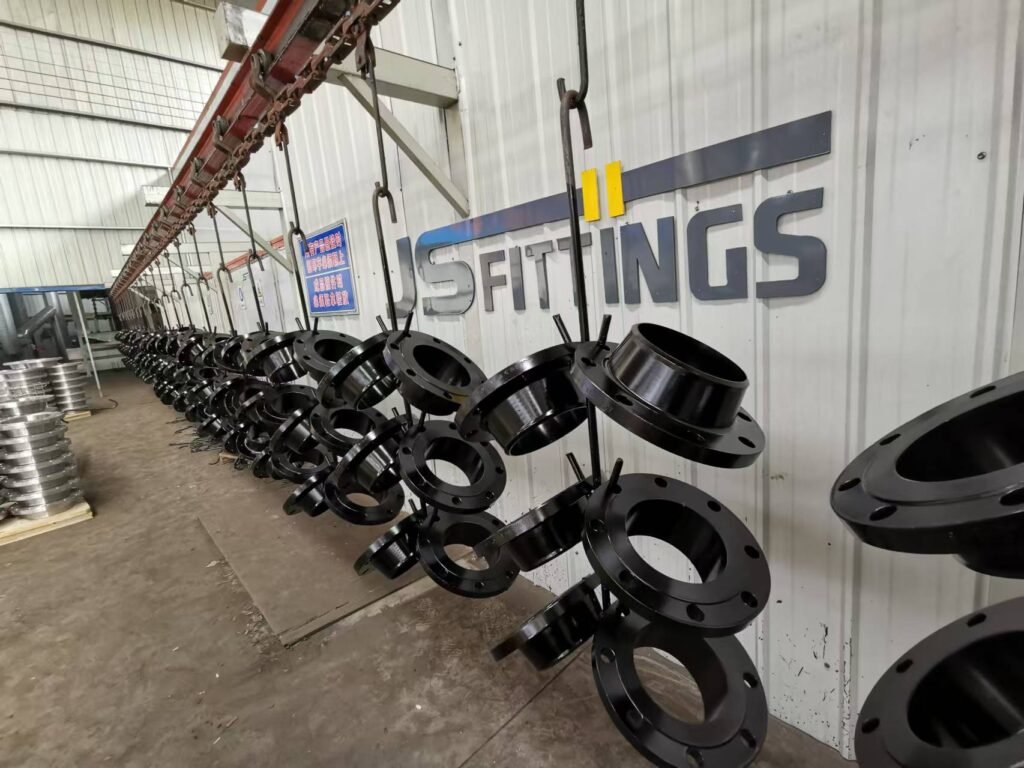
The automatic painting line is designed for batch production rather than small-scale manual processing.
Our current production information includes:
- Flange painting capacity: up to 15 tons/day
- Natural gas consumption: approximately 240–260 m³/day
- Automatic painting process
- High-temperature curing
- Controlled cooling
- Protective film application before packaging
For stock distributors and project buyers, production capacity is important when a large quantity of flanges needs to be processed within a defined delivery schedule.
Why This Process Matters to Flange Buyers
When evaluating an industrial steel flange factory, buyers should look beyond the product photograph and quoted price.
A more useful assessment is to ask:
- How are flange surfaces cleaned before painting?
- How is moisture removed?
- Is the painting process manual or automated?
- How is paint cured?
- How is coating adhesion controlled?
- How are painted flanges protected during packaging?
- What is the actual production capacity?
These details provide a better understanding of whether a supplier operates a real production system or simply sources finished products for resale.
At our factory, the auto-painting line is one part of the wider flange manufacturing and quality-control process. The purpose is not simply to make the products look better. It is to establish a repeatable production procedure from surface preparation through curing and final packaging.
A Factory Approach to Industrial Steel Flange Supply
For stockists, distributors, trading companies and engineering contractors, supplier reliability involves more than having a catalogue of flange sizes.
It requires production capability, process control, technical understanding and the ability to handle batch orders consistently.
Our automatic painting line demonstrates how we manage one specific stage of flange production with defined operating conditions, production capacity and inspection requirements.
If you are sourcing industrial steel flanges for inventory or an engineering project, send us your flange specifications, sizes, standards and coating requirements. Our factory team can review the requirements and provide a production-based quotation.
Email: info@hb-steel.com admin@jsfittings.com
WhatsApp: +86 180 0311 9682