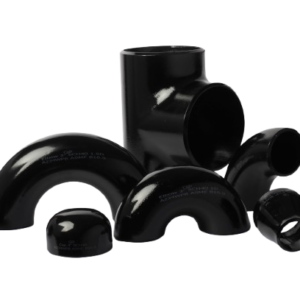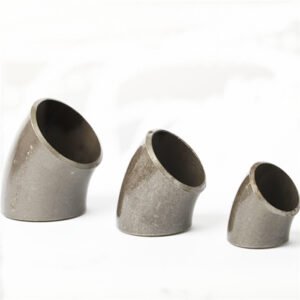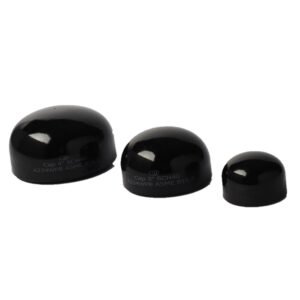

In the demanding world of oil, gas, and petrochemical infrastructure, the integrity of a piping system relies on the precision of its components. As a procurement professional or project engineer, one of the most critical considerations is the relationship between buttweld fitting pressure ratings and wall thickness (Schedule). Choosing the wrong specification doesn’t just lead to budget overruns—it risks system failure.
At Rayoung, as a professional manufacturer specializing in high-quality buttweld fittings and flanges. This guide aims to clear the air.
Buttweld Fittings Pressure Rating vs. Wall Thickness
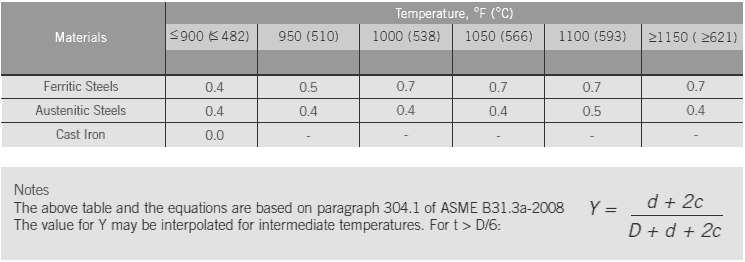
The pressure rating of a buttweld fitting (such as an elbow, tee, or reducer) is not an arbitrary number. It is intrinsically linked to the pipe schedule. Under ASME B16.9, the standard for factory-made wrought buttweld fittings, the fitting must be designed to withstand the same pressure as the matching straight seamless pipe.
Key takeaway: A fitting’s pressure rating is defined by the wall thickness (Schedule 40, 80, 160, etc.) and the material grade (ASTM A234 WPB, A420 WPL6, etc.).
Buttweld fittings do not carry independent pressure class ratings (like 150# or 300# flanges). Instead, their pressure rating matches the straight pipe of the corresponding nominal size and wall thickness schedule, meaning a fitting with a specific schedule thickness safely contains the exact same internal pressure as a pipe of that same schedule.
Rating and Thickness Principles
Equal Strength: A butt-weld fitting is designed to have equal or greater nominal thickness and strength than the matching pipe.
Schedule Matching: Ratings are designated by pipe schedules (such as SCH 10, SCH 40, SCH 80, and SCH 160) rather than pound classes.
Wall Thickness Rules: Thicker walls handle higher internal operating pressures and temperatures.
Design Standards: Governed by standards like ASME B16.9 for dimensions and ASME B31.3 for pressure design calculations.
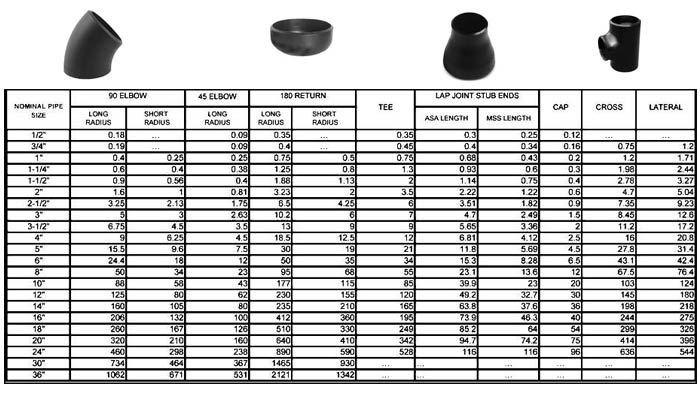
Why “Matching” Matters
When selecting buttweld fittings for high-pressure pipelines, the “matching principle” is the golden rule:
- Uniformity: The fitting’s wall thickness must match the pipe’s nominal wall thickness to ensure a consistent inner diameter (ID) and proper weld penetration.
- Pressure Integrity: If the fitting thickness is lower than the pipe schedule, the fitting becomes the weak point of the system.
- Hydrostatic Testing: All Rayoung fittings are manufactured to comply with strict testing protocols to ensure that, regardless of the schedule, the fitting maintains its pressure rating under extreme thermal and mechanical stress.
Critical Factors Influencing Your Choice
- Operating Pressure & Temperature: Higher pressures require higher schedules (e.g., Sch 80 or 160).
- Corrosion Allowance: For oil and gas applications, engineers often add “corrosion allowance” to the wall thickness, which may require jumping to a higher schedule than the base pressure rating suggests.
- Material Grade Matters: A stainless steel fitting (e.g., ASTM A403 WP316) has different pressure-temperature ratings than a carbon steel fitting (e.g., A234 WPB), even if the wall thickness is the same.
Why Experienced Buyers Choose Rayoung
At Rayoung, we don’t just supply fittings; we provide engineering solutions. We understand that for international projects, documentation is as important as the steel itself.
- Manufacturing Precision: Our CNC machining and forging processes ensure every fitting meets exact wall thickness tolerances per ASME/ANSI standards.
- Traceability: We offer full MTC (Material Test Certificates) according to EN 10204 3.1.
- Scalability: From bulk inventory supply for distributors to custom-engineered runs for large-scale energy projects, Rayoung delivers consistency across every piece.
Need Expert Guidance for Your Project?
Selecting the right pressure rating and schedule is vital for safety and cost-efficiency. Are you currently sourcing for an upcoming pipeline project or stocking your inventory?
Click here to download our latest Buttweld Fitting Catalog
Contact the Rayoung Technical Team today.
Send us your specification list, and let our experts provide a competitive quote and technical verification for your specific requirements.