

Incorrect installation of a buttweld pipe fitting can lead to weld defects, dimensional problems, rework and delays in industrial piping projects. Some issues are visible before welding; others are discovered only during inspection or testing.
The key is knowing not only how to prevent these mistakes, but also what to do when they occur. The following guide covers practical problems encountered during fitting selection, pipe preparation, welding and inspection.
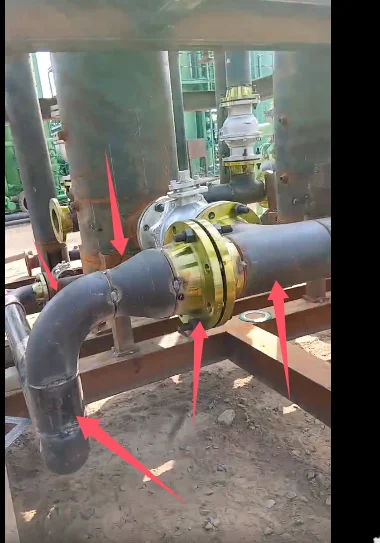
1. Incorrect Bevel Preparation or Root Gap
The problem: Damaged or uneven bevels, or a root opening that does not meet the approved welding procedure, can make proper weld penetration difficult.
How to fix it: Stop fit-up and check the joint preparation against the approved Welding Procedure Specification (WPS). Reprepare damaged ends using an approved method, then reset and verify the root opening before welding. Do not compensate for incorrect preparation by adding excessive weld metal.
2. Pipe and Fitting Misalignment
The problem: The internal surfaces of the pipe and fitting do not line up correctly, creating a high-low condition. This may affect weld quality and, depending on the service, flow performance.
How to fix it: Release the joint from temporary restraints where appropriate and identify the cause, such as incorrect cutting, poor positioning or dimensional mismatch. Realign the components using suitable fit-up tools. If the mismatch exceeds the applicable acceptance criteria, do not force the joint together; correct the geometry or replace the unsuitable component.
3. Wrong Size, Wall Thickness or Fitting Type
The problem: A fitting has the correct nominal pipe size but the wrong schedule, angle, radius or end-to-end dimensions. This often occurs when similar items are mixed during storage or delivery.
How to fix it: Compare the component markings and dimensions with the approved drawings, bill of materials and purchase specification. Quarantine incorrect items and obtain the correct fitting. Do not machine, thin or modify a pressure-containing fitting without an approved engineering disposition.
For selection guidance, see our guide to carbon steel buttweld elbows.
4. Incorrect Material Grade or Lost Traceability
The problem: A fitting’s grade does not match the project specification, or its heat number and material records cannot be reliably linked to the component.
How to fix it: Hold the component from installation until its identity can be verified through acceptable markings and material documentation. If the grade cannot be established, refer the item to quality control or the responsible engineer for disposition. Replace it if compliance cannot be demonstrated.
Distributors should keep different grades separated and preserve traceability when repacking or splitting orders.
5. Welding Surface Contamination
The problem: Oil, grease, moisture, paint, rust or other contaminants remain on the joint preparation and contribute to weld defects.
How to fix it: Stop welding, remove the contamination using an approved cleaning method and reinspect the joint. If welding has already occurred and porosity or another defect is suspected, assess the weld under the applicable inspection procedure. Repair unacceptable defects only through an approved repair method, followed by the required reinspection.
6. Missing Preheat or Incorrect Heat Control
The problem: Required preheat is omitted, interpass temperatures are uncontrolled, or the welding heat input falls outside the approved procedure.
These requirements depend on the material, thickness, welding process and applicable construction code. A high schedule number alone does not establish the required preheat.
How to fix it: Before welding, verify the applicable temperature and heat-input requirements and correct the setup. If the joint has already been welded under uncontrolled conditions, notify quality control and the responsible welding engineer. Assess the records and joint condition, and determine whether additional examination or an approved disposition is required. Do not assume that reheating automatically resolves the problem.
7. Inadequate Back Purging Where Required
The problem: During welding of stainless steel and certain other materials or joint configurations, insufficient root-side shielding can cause heavy oxidation or unacceptable root surfaces.
How to fix it: If the problem is identified before welding, restore the specified purge conditions and verify the required gas and oxygen-control criteria. If the root has already been welded, inspect it using the method and acceptance criteria specified for the service. Where unacceptable oxidation or other defects are confirmed, repair or replace the joint as directed by the approved procedure.
Back purging requirements should be determined by the material, welding procedure and project specification, not applied indiscriminately to every fitting.
8. Distortion or Stress from Forced Fit-Up and Poor Support
The problem: Pipes are pulled into position with excessive force, temporary supports are inadequate, or welding distortion changes the intended alignment.
How to fix it: Stop the installation sequence and check the pipe supports, alignment and adjacent connection positions. If the weld is not complete, correct the fit-up before continuing. If the joint has been welded, assess the dimensional deviation and any imposed loads before deciding whether controlled correction or replacement is acceptable. Do not force connected equipment into alignment by tightening or pulling the piping without engineering approval.
9. Required Post-Weld Heat Treatment Is Missed
The problem: The project specification or governing construction code requires post-weld heat treatment (PWHT), but the operation is omitted or the records do not demonstrate compliance.
How to fix it: Hold the joint from final acceptance and verify the applicable PWHT requirements. If treatment was required, arrange it under an approved procedure with the necessary temperature monitoring and records. Afterward, complete any required hardness testing, examination or other acceptance checks. Do not apply PWHT automatically to every material or joint; inappropriate treatment can also be harmful.
10. Incomplete Inspection or Failed NDT
The problem: A weld is accepted based on appearance alone, required testing is missed, or radiographic testing (RT), ultrasonic testing (UT) or another examination identifies an unacceptable indication.
How to fix it: Do not release the joint for service until the nonconformity has been evaluated. Identify the defect, determine its extent and follow the approved repair procedure. Re-examine the repaired area and perform any additional testing required by the governing code and project specification. Visual inspection alone cannot confirm the absence of internal defects.
Final Checks Before Accepting a Buttweld Pipe Fitting Joint
Before a joint is released for service, confirm that:
- The fitting size, wall thickness, type and material grade match the approved documents.
- Bevel preparation, root opening and alignment meet the applicable requirements.
- Welding was completed under the approved procedure by appropriately qualified personnel.
- Required heat treatment, inspection and testing have been completed and recorded.
- All nonconformities have been resolved and accepted by the responsible quality personnel.
Sourcing Buttweld Pipe Fittings for Industrial Projects
Installation quality depends on both suitable fittings and controlled site procedures. Distributors should verify specifications, markings and material documentation before delivery. Engineering contractors should ensure that the supplied fittings match approved drawings, material requirements and inspection plans.
RAYOUNG supplies industrial buttweld pipe fittings for stock distributors, trading companies and engineering contractors. With a 35,000+ sqm production base, a team of more than 100 members and reported capacity exceeding 90 containers per month, we support industrial procurement with a stated lead time of 15–30 days for one container, subject to order specifications and confirmation.
For a quotation, send us your fitting list, sizes, material grades, standards, quantities and inspection requirements.
Contact RAYOUNG
Email: info@hb-steel.com
WhatsApp: +86 180 0311 9682
Our team can review your requirements and clarify the information needed for your order.