

In the complex world of industrial piping, the terminology can often be as intricate as the systems themselves. For procurement managers, project engineers, and site supervisors, distinguishing between a Blind Flange and a Blank Flange is more than a linguistic exercise—it is a critical requirement for operational safety and efficiency.
While these terms are sometimes used interchangeably in casual conversation, they represent specific functions and engineering requirements. In this article, we will delve deep into the technical differences, material specifications, and application scenarios for both, helping you make informed decisions for your next project.
1.What is a Blind Flange?
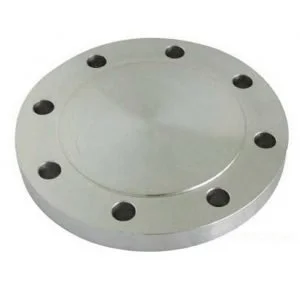
A Blind Flange is a solid disk used to terminate a piping system or seal off a pressure vessel opening. Unlike standard flanges (such as slip-on or weld neck flange), a blind flange has no center bore or hole to allow fluid flow. Instead, it features a solid face and is designed with bolt holes around the perimeter to match its mating flange.
The Anatomy of a Blind Flange
Constructed typically from forged steel to ensure maximum density and strength, a blind flange is engineered to withstand significant internal pressure. Because the pressure of the system exerts its force directly against the center of the flange, these components are often subject to higher mechanical stress than any other flange type.
Primary Use Cases
- System Termination: Closing off the end of a pipeline that is no longer in use or has reached its designed limit.
- Pressure Testing: Used as a temporary seal to allow for the hydrostatic testing of a pipe section.
- Future Expansion: Sealing a “T” or a “Y” junction where future piping might be added.
- Safety Isolation: Cutting off a section of the system for repair while the rest remains pressurized.
2. What is a Blank Flange?
A Blank Flange (often referred to in some regions as a “blanking plate” or “paddle blank”) is a flat, circular plate without a bore, used to block the flow of fluid or gas within a piping system. While the definition overlaps with blind flanges, “blank” often refers to the state of the flange—a solid piece of material that acts as a physical barrier.
In some engineering contexts, a blank flange is differentiated by its installation method. While a blind flange is a standard part of a bolted assembly, a “blank” can sometimes refer to a plate inserted between two existing flanges (often called a spade or a paddle blank) to ensure a 100% leak-proof isolation during maintenance.
Key Characteristics
- Flat Surface: Usually lacks the complex hub or raised face often found on specialized blind flanges.
- High Adaptability: Can be manufactured from a wider variety of materials depending on whether the application is temporary or permanent.
- Maintenance Essential: Frequently used as a “stop-gap” to allow technicians to work downstream without the risk of fluid bypass.
3. Technical Comparison: Blind vs. Blank Flanges
The “Permanence” Factor
One of the most distinct differences is the intended duration of use. A Blind Flange is typically a permanent fixture in a piping layout. It is integrated into the system design, complete with its own pressure rating (Class 150, 300, 600, etc.).
In contrast, a Blank Flange is often seen as a tool for maintenance. For example, when a valve needs to be replaced, a blank might be inserted to prevent any residual flow from reaching the work area. Once the work is done, the blank is removed.
4. Why Material Choice Matters (The Manufacturer’s Perspective)
As a factory specializing in forged steel flanges, we cannot overstate the importance of material integrity. Whether you are ordering a blind or a blank flange, the material must match the environment.
Forged Steel: The Gold Standard
For blind flanges, forging is the preferred manufacturing method. Unlike casting, forging compresses the grain structure of the steel, resulting in a part that is significantly more resistant to impact and fatigue.
- Carbon Steel (ASTM A105): Ideal for ambient and higher-temperature service in non-corrosive environments.
- Stainless Steel (ASTM A182 F304/F316): Essential for chemical processing, food and beverage, or offshore applications where corrosion is a major threat.
- Alloy Steel: Used in specialized high-pressure or extreme-temperature scenarios (e.g., power plants).
Blank Flange Material Flexibility
Because blank flanges are sometimes used for temporary testing, they might be made from materials like PVC or brass in low-pressure, non-critical systems. However, in heavy industrial settings, they remain forged steel to ensure they do not buckle under the “hammer” effect of fluid pressure.
5. Sealing Faces and Gasket Selection
The effectiveness of both blind and blank flanges depends heavily on the Sealing Face. As a buyer, you must specify the face type to match your existing system:
- Raised Face (RF): The most common type. It concentrates more pressure on a smaller gasket area, providing a superior seal.
- Flat Face (FF): Usually used when the mating flange is a casting (like a pump or valve) to prevent the flange from cracking when bolted.
- Ring Type Joint (RTJ): Features a groove for a metal ring gasket. This is the choice for ultra-high-pressure applications (Class 900 and above).
Why this matters: A blind flange used for permanent termination must have a perfectly machined face to prevent leaks over years of service. A blank flange used for maintenance must also be machined correctly, or it risks compromising the safety of the crew working downstream.
6. How to Choose the Right Flange for Your Project
When searching for a supplier or specifying parts for a bid, use these three criteria to ensure you get the correct product:
A. Pressure Rating
Ensure the blind flange matches the pressure class of the rest of your system. A Class 300 pipe requires a Class 300 blind flange. Using a blank plate with an insufficient thickness can lead to catastrophic failure.
B. Fluid Compatibility
Is the medium corrosive? Is it abrasive? Forged stainless steel blind flanges are the standard for longevity in harsh environments, whereas carbon steel is more cost-effective for oil and gas transport.
C. Compliance Standards
Always ensure your flanges meet international standards such as ASME B16.5 (for pipe flanges), DIN, or JIS. This guarantees that the bolt hole patterns and thicknesses are consistent, allowing for a seamless fit.
7. Quality Control in Forged Flange Manufacturing
As a professional foreign trade factory, our manufacturing process for blind and blank flanges involves several critical steps that ensure “industry-grade” quality:
- Raw Material Inspection: We start with high-quality steel billets, verifying chemical composition through spectrometer testing.
- Forging: Using heavy-duty hammers and presses, the steel is forged into the rough shape of the flange, ensuring a dense grain structure.
- Heat Treatment: Normalizing or quenching and tempering to achieve the required mechanical properties (hardness, tensile strength).
- CNC Machining: Precise machining of the face and bolt holes to ensure they meet the exact tolerances of ASME B16.5.
- Surface Treatment: Anti-rust oil coating, painting, or galvanizing to protect the flange during shipping and storage.
- Final Certification: Providing Mill Test Reports (MTRs) to the customer, proving the flange meets all safety and material specifications.
8. Benefits Recap: Blind vs. Blank
Advantages of Blind Flanges:
- High Structural Integrity: Designed to be the strongest point in a piping system.
- Standardized: Easy to source and replace thanks to global ASME/ANSI standards.
- Total Isolation: Provides a permanent, leak-proof seal for system ends.
Advantages of Blank Flanges:
- Operational Flexibility: Perfect for isolating sections during “live” system maintenance.
- Cost-Effective: Often simpler to manufacture for low-pressure, temporary uses.
- Safety Barrier: Essential for “Lock-Out, Tag-Out” (LOTO) safety procedures in industrial plants.
9. Making the Right Investment
The difference between a blind flange and a blank flange may seem subtle, but in the world of high-pressure fluid dynamics, those subtleties are the difference between a smooth operation and a costly shutdown.
Blind flanges are your go-to for permanent termination and structural reliability.
Blank flanges are your essential tools for maintenance, testing, and temporary isolation.
As a leading factory in the production of forged steel flanges, we specialize in providing both blind and blank solutions that meet the most rigorous global standards. Whether you need a 1/2″ stainless steel blind flange for a laboratory or a 48″ carbon steel blank for a massive pipeline, our forged products provide the durability and precision your project deserves.
Looking for a reliable partner for your flange needs?
Our factory combines decades of forging expertise with modern CNC precision to deliver products that keep your systems running safely. Contact us today for a technical consultation or a quote on your next project. Let us help you select the perfect flange to seal your success.
FAQ Section
Q: Can I use a blank flange as a permanent solution?
A: While possible, it is recommended to use a certified Blind Flange for permanent termination, as it is specifically rated and designed for long-term pressure loads according to ASME standards.
Q: What is the most common material for blind flanges?
A: ASTM A105 Carbon Steel is the most common for standard industrial use, while ASTM A182 is preferred for corrosive environments.
Q: Do blind flanges come with a hub?
A: Some blind flanges have a slight hub for reinforcement, but most are flat disks. The thickness is the key factor in their pressure-bearing capacity.
Q: How do I know which pressure class to order?
A: Your flange pressure class (e.g., 150, 300, 600) must match the rating of the pipes and valves in your system. Consult your piping isometric drawings or system specifications.

5 thoughts on “Blind Flanges vs. Blank Flanges”
Great article! I always found the terms “blind flange” and “blank flange” a bit confusing. Your clear explanations and comparisons really helped clarify the differences for me. It’s also helpful to have the selection guide for future reference. Thanks for sharing!
Great post! I found the explanations of blind flanges and blank flanges very helpful. It’s interesting to see how their applications differ, and I appreciate the comparison chart you included. It really clarified things for me. Thanks for sharing these insights!
Great breakdown of the differences between blind flanges and blank flanges! I didn’t realize how their applications could vary so much. This guide will definitely help me make more informed decisions for my upcoming project. Thanks for the clarity!
Great article! I appreciate the clear distinctions you made between blind flanges and blank flanges. It’s helpful to understand their specific applications and how to choose the right one for a project. Looking forward to more posts like this!
Great breakdown of the differences between blind flanges and blank flanges! It’s really helpful to have a clear comparison as I navigate my options for an upcoming project. I appreciate the selection guide too; it makes the decision-making process much easier. Thanks for the insights!