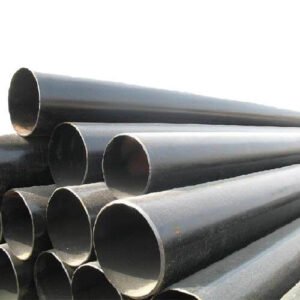

In the global energy sector, the integrity of pipeline infrastructure is non-negotiable. Electric Resistance Welded (ERW) steel pipes have emerged as a cornerstone in the oil and gas supply chain, offering a balance of high performance, dimensional precision, and cost-efficiency.
For procurement managers, project engineers, and stockists, understanding the evolving role of ERW technology is essential. This article delves into the technical significance of ERW pipes in energy operations and analyzes the market trends shaping the future of global procurement.
The Manufacturing Edge: Why ERW?
Before examining applications, it is vital to understand the “why.” Unlike Seamless pipes, ERW pipes are manufactured by cold-forming steel coils into a cylindrical shape. The edges are then heated and fused using high-frequency electric current—often referred to as High-Frequency Welding (HFW) in modern manufacturing.
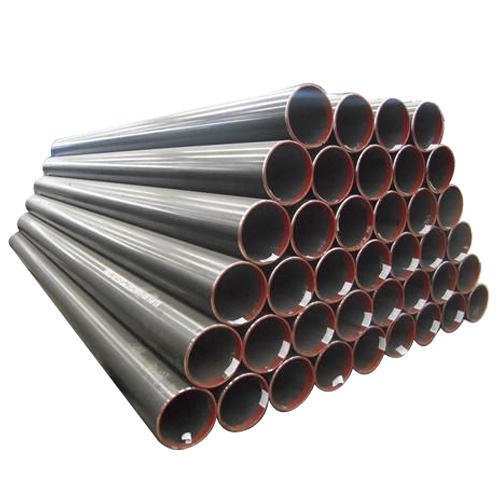
For the oil and gas buyer, this process offers distinct advantages:
Dimensional Accuracy: Tighter wall thickness tolerances compared to seamless pipes.
Weld Integrity: Modern heat treatment (annealing) of the weld seam ensures the finished pipe creates a uniform grain structure, meeting strict API 5L and ASTM standards.
Scalability: Efficient production cycles allow for faster delivery times on large-scale pipeline projects.
Key Roles Across the Supply Chain
ERW pipes are not limited to a single function; they are versatile components utilized across the upstream, midstream, and downstream sectors.
Upstream: Exploration and Extraction
In the harsh environments of drilling and extraction, material failure is not an option.
OCTG (Oil Country Tubular Goods): ERW pipes are extensively used as casing and tubing. They stabilize the borehole to prevent collapse and serve as the primary conduit for transporting crude oil and natural gas to the surface.
Water Injection Systems: To enhance oil recovery (EOR), these pipes are employed to inject water into reservoirs, maintaining pressure and boosting extraction rates. The steel grades used here are specifically selected to resist corrosion and high formation pressures.
Midstream: Transportation and Transmission
This is perhaps the most visible application of ERW technology.
Trunk Lines & Gathering Lines: Transporting unprocessed hydrocarbons from wellheads to processing facilities requires pipes that can withstand varying pressures. ERW pipes provide a robust solution for long-distance transport.
Pipeline Infrastructure: For large-scale projects, the cost-effectiveness of ERW pipes allows for the viable construction of extensive networks connecting extraction sites to refineries and export terminals.
Downstream: Processing and Distribution
Inside refineries and petrochemical plants, the operating conditions shift to high temperatures and corrosive chemical exposure.
Refinery Process Piping: Used for the internal transfer of hydrocarbons, acids, and processed derivatives.
Heat Exchangers and Boilers: Due to their uniform dimensions, ERW pipes are ideal for fabricating heat transfer components where precise fit-up is critical for thermal efficiency.
City Gas Distribution: In the final mile, ERW pipes form the backbone of urban natural gas networks, delivering energy safely to residential and industrial end-users.
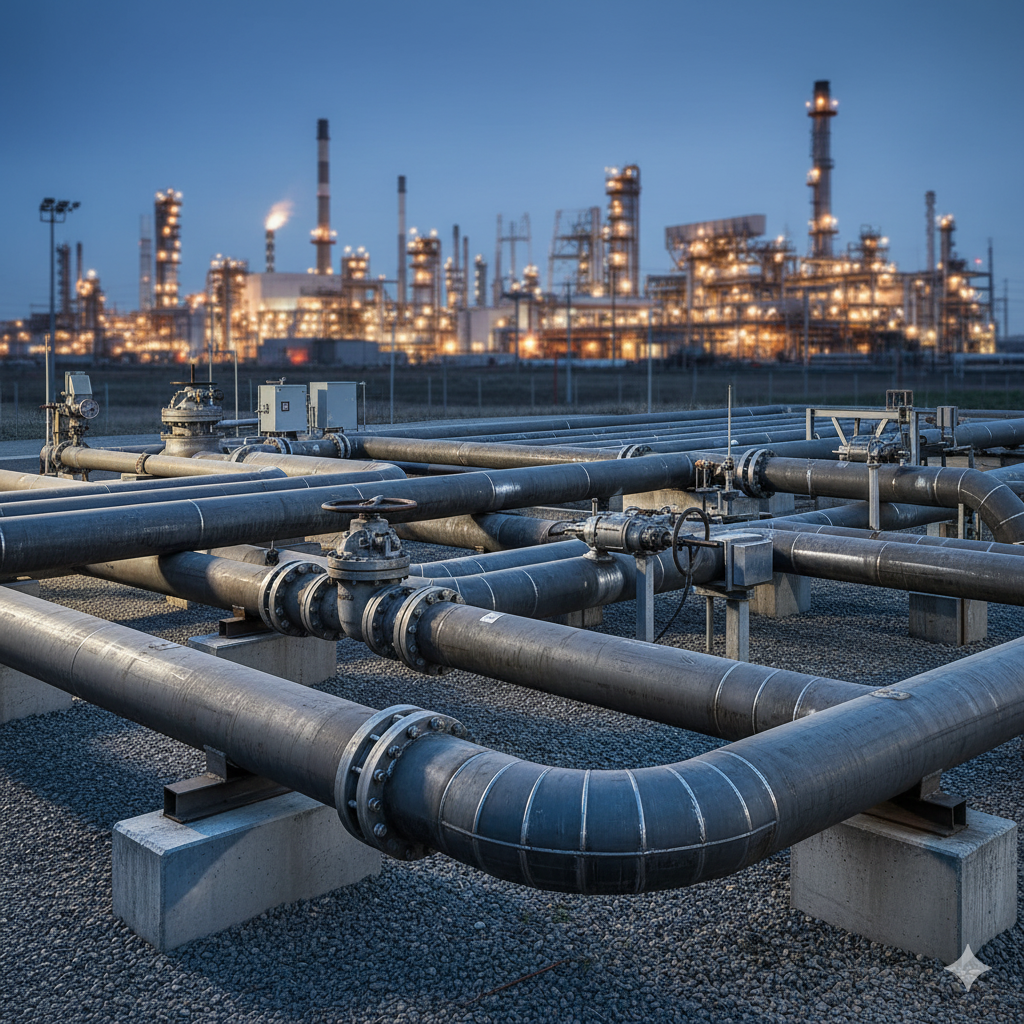
Emerging Market Trends Shaping the Industry
The demand for ERW pipes is not static; technological shifts and global energy policies drive it.
Technological Advancements in Metallurgy
The gap between ERW and Seamless pipes is narrowing. Advances in steel strip quality and online Non-Destructive Testing (NDT)—such as ultrasonic and eddy current testing—have significantly improved the reliability of ERW pipes. Manufacturers can now produce high-grade pipes (up to X70 or X80 grades) that perform reliably in high-pressure offshore and onshore environments.
The Shift to Natural Gas & LNG
As the world transitions toward cleaner fossil fuels, the consumption of natural gas is increasing rapidly. This “Dash for Gas” requires extensive new pipeline networks. ERW pipes are the preferred choice for these low-to-medium pressure gas transmission lines due to their economic advantages over seamless alternatives.
Sustainability and Leak Prevention
Environmental regulations are stricter than ever. The industry is prioritizing pipeline integrity to minimize methane leaks and carbon footprints. Modern ERW pipes, with their precise welding and advanced coating options (like 3LPE/3LPP), offer the durability needed to meet these sustainability goals.
Strategic Sourcing: Partnering for Success
For international buyers, stockists, and EPC contractors, selecting the right manufacturer is as critical as selecting the right material. The market is flooded with options, but quality assurance varies significantly.
At RAYOUNG, we understand that a steel pipe is more than just a commodity—it is acritical asset in your infrastructure.
Whether you are sourcing for a petrochemical plant expansion, a cross-country pipeline, or restocking inventory for local distribution, reliability is key.
We focus on:
Strict Adherence to Standards: Full compliance with API 5L, ASTM, and DIN specifications.
Rigorous Testing: Comprehensive hydrostatic and NDT testing to ensure weld seam integrity.
Global Logistics: Expertise in handling logistics for safe and timely delivery to project sites worldwide.
Final Thoughts
The oil and gas industry is evolving, moving towards deeper wells, longer pipelines, and stricter environmental standards. ERW steel pipes remain a vital enabler of this progress. By leveraging the efficiency and durability of modern ERW technology, projects can achieve both operational success and long-term safety.
Ready to optimize your supply chain?
Contact RAYOUNG today. Let our technical experts assist you in selecting the precise ERW piping solutions tailored to your project’s specifications.
+86-18003119682
info@hb-steel.com