
Pipeline systems are complex networks designed to transport various fluids efficiently. Buttweld Reducers are one of the many types of fittings that can be used to control the flow within a piping system.
In a piping system, there are two major types of reducers: concentric reducers and eccentric reducers.
This article compares the two types of reducers.
What is a Concentric Reducer?
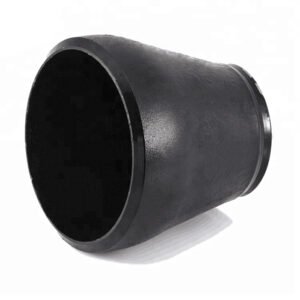
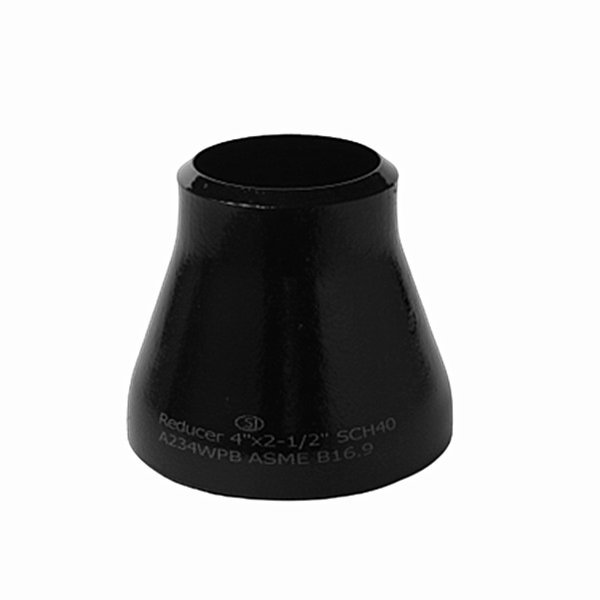
A concentric reducer is a pipe fitting that is in the shape of a cone. In this cone structure, the centers of the large-end cross-section circle and the small-end cross-section circle are located on the same central axis. This is an important feature that distinguishes it from an eccentric reducer.
The design of a concentric reducer ensures that the smaller pipe end aligns symmetrically with the larger pipe’s center line, providing a smooth transition. This uniformity helps maintain constant fluid flow, minimizing turbulence or disruptions in the system.
What is an Eccentric Reducer?
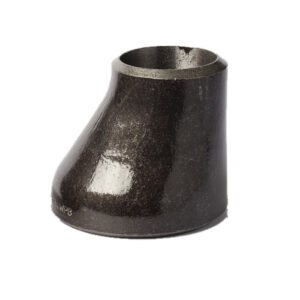
The eccentric reducer is a butt weld pipe fitting used to connect two pipes of different diameters whose centers are not on the same straight line. Since the centers are not coincident, the eccentric reducer has the function of changing the direction of the pipe, balancing the pipe deviation and reducing stress concentration.
Unlike a concentric reducer, which resembles a cone, eccentric reducers have an edge that is parallel to the connecting pipe, referred to as the flat side. This parallel edge results in the two pipes having offset center lines. Because eccentric reducers are asymmetrical, they create asymmetrical flow conditions; flow is faster along the angled side, resulting in increased pressure.

Concentric Reducers Key Features and Benefits:
- Symmetrical Flow: The uniform reduction in diameter ensures a smooth and symmetrical fluid flow, minimizing turbulence. This makes them ideal for systems where consistent flow conditions are paramount.
- Vertical Applications: They are frequently used in vertical pipelines for both gas and liquid flow, including pump discharge lines, where their design effectively guides the fluid downwards.
- Abrasive Fluids & Slurries: Their symmetrical form can be advantageous in conveying abrasive fluids and slurries, particularly in applications requiring specific wear protection between flanges or pipes.
- Reduced Energy Loss: In long-distance fluid transportation, like oil pipelines, concentric reducers contribute to minimizing energy loss by providing a gradual transition that lessens turbulence.
Eccentric Reducers Key Features and Benefits:
- Horizontal Applications: Eccentric reducers are the preferred choice for horizontal pipelines. Their flat side helps prevent the accumulation of air or gas pockets, which is critical for maintaining consistent flow, especially with dense or mixed fluids.
- Drainage and Exhaust: Due to their flat side, they excel in exhaust or liquid discharge applications, simplifying start-up and maintenance by allowing for complete drainage.
- Preventing Cavitation: By preventing air entrapment, eccentric reducers play a vital role in systems transporting fluids prone to cavitation, ensuring smoother operation and pump efficiency.
- Guiding Accumulation: In chemical processes with gas-liquid two-phase flow or liquid accumulation, an appropriately oriented eccentric reducer can guide the accumulated liquid to a specific collection point.
Applications:
Concentric reducers: find their niche in industries demanding precise flow control and minimal energy loss. In chemical production, they ensure even and symmetrical fluid flow during diameter changes, which is crucial for accurate material transportation. Their role in long-distance oil pipelines is to facilitate a uniform increase in flow rate and decrease in pressure, mitigating turbulence.
Eccentric reducers are indispensable in scenarios where maintaining a consistent flow profile and preventing air/gas accumulation are critical. They are a staple in horizontal pipelines, particularly for wastewater, slurries, and other fluids prone to air entrainment. Their ability to guide accumulated liquids makes them invaluable in certain chemical process pipelines.
How to select buttweld reducer types?
When deciding between a concentric and an eccentric reducer, consider these key factors:
- Flow Requirements:
Concentric reducer: Ideal for smooth, uniform flow with minimal pressure drop.
Eccentric reducer: Suited for applications where air pocket prevention, precise flow control, or pump efficiency are paramount.
2. Space Constraints:
Concentric reducer: More space-efficient due to its symmetrical design, fitting well in confined spaces.
Eccentric reducer: Requires additional consideration for space due to its offset configuration.
3. Fluid Characteristics:
Concentric reducer: Best for clean fluids or non-abrasive materials where turbulence and pressure drop must be minimized.
Eccentric reducer: Preferred for slurries, wastewater, or fluids susceptible to air entrainment.
4. Installation and Maintenance:
Concentric reducer: Generally easier to install and maintain due to its straightforward, symmetrical shape.
Eccentric reducer: May require more careful alignment during installation to ensure proper flow characteristics and avoid air pockets.
Conclusion
Both buttweld concentric and eccentric reducers are vital components in modern piping systems. While concentric reducers ensure symmetrical flow and are ideal for vertical lines and uniform transitions, eccentric reducers excel in horizontal applications, preventing air pockets and facilitating drainage.
By carefully evaluating your specific flow characteristics, space limitations, fluid properties, and installation needs, you can select the most appropriate reducer to optimize your pipeline’s performance and ensure long-term operational efficiency.