

Buttweld pipe bends are used to change pipeline direction through a gradual curve, particularly where the piping layout requires a larger bending radius or a non-standard turning geometry. For stock distributors, trading companies and engineering contractors, choosing the right steel pipe bend involves more than selecting a diameter and angle. Material grade, wall thickness, bend radius, manufacturing method and inspection requirements must all match the project specification.
RAYOUNG supplies industrial steel pipe bends for piping applications in sectors including oil and gas, water treatment, mining and factory construction. This guide focuses on the manufacturing, technical verification and purchasing considerations that matter when sourcing buttweld pipe bends.
1. What Are Buttweld Pipe Bends?
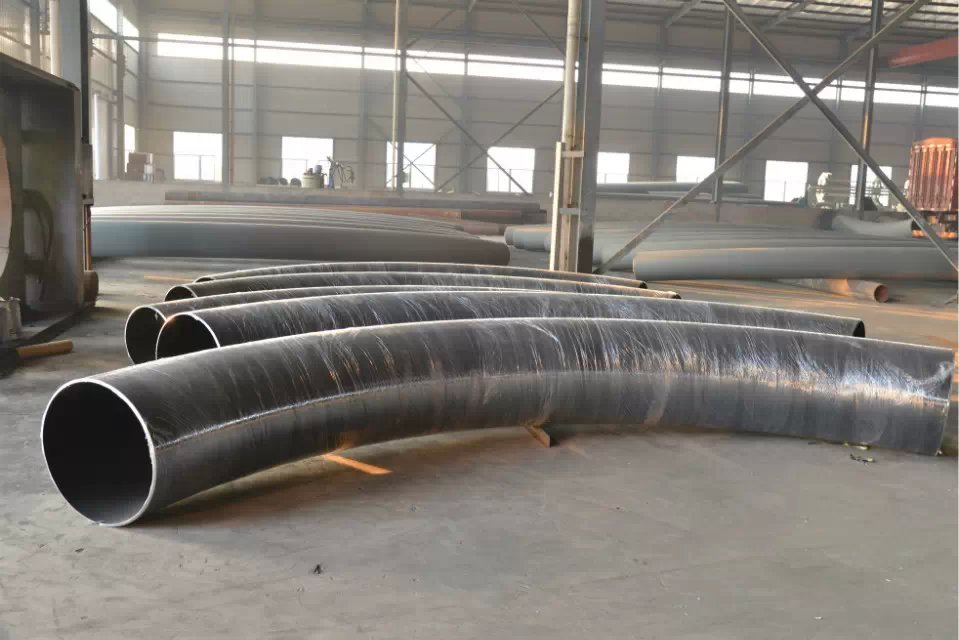
A buttweld pipe bend is a pipe component designed to change the direction of a pipeline through a curved section. Its ends are prepared for butt welding to the adjoining pipework.
Unlike standard elbows, which generally use standardized dimensions and relatively compact radii, pipe bends can be manufactured with larger radii and project-specific geometries. They are used when the pipeline design calls for a more gradual directional change or a particular bend configuration.
Pipe bends are commonly specified by their radius, angle, outside diameter, wall thickness and material grade. The correct combination depends on the pipeline design and operating conditions.
For a broader introduction to pipe bend types and applications, see our guide to An Overview of Pipe Bends.
2. Pipe Bend Manufacturing Methods
The manufacturing method affects the production process and the inspections needed to verify the finished product. The appropriate method depends on the material, dimensions, bend geometry and purchase specification.
Hot Induction Bending
Induction bending uses localized heating and controlled bending to form a pipe into the required curvature. It is used for producing pipe bends in a range of diameters and radii, including configurations required for industrial pipeline projects.
Because the pipe is heated and deformed during production, dimensional checks and material-property verification are important. Wall-thickness variation, ovality and the condition of the finished surface should be evaluated against the applicable requirements.
Cold Bending
Cold bending forms the required curvature without applying the same localized induction-heating process. Its suitability depends on the pipe material, dimensions, bending radius and manufacturing procedure.
The manufacturing route should be agreed before production rather than selected solely on price or delivery time. Where a project specifies a particular bending process, that requirement should be stated clearly in the inquiry.
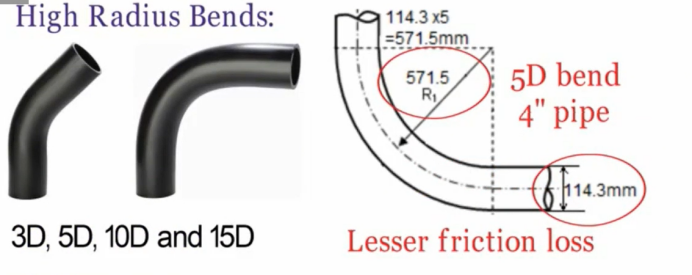
For example:
5D 4” Pipe bend
3. Pipe Bend Radius and Geometry
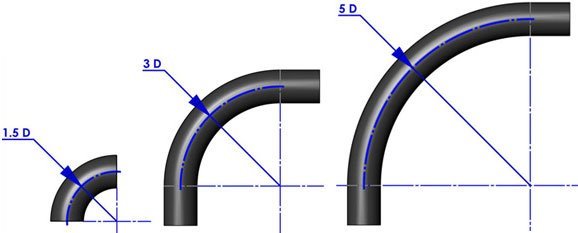
Pipe bends may be specified as 3D, 5D, 6D, 8D or other project-defined radii. In this notation, D represents the reference pipe diameter used by the applicable specification, and the number indicates the radius multiplier.
A larger radius generally produces a more gradual curve, but it also requires more installation space. The largest available radius is not automatically the best option for every pipeline.
When checking a pipe bend drawing or quotation, confirm:
- Required bending radius and its dimensional reference.
- Bend angle and overall geometry.
- Pipe outside diameter and nominal size.
- Wall thickness and applicable tolerances.
- End preparation and connection requirements.
- Any requirements for pigging, internal clearance or installation space.
For a more detailed comparison of radius options, read 3D, 5D and 8D Steel Pipe Bends: A Selection Guide.
4. Materials and Product Specifications
Steel pipe bends are available in different material families, depending on the application and required specification. RAYOUNG’s existing product information lists options including carbon steel, alloy steel and stainless steel.
Examples listed across the company’s product information include:
- Carbon steel: ASTM A234 WPB and WPC.
- Pipeline steel: API 5L grades such as Grade B, X42, X52, X60 and X70, subject to the specified product and applicable requirements.
- Alloy steel: ASTM A234 grades including WP5, WP9, WP11 and WP22.
- Stainless steel: ASTM A403 WP304/304L and WP316/316L.
These examples are not a guarantee that every grade is available in every size, radius or manufacturing route. Confirm the exact combination before placing an order.
Material selection should consider the design temperature, pressure, conveyed medium, corrosion conditions and governing piping specification. Do not substitute one grade for another simply because the nominal size is the same.
5. Standards and Dimensional Verification
The applicable standard depends on the type of bend, its manufacturing route and the project specification.
ASME B16.49 covers factory-made wrought buttwelding induction bends for transportation and distribution systems within its scope. It should not automatically be applied to every type of pipe bend.
Other product and material requirements may apply depending on the intended service. The buyer should identify the governing dimensional standard, material specification and construction code separately where necessary.
Before approving a quotation, verify:
- Pipe size and outside diameter.
- Required bend radius and angle.
- Nominal or specified wall thickness.
- Material grade and applicable material standard.
- Dimensional tolerances and end preparation.
- Required inspection, testing, marking and documentation.
Where the project provides approved drawings or a technical data sheet, use those documents as the primary reference for the order.
6. Quality Checks for Industrial Pipe Bends
A pipe bend should be checked against its specified requirements rather than accepted on appearance alone.
Dimensional inspection: Confirm the radius, angle, end-to-end dimensions, outside diameter and other specified dimensions.
Wall-thickness verification: Check thickness in accordance with the applicable inspection plan, particularly where bending may cause thickness variation.
Surface examination: Inspect for visible damage, cracks, unacceptable surface conditions or other indications requiring evaluation.
Material verification: Confirm the material grade and traceability records required by the purchase specification.
Testing and documentation: Complete the inspection and non-destructive examination required by the applicable standard, project specification and quality plan.
The inspection method and acceptance criteria must be defined by the governing requirements. A visual check alone cannot establish compliance with every dimensional, material or internal-quality requirement.
7. How to Specify a Pipe Bend When Requesting a Quote
Incomplete inquiries can lead to repeated technical questions, quotation delays and incorrect supply. Distributors should also keep the manufacturing route, material grade and dimensions clear when replenishing inventory.
For a more efficient quotation, provide:
- Product description and quantity.
- Pipe outside diameter or nominal pipe size.
- Required bend radius and angle.
- Wall thickness or schedule.
- Material grade and applicable standards.
- Manufacturing method, where specified.
- Inspection, testing and documentation requirements.
- Delivery destination and requested schedule.
If the project includes several bend configurations, attach a line-by-line material list or approved drawing. This allows the supplier to review each requirement instead of assuming that all bends share the same dimensions or manufacturing conditions.
8. RAYOUNG Buttweld Pipe Bends
RAYOUNG supplies industrial steel pipe bends and related piping products for stock distributors, trading companies and engineering contractors.
Our company reports a production base exceeding 35,000 sqm, a team of more than 100 members and annual output of approximately $30 million. Reported production capacity exceeds 90 containers per month.
The stated lead time for one container is 15–30 days, subject to the product specification, order confirmation and production schedule. Our service targets include a 2-hour response, 24-hour proposals and 7×24 support.
We focus on industrial-grade products rather than food-grade applications. Specific materials, dimensions, manufacturing routes, certifications and inspection requirements should be confirmed for each order.
Request a Buttweld Pipe Bend Quotation
Whether you are sourcing standard steel pipe bends for inventory or project-specific bends for a pipeline, provide your required dimensions, material grade, manufacturing requirements and quantity.
RAYOUNG can review your inquiry and clarify the information needed for quotation and order confirmation.
Explore our Steel Pipe Bends Product Range.
Contact RAYOUNG:
Email: info@hb-steel.com
WhatsApp: +86 180 0311 9682