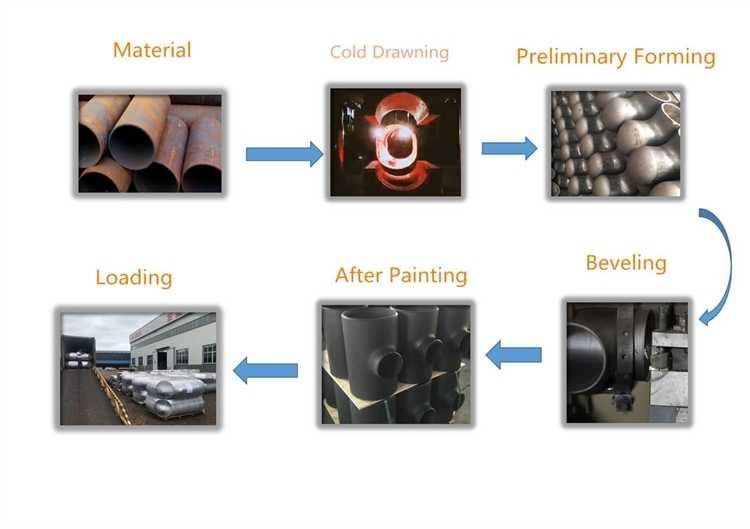

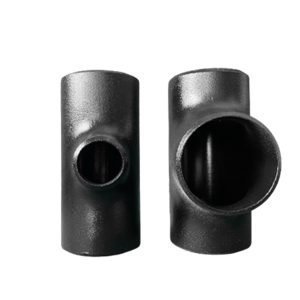
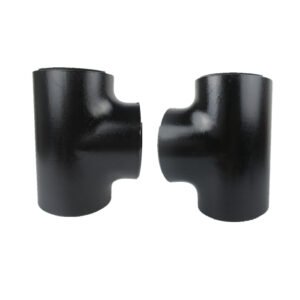
In any complex piping network, the ability to safely split or combine fluid flow is critical. The Butt Weld Pipe Tee (also known as a triplet or three-way fitting) is the most widely used component for creating 90-degree branches in industrial systems.
At Rayoung, we provide precision-engineered pipe tees that ensure leak-proof connections, even under extreme pressure and temperature variations. This guide covers everything you need to know about selecting the right tee for your project.
International Standards and Dimensions
To ensure global interchangeability and safety, our pipe tees are manufactured in strict accordance with major international dimensional standards:
ASME B16.9 Pipe Tee: The most common American standard for factory-made wrought butt-welding fittings, covering NPS 1/2 through NPS 48.
EN 10253 Pipe Tee: The European standard for butt-welding pipe fittings, essential for projects across the EU.
GOST 17376 Pipe Tee: Specifically designed to meet the requirements of the Russian and CIS markets.
Tolerance Matters: Accuracy in wall thickness, end preparation (beveling), and center-to-end dimensions is vital. Our fittings adhere to strict tolerance protocols to ensure seamless alignment during the welding process, reducing installation time and stress concentrations.
Exploring the Different Types of Pipe Tees
Depending on your flow requirements and piping geometry, different tee configurations are required:
As the name suggests, an Equal Tee has a branch diameter identical to the main run pipe. It is used when the volume of fluid in the branch is expected to be the same as in the main line.
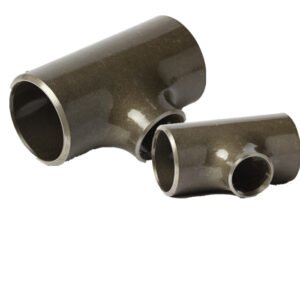
A Reducing Tee features a branch outlet that is smaller than the main run. This allows for a controlled transition to a smaller pipe size or equipment connection without the need for additional reducers.
Unlike a standard 90-degree tee, a Lateral Tee has a side branch at a 45-degree angle. This design minimizes flow turbulence and is often used in systems where low-pressure drop and smooth fluid transition are priorities.
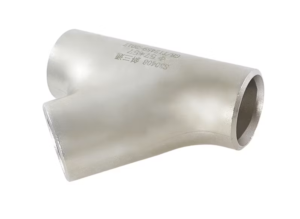
Specifically engineered for the oil and gas midstream sector, a Barred Tee includes internal restriction bars welded across the branch opening. These bars prevent a “pig” (pipeline inspection gauge) from accidentally entering the branch, ensuring smooth pipeline cleaning and inspection.
Industrial Applications: Where Reliability Meets Performance
Butt weld pipe tees from Rayoung are found in the world’s most demanding environments, including:
- Energy Sector: Power generation, gas compression, and oil refineries.
- Chemical & Processing: Pharmaceutical, pulp and paper, and chemical fertilizer equipment.
- Marine & Offshore: Shipbuilding and seawater desalination plants.
- Infrastructure: Waste treatment, utility lines, and large-scale HVAC systems.
Professional Buying Tips: How to Get an Accurate Quotation?
To avoid technical mismatches and ensure you receive the most competitive pricing, please provide the following specifications when requesting a quote:
- Production Standard: Specify if you require ASME B16.9, GOST 17376, EN 10253, or others.
- Size (NPS/DN): Clearly state the main run and branch sizes (e.g., 8” x 6” or DN 200 x 150).
- Wall Thickness (Schedule): Use Schedule numbers (Sch 40, Sch 80, STD) or exact millimeter measurements.
- Material Grade: Choose between Carbon Steel (ASTM A234 WPB), Stainless Steel (304/316L), or Alloy Steel.
- Quantity: Larger batches often benefit from optimized shipping and production costs.
- Surface Treatment: Options include black painting, anti-rust oil, or galvanization.
- Marking & Packaging: Specify any unique heat number tracking or specialized export packaging requirements.
Why Choose Rayoung for Your Piping Solutions?
With years of expertise in the global steel market, Rayoung is more than just a supplier—we are your technical partner. Our butt weld fittings undergo rigorous quality checks, ensuring that every weld end is perfectly beveled for your on-site installation.
Contact our Technical Sales Team for a custom quote.
+86-18003119682