
In the complex world of industrial piping—whether for oil and gas, water transport, or chemical processing—pipelines rarely run in a straight line. Changing the direction of a pipeline is a critical engineering challenge.
While standard elbows are the go-to for tight turns, Steel Pipe Bends are the superior choice when flow efficiency and specific geometries are required.
If you want to understand the differences between a standard elbow and a 3D, 5D, or 8D bend, or if you need to know which specifications are suitable for your project, this guide provides all the information you need.
What is a Steel Pipe Bend?
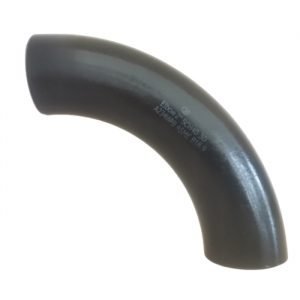
A steel pipe bend is a component used to change the direction of a pipeline. Unlike a standard elbow, which is pre-manufactured to fixed dimensions, a pipe bend is typically longer and custom-manufactured to specific radii to meet the unique needs of a project.
The “D” is Radius.
The most common way to categorize bends is by their Bending Radius (R) relative to the pipe’s Diameter (D).
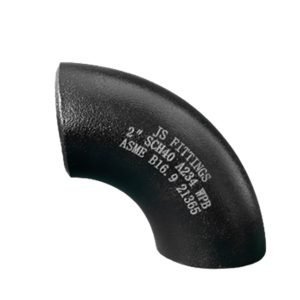
Elbows: If the radius is 1D (Short Radius) or 1.5D (Long Radius), it is classified as a standard elbow.
Bends: If the radius is greater than 2D, it is classified as a pipe bend.
Common specifications include 3D, 5D, 6D, and 8D bends. As the number increases, the curve becomes more gradual, and the physical length of the fitting increases.

Common Types of Pipe Bends
Long-distance pipelines prefer bends over elbows because they reduce friction, allowing for smoother fluid transport. Here is a breakdown of the most popular radii:
- 3D Pipe Bend
A 3D bend has a radius that is three times the pipe’s outer diameter.
Example: For a 10-inch pipeline, the radius of a 3D bend would be 30 inches.
Use Case: This is the entry-level standard for “long radius” bends, offering better flow than a 1.5D elbow without taking up excessive space. - 5D Pipe Bend
The 5D bend (Radius = 5 x Diameter) is widely regarded as the sweet spot for many industries. It offers significantly smoother performance than a 3D bend, reducing pressure drop and turbulence within the line. - 6D and 8D Pipe Bends
These are “Extra Long Radius” bends.
6D Bend: Longer than a 5D but shorter than an 8D.
8D Bend: usually the longest radius found in standard applications.
Why use steel pipe bends?
These are essential for long-distance oil and gas transmission lines. The gradual curve allows “pigs” (pipeline inspection gauges and cleaning devices) to pass through the line without getting stuck, which is difficult in tighter bends.
Steel Pipe Bend vs. Elbow: What’s the Difference?
While they serve the same basic purpose—changing pipe direction—bends and elbows are distinct in engineering, cost, and application.
- Manufacturing Process
Elbows: Mass-produced via hot finishing or hot bending in molds. They are standardized to 45°, 90°, or 180°.
Bends (3D, 5D, 8D): Often manufactured via Induction Bending or cold bending directly from a finished straight pipe. This allows for custom angles (e.g., 12° or 35°) and custom radii (up to 40D). - Flow Efficiency & Application
Elbows: Best for tight spaces where the pipeline must turn sharply. However, the sharp turn creates high turbulence and pressure loss. They are often used in facility piping where space is limited.
Bends: Best for long-distance transport (oil, gas, slurry). The long radius ensures low resistance, maintains fluid pressure, and reduces erosion inside the pipe. - Cost Implications
Because elbows are produced in bulk using standard molds (usually 1.5D), they are generally cheaper. Pipe bends require customized production processes to achieve specific radii (3D, 5D, etc.), making them more expensive but necessary for high-performance pipelines.
Our Supply Range & Specifications
We specialize in high-quality steel pipe bends tailored to complex pipeline conditions. Whether you need carbon steel bends for standard transmissions or alloy steel bends for high-pressure environments, we have the solution.
Product Specifications:
Manufacturing Standards: AISI B16.49, ASME B 16.49 16.5
Bending Radii: 2D, 2.5D, 3D, 4D, 5D, 6D, 8D (or customed).
Angles: 45°, 60°, 90°, and fully customized degrees.
Wall Thickness: SCH 10, SCH 40, SCH 80, and heavy walls.
Material Grades:
API 5L (Line Pipe): Grade B, X42, X46, X52, X56, X60, X65, X70, X80 (PSL1, PSL2 & Sour Service).
Carbon & Alloy Steel: ASTM A234 WPB, WPC, WP1, WP5, WP9, WP11, WP22, WP91.
Stainless Steel: ASTM A403 304/304L, 316/316L.
Coating Options:
To ensure longevity and corrosion resistance, we offer Black Paint, Galvanizing, Epoxy Coatings, 3PE (3-Layer Polyethylene), and FBE (Fusion Bonded Epoxy).
Choosing the right bend radius can significantly impact the efficiency and lifespan of your piping system. Don’t compromise on quality.
Contact us today for an immediate technical consultation and a competitive quote on 3D, 5D, and 8D steel pipe bends.